






How Good Doctor, Indonesia's Leading Digital Healthcare Platform, Drove 51.78% More Transactions and 13.86% More Paying Users with Netcore's AI Decisioning Agents


Good Doctor is one of Indonesia’s leading digital healthcare platforms, connecting millions of users to online consultations, medicine delivery, and health information. As the platform scaled, the team faced a familiar growth challenge: reaching more users didn’t automatically mean reaching the right ones, at the right moment, with something worth their attention.
Working with Netcore, Good Doctor deployed AI Decisioning Agents across onboarding, targeting, and content strategy, systems that could sense shifts in user behavior and health trends and act on them directly, without waiting on manual review. The shift showed up directly in the numbers, and in how relevant each interaction felt to the people receiving it.
Good Doctor is one of Indonesia’s leading digital healthcare platforms, giving users convenient access to online medical consultations, medicine purchases, health information, and integrated healthcare services. The platform connects more than 15 million users to a network of over 1,000 doctors and 4,500 healthcare facilities, and works with 65+ insurance partners and 3,500 corporate clients across Indonesia.
Indonesia’s connected healthcare market is expanding quickly, with telemedicine leading the category and the broader market forecast to grow at a CAGR of around 27% through 2031 (Mordor Intelligence). Patients increasingly expect the same immediacy and relevance from healthcare apps that they get elsewhere online, even though health needs are inherently personal and change fast, shaped by season, symptom, and individual circumstance. The market is expanding steadily within a consolidating field of established platforms, most competing on the same basic premise of access. For Good Doctor, staying ahead meant treating relevance, not just reach, as the next growth lever.
Good Doctor’s objective was straightforward: improve activation, consultation and purchase conversions, and overall marketing effectiveness, without simply pushing more messages to more people. That meant solving for three things:
Good Doctor’s existing setup for App Push and Email wasn’t designed to prioritize content or traffic automatically; every new variant, segment, or trend required manual review. In a category where patient interest can shift within days, a seasonal illness, a sudden symptom, that manual layer meant campaigns were often optimized for what had already happened rather than what was happening. Left unresolved, this carried three compounding risks: users dropping out of onboarding before reaching their first consultation, marketing effort spread evenly across users regardless of intent, and campaigns arriving after, rather than during, the moment a patient was actually looking for care.
Good Doctor worked with Netcore to introduce AI Decisioning Agents across the user journey, systems designed not just to analyze data but to act on it directly: shifting traffic, selecting audiences, and surfacing trends without a person triggering each cycle. This covered the journey from first visit through ongoing engagement.
Good Doctor built multiple onboarding journey variants, each testing different messaging on why and when to start a consultation. Netcore’s Decisioning Agent, running as the Journey Path Optimizer, continuously observed engagement and conversion across these variants and shifted traffic toward the best-performing path on its own, without a person running or interpreting a manual A/B test.


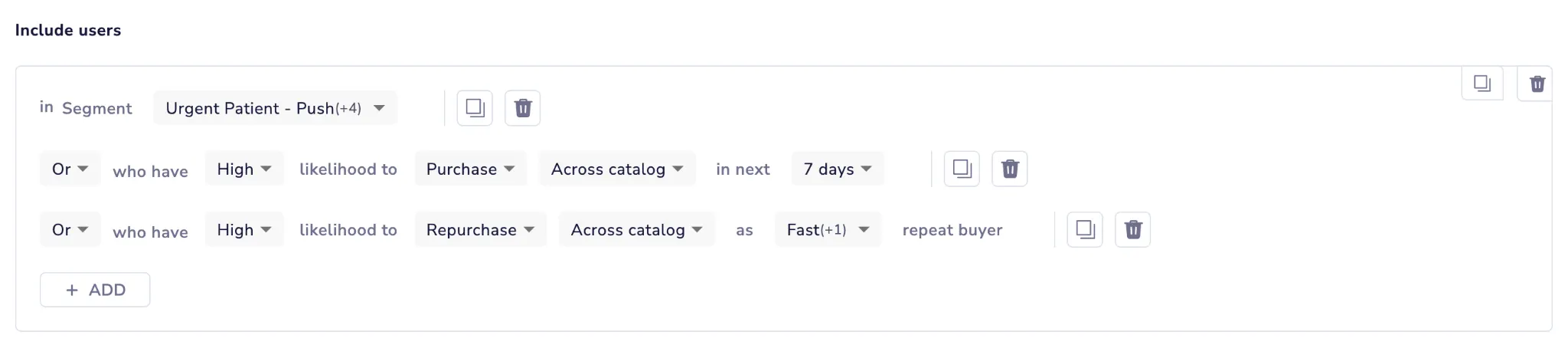
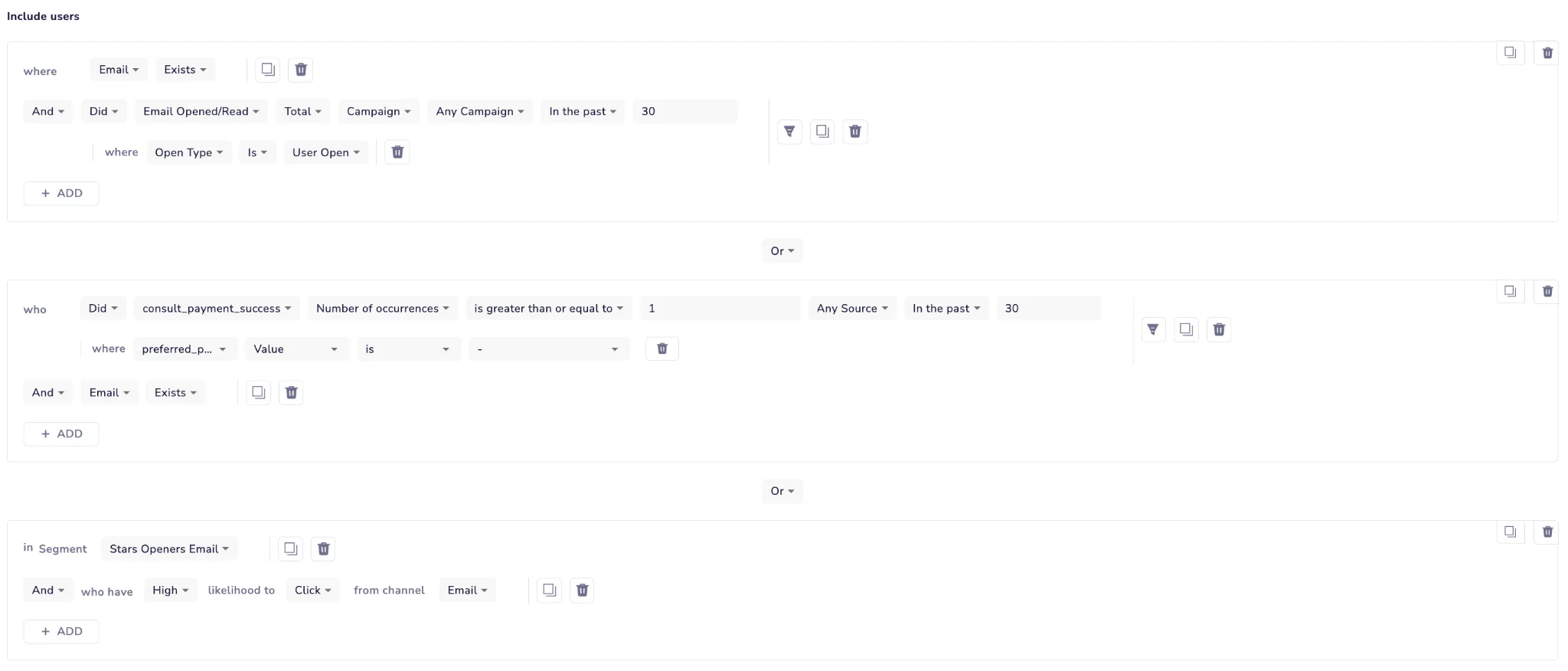
Instead of every campaign going to the full user base, Netcore’s Decisioning Agent, configured through Propensity-Based Segments, continuously scored users on their likelihood to purchase or repurchase and routed App Push and Email campaigns to the resulting high-intent segments directly, refreshing who qualified as behavior changed.
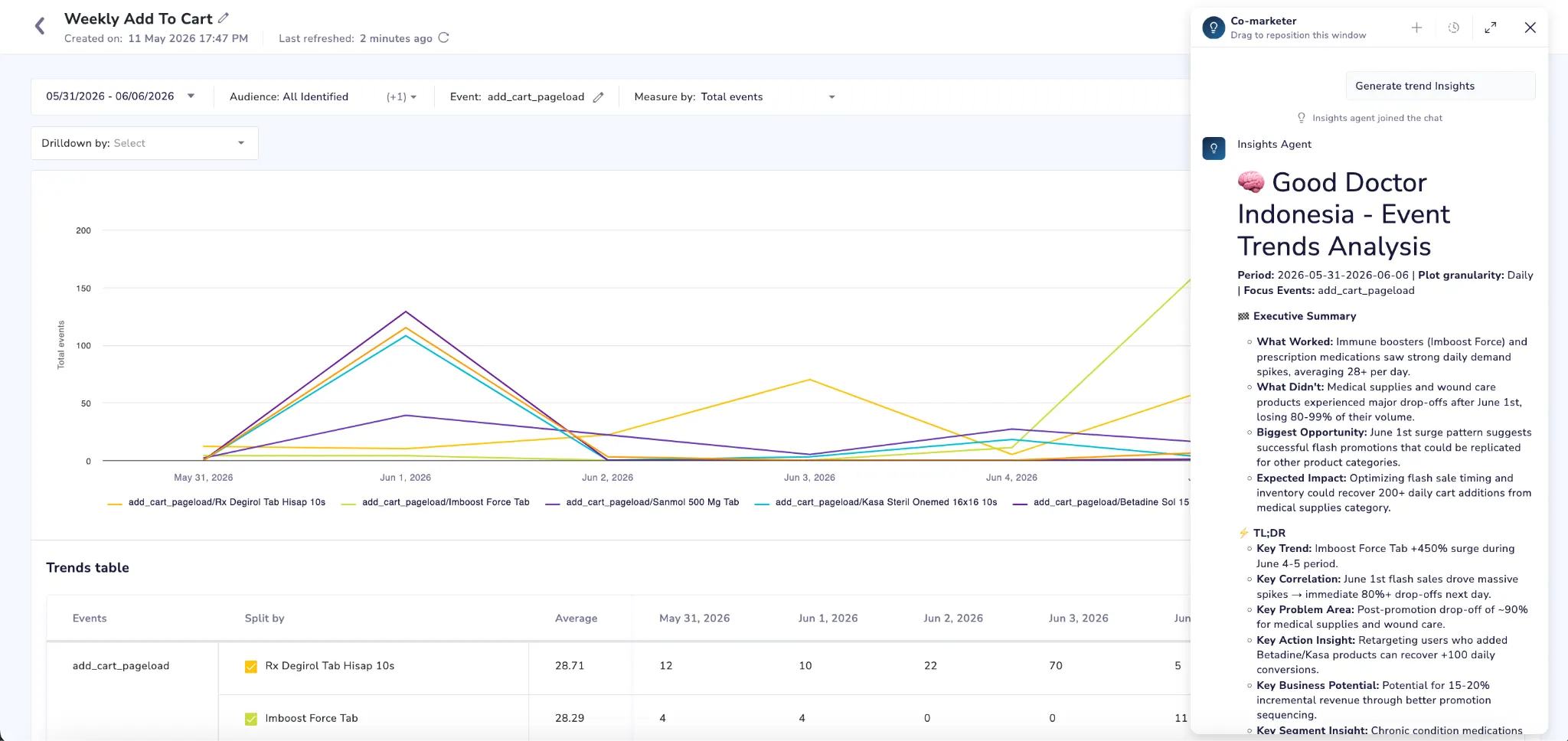
Netcore’s AI Insight Summarizer agent, accessed through Co-Marketer, continuously read behavioral and health-search data on its own and surfaced emerging patterns: which medicine categories were growing fastest, which symptoms were trending, and where demand was shifting, without the team needing to pull or interpret that data manually.
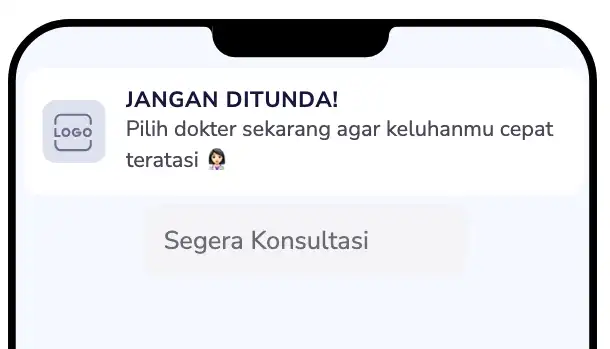
When the agent flagged a sharp rise in interest around sore throat medication, the team acted on that signal immediately, launching a targeted campaign while the interest was still active, pairing timely content with an offer relevant to what users were already searching for.
Results were tracked across three areas, onboarding, predictive targeting, and trend-led execution, and each ties back to a different lever of business performance: activation, marketing efficiency, and speed to relevance.
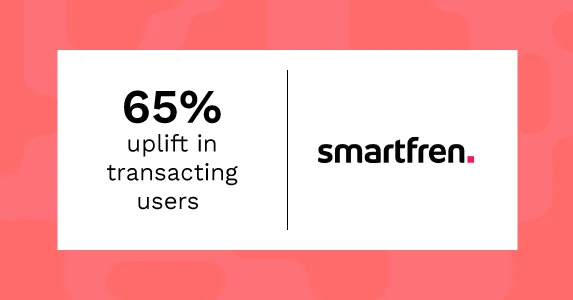
A user who drops off during onboarding never becomes a customer. With the Decisioning Agent continuously reallocating traffic toward the best-performing path, more new users reached their first consultation, directly growing the base of engaged, addressable users (15 May – 15 June 2026):
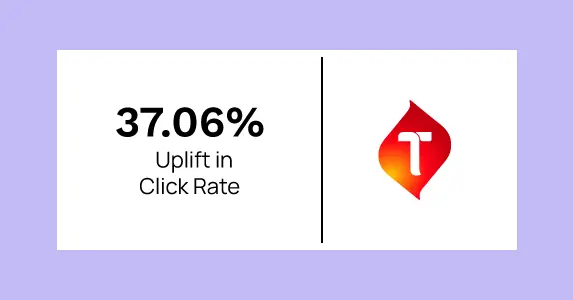
With Decisioning Agents continuously scoring and re-targeting high-intent users, the same campaign effort produced more results, improving return on marketing spend rather than requiring more of it. (Figures below are shown as a multiple of the previous rate, e.g. 2.0X means twice the previous rate.)


Campaigns built on signals the agent surfaced in real time, rather than a fixed content calendar, converted meaningfully better, showing that timing, not just targeting, moves outcomes:


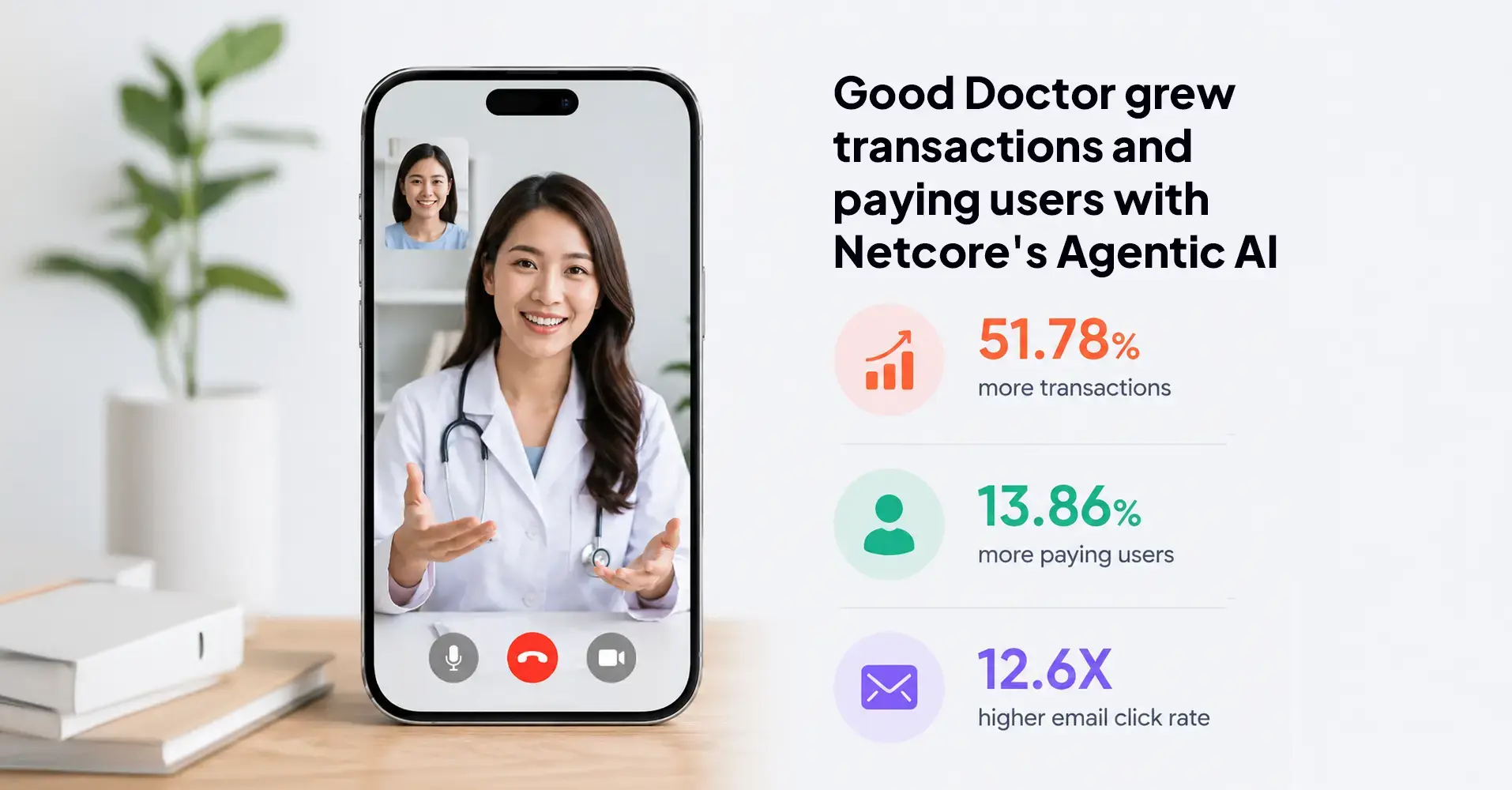
Together, these improvements compounded into gains that tie directly to revenue and user growth:
Good Doctor plans to extend AI Decisioning Agents across more touchpoints in the user journey, building on the same foundation of journey optimization, predictive targeting, and trend intelligence established here. The intent is to keep personalizing care at scale as the platform grows, rather than treating relevance as a one-time project.


Kristina Regita Chandra
CRM Marketing Manager, Good Doctor“Netcore has become more than a customer engagement platform for us-it acts as an intelligence layer for our marketing efforts. Its AI-powered capabilities help us identify high-intent users, optimize journeys automatically, and uncover emerging healthcare trends, enabling us to deliver more meaningful customer experiences while driving measurable business growth.”
Please wait while you are redirected to the right page...