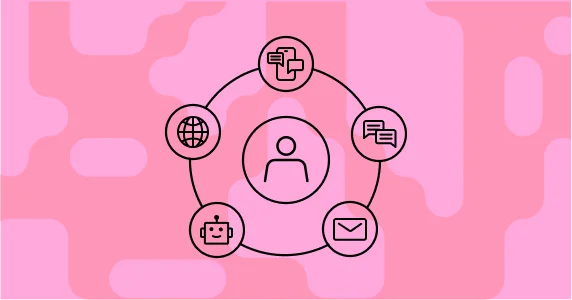





TL;DR
- Customer Journey Orchestration (CJO) platforms help brands deliver personalized, real-time experiences across channels by unifying customer data, AI, and automation.
- The top Customer Journey Orchestration platforms for 2026 include Netcore, Braze, Klaviyo, Connectif, and Splio, each offering unique strengths for B2B, B2C, retail, and ecommerce businesses.
- When evaluating a journey orchestration platform, prioritize AI-powered decisioning, omnichannel engagement, real-time customer data, scalability, analytics, and seamless integrations with your existing martech stack.
- The right platform should not only automate customer journeys but also optimize every interaction to increase engagement, conversions, retention, and customer lifetime value.
Customer journey orchestration is not just a passing trend in the ever-evolving world of marketing technology.
It represents a fundamental change in how brands perceive their customer relationship. After all, providing a poor customer experience is a customer lost.
Therefore, to stay one step ahead, it is essential for brands to embrace new approaches to meet the ever-changing customer expectations.
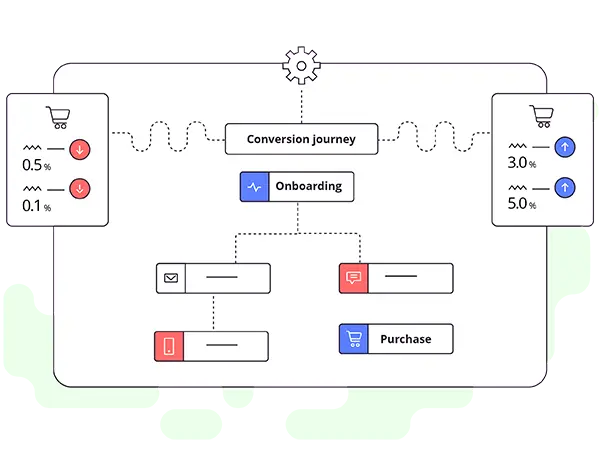
With customer journey orchestration, you can play an active role in shaping the personal experience with your customers, similar to a choose-your-own-adventure book where you are the author.
These platforms provide the options and guide the way, leading them toward the perfect products and encouraging them to purchase. As a marketer, you are responsible for creating, adjusting, and managing their customer journey.
This blog delves into the top journey orchestration platforms and the factors you need to consider when choosing the best platform for your requirements.
What is customer journey orchestration?
At the heart of journey orchestration lies a straightforward formula: combining customer behavior with omnichannel communication.
Customer journey orchestration entails examining consumer interactions across every communication channel and harnessing this data to craft customized campaigns that maximize customer engagement marketing.
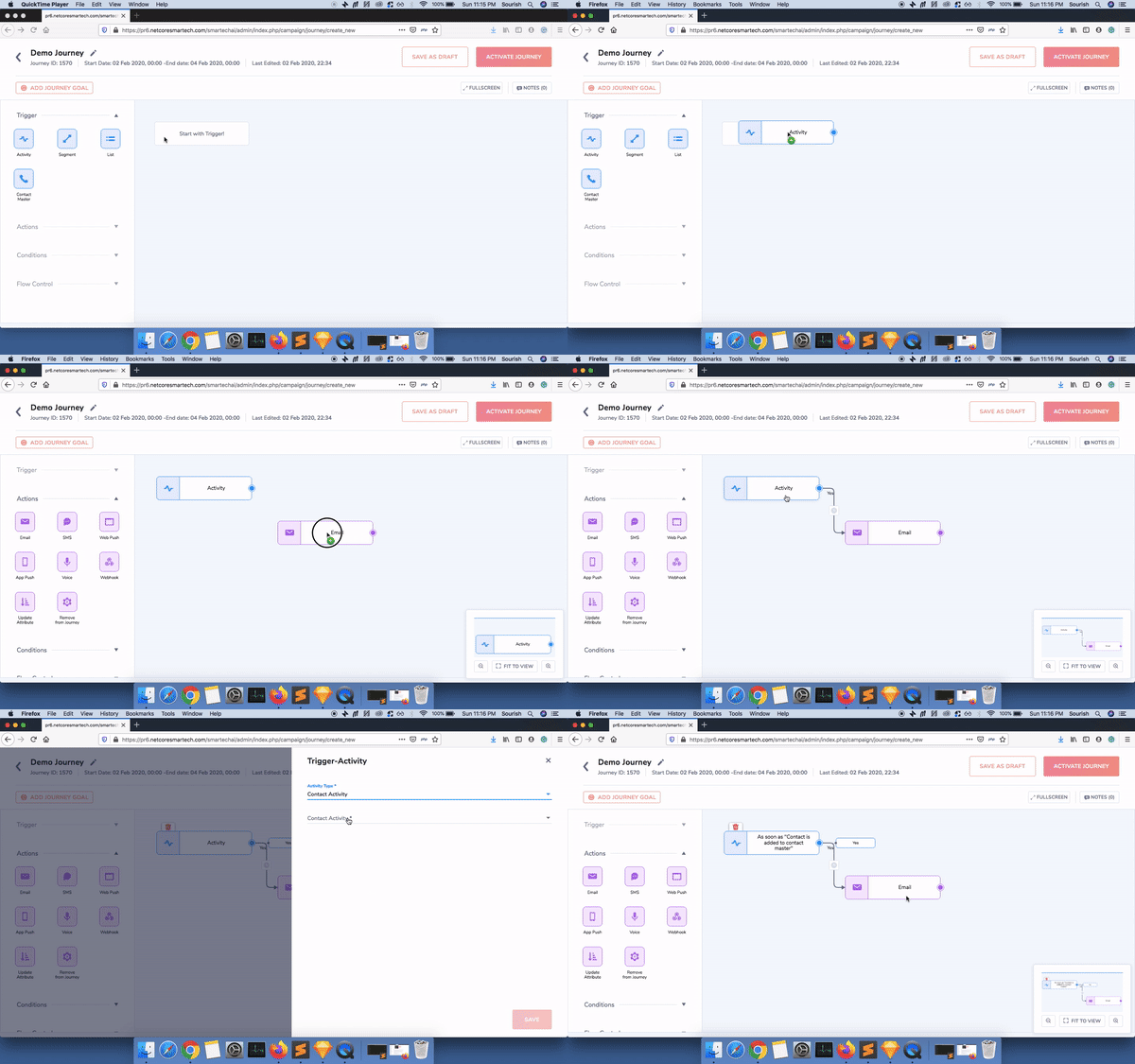
The key to success is your ability to link your customers to various touchpoints they have with your brand, which reveals valuable insights into their preferences and tendencies regarding engagement.
Journey orchestration lets you adapt to changing customer behavior in real time, providing flexibility and scalability. If you want to help a buyer along their journey, it’s crucial to determine where they’re at in the process. They might just be starting out, trying to decide between different options, or almost ready to make a final choice.
Once you know where they’re at, you can focus on answering their most important questions and giving them what they need to keep moving forward.
In turn, through journey orchestration platforms, you can deliver content that is directly attuned to their requirements, boosting continued interaction with your brand.
What are customer journey orchestration platforms?
Journey orchestration platforms are designed to streamline and optimize customer interactions, ensuring a smooth and engaging experience.
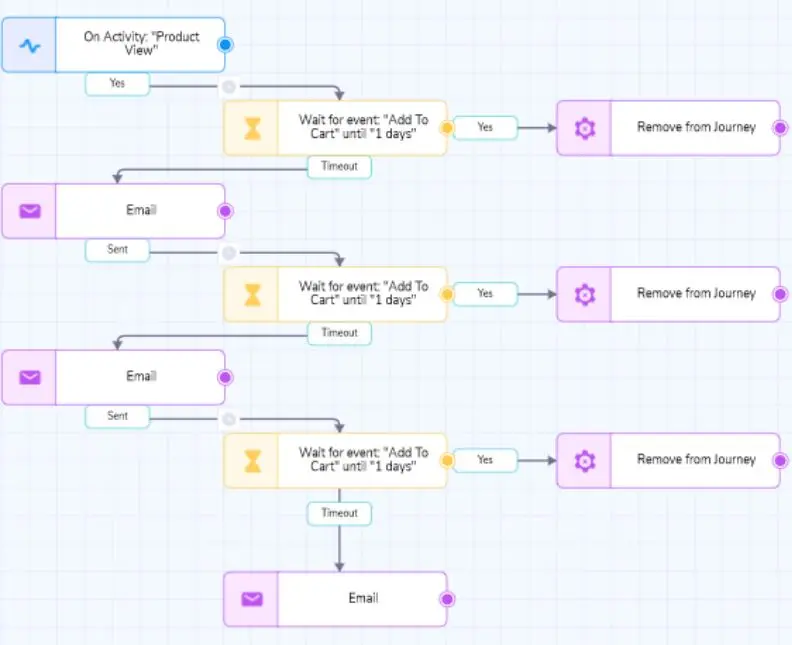
When it comes to journey orchestration, there are a lot of technology functions involved. You have to capture, track, and analyze customer data from all possible touchpoints, like your website, ads, social media, etc.
With the help of AI, customer journey orchestration software can turn all that data into insights that you can actually use. Using these insights, you can create hyper-personalized customer journeys at every stage or tweak existing campaigns depending on the performance and insights received.
For instance, your customers may prefer receiving promotional emails in the morning, visiting your website during lunch break, or encountering social media ads instead of SMS messages. With customer journey orchestration software, you can create specific journeys that trigger content based on the above criteria. This creates a great customer experience, leaving a positive impression in customers’ minds.
5 Best Customer Journey Orchestration Platforms Out There
1. Netcore
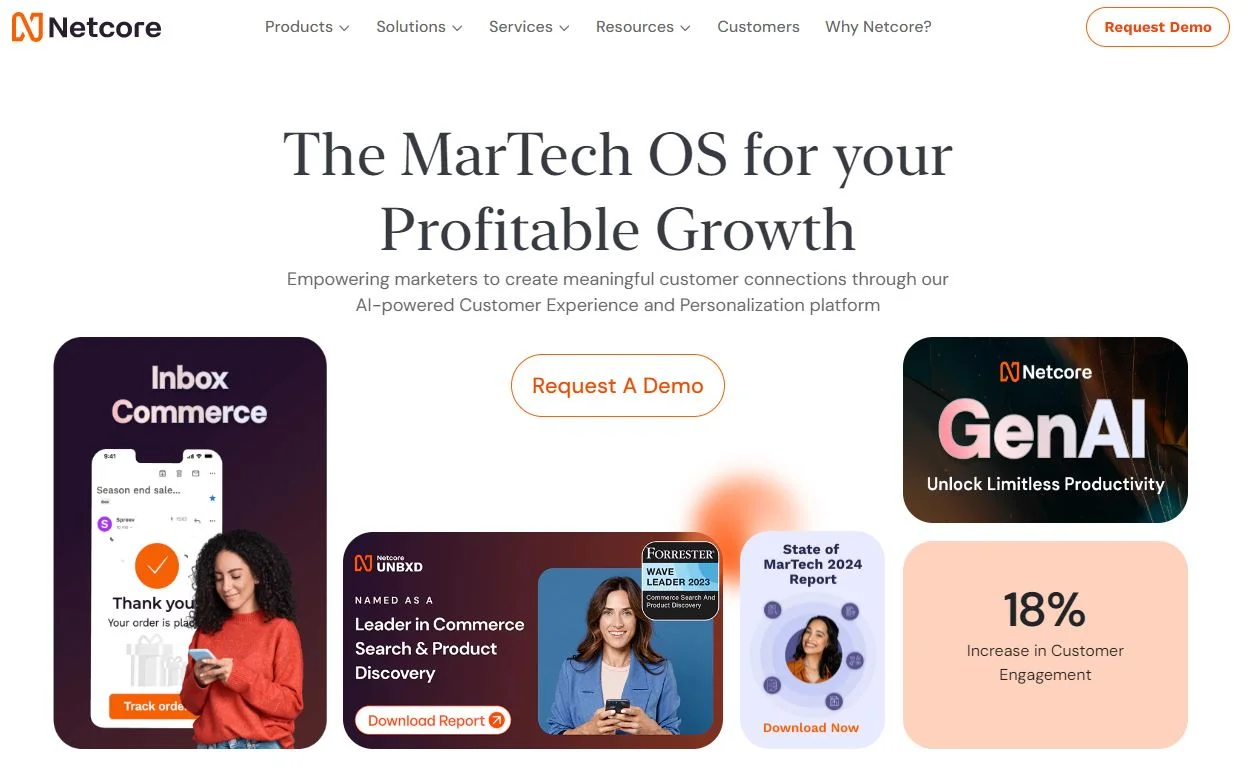
Netcore is an all-in-one customer engagement software that boosts marketing efforts. Netcore’s customer journey orchestration platform stands out for its sophisticated approach to managing and enhancing customer interactions across various touchpoints. The platform comes with a drag-and-drop no-code journey creator. The platform leverages real-time data and predictive analytics to deliver highly personalized experiences that resonate with each customer’s unique needs and preferences.
Dynamic Segmentation
This feature allows real-time classification of customers based on multiple variables such as purchasing behavior, activity levels, and personal demographics. By creating highly defined segments, marketers can execute campaigns that are significantly more targeted and effective.
Behavior-triggered Messaging
Capitalize on customer actions by deploying automated messages that are triggered by specific behaviors. This feature ensures that communications are not only timely but also highly relevant, enhancing the chances of engaging customers precisely when they are most responsive.
Cross-channel Integration
Offers a unified approach to customer communication by integrating various channels such as email, WhatsApp, SMS, and push notifications. This ensures a cohesive brand experience across all channels, helping to maintain consistency in the customer journey regardless of the touchpoint.
Predictive Analytics
Employs advanced algorithms to forecast future customer behaviors based on historical data. This proactive feature allows marketers to anticipate customer needs, tailor communications, and optimize campaigns to address those needs ahead of time.
Journey Optimizer with Netcore’s Co-Marketer
Netcore’s Co-marketer AI takes no-code journey builder capabilities one step further. With the help of the co-marketer’s AI capabilities, you can select the most effective channels for your campaigns, ensuring you engage your audience effectively and boost conversions. It automates your campaign workflows to save time, systematically recommending and routing your highest-performing campaigns to drive significant revenue growth. This allows you to strategize the perfect timing for your notifications and triggers, incorporating optimal wait times to maximize the success of your campaigns
2. Klaviyo
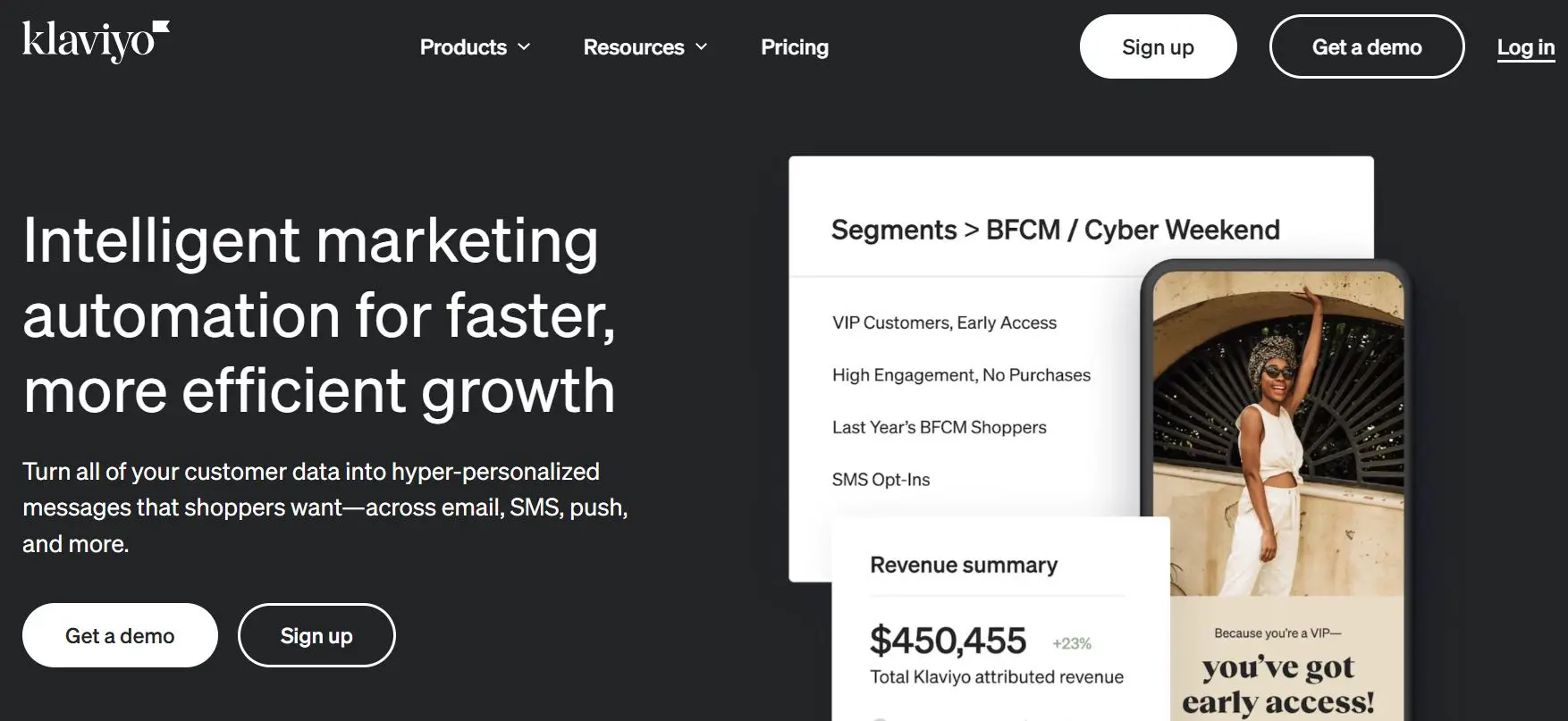
Klaviyo stands out as a premier marketing automation and customer engagement platform geared to foster business growth and fortify customer interactions.
It offers a wide range of features and functionalities to create personalized and targeted marketing campaigns.
Here are some key highlights of Klaviyo:
With Klavio, you can segment audiences based on various criteria, such as demographics, behavior, and purchase history. This helps in delivering highly relevant and personalized messages to different customer segments.
Klaviyo offers powerful automation tools that enable businesses to create workflows and trigger personalized messages based on customer actions and behaviors. This helps in delivering timely and targeted messages to nurture leads and drive conversions.
Klaviyo taps into customer engagement solutions to heighten personalization, ranging from bespoke product suggestions to dynamic content. This includes personalized product recommendations, dynamic content, and tailored messaging to create a personalized experience for each customer.
Klaviyo provides robust analytics and reporting features to track the performance of marketing campaigns. Businesses can monitor key metrics, such as open rates, click-through rates, and conversions, to gain insights and optimize their marketing strategies.
Klaviyo seamlessly integrates with a variety of platforms, CRMs, and other marketing tools, making it easy to synchronize data and automate workflows.
3. Splio
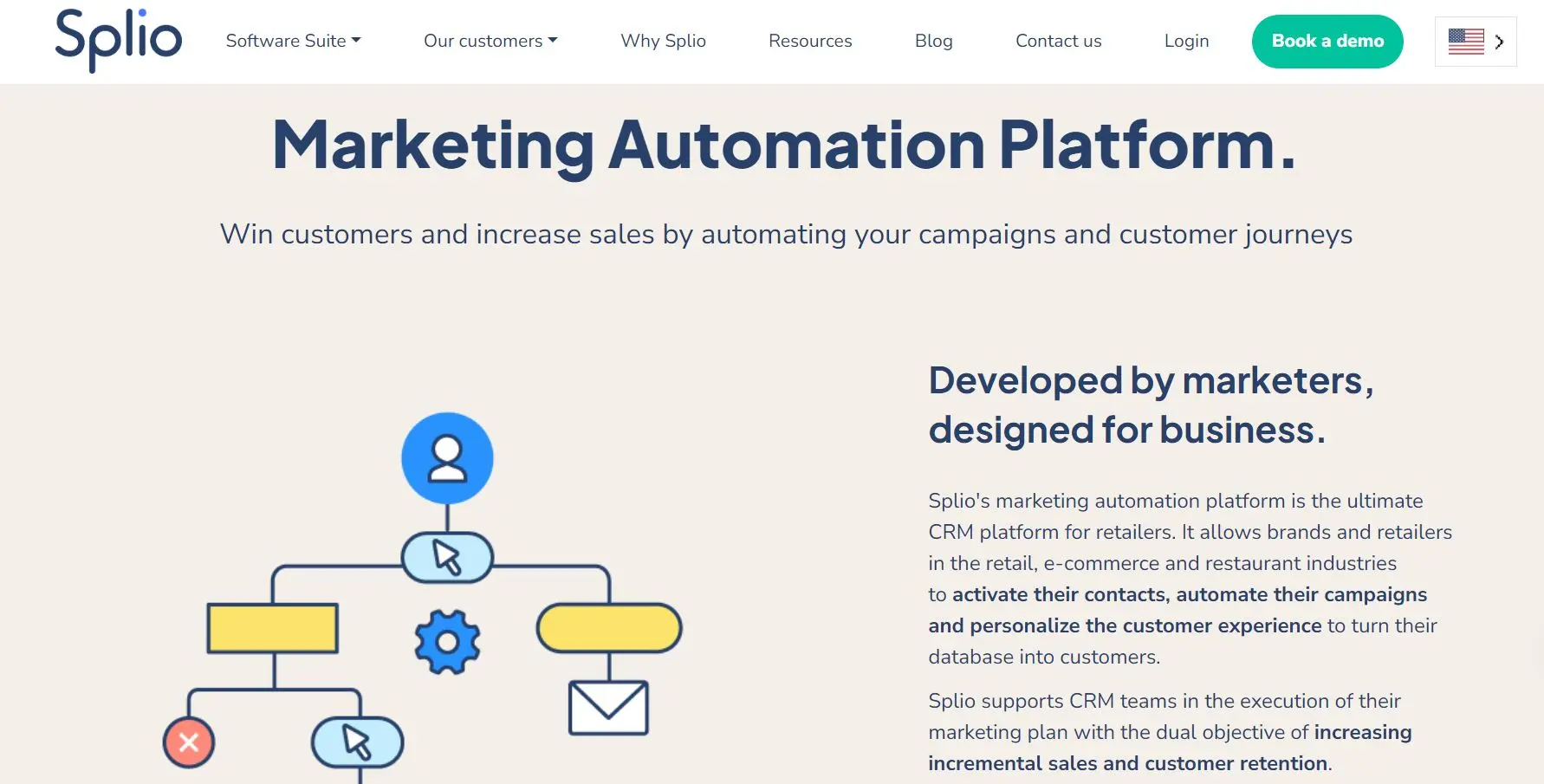
Splio, another noteworthy customer engagement software, amplifies customer engagement considerably.
With a wide array of features and functionalities, Splio empowers businesses to create targeted and personalized marketing campaigns that drive results.
Here are some key highlights:
With Splio, you can categorize your customer base and aim for particular groups with customized messages. This way, you can provide personalized content, make a more significant impact, and enhance customer engagement.
Splio helps you reach your customers across multiple channels, including email, SMS, mobile push notifications, and more. This omnichannel approach ensures that your messages are delivered to your customers wherever they are, increasing your chances of capturing their attention.
Splio simplifies your marketing workflows by automating repetitive tasks. From welcome emails to abandoned cart reminders, you can set up automated campaigns that run smoothly and effectively, saving you time and effort.
Splio provides powerful analytics and reporting capabilities, giving you valuable insights into your marketing performance.
Track key metrics, measure campaign success, and make data-driven decisions to continuously optimize your marketing efforts.
With Splio, you can create dynamic and personalized content that resonates with your audience.
From personalized product recommendations to dynamic email content, you can deliver a tailored experience that grabs attention and drives conversions.
4. Connectif
Connectif is a great marketing automation tool that can help you engage with your customers better and grow your business.
It stands out as a reliable customer engagement tool tailored to refine your marketing efforts.
Here are some key highlights of Connectif:
Connectif lets you reach your customers on different channels like email, SMS, push notifications, and more. This customer engagement platform guarantees that your communications find your customers in their preferred spaces.
With Connectif, you can group your customers based on things like demographics, behavior, and purchase history.
This powerful customer engagement solution allows you to curate messages that resonate with specific audiences, amplifying relevance and engagement. By delivering more relevant content, you can get them more engaged and boost your results.
Connectif makes your marketing life easier by taking care of repetitive tasks for you. You can set up automated campaigns that are triggered by specific customer actions or events, like welcome emails, abandoned cart reminders, or personalized follow-ups.
With Connectif, you can level up your messaging game by creating personalized and dynamic content that really speaks to your audience.
Imagine adding your customers’ personal data right into your messages or tweaking the content to match their behaviors – it’s like having a conversation tailored just for them! This personalized touch not only grabs attention but also works wonders in boosting conversions.
You can become a marketing magician by testing and tweaking your campaigns to perfection.
Try out different subject lines, play around with content, or even mix things up with various call-to-action buttons – the possibilities are endless! By experimenting and finding what works best, you’ll unlock the secret to boosting your campaign’s performance and getting those impressive results you’ve been dreaming of.
Connectif provides comprehensive analytics and reporting features to track the performance of your marketing campaigns.
You can measure key metrics, such as open rates, click-through rates, and conversion rates, to gain insights and make data-driven decisions to improve your marketing strategies.
5. Braze
Braze emerges as a formidable customer engagement solution designed to craft memorable, tailored marketing campaigns.
With Braze, you can unleash your creativity and create personalized marketing campaigns that leave a lasting impression.
Check out some key highlights of Braze:
Using Braze, you can effortlessly connect with your customers through multiple channels. Whether it’s a catchy email, a timely push notification, or a friendly in-app message, you’ll be able to reach them wherever they are. Braze’s customer engagement solutions ensure that businesses remain attuned to their audience’s preferences.
It’s all about being in sync with your audience and delivering the perfect message that grabs their attention and keeps them hooked.
Braze’s customer engagement platform transforms each interaction into a personalized experience.
Whether it’s addressing them by their name, sending tailored messages based on their preferences, or acknowledging their past behaviors, you’ll make each customer feel seen and valued.
It’s all about creating meaningful connections and making your customers go “Wow!” with every interaction.
With Braze, you can send messages that are spot-on when your customers take specific actions. It elevates customer engagement by responding promptly to user actions.
Set up triggers based on customer behaviors like making a purchase or leaving items in their cart, and watch the magic happen.
Braze will automatically send targeted messages to keep your customers engaged and coming back for more.
Braze’s got your back with its powerful analytics capabilities. Track how your campaigns are performing, measure user engagement, and unlock valuable insights that will supercharge your marketing strategies.
With Braze, you’ll have all the tools you need to drive better results and make smarter decisions.
Braze integrates with other tools and platforms, making it easy to connect and streamline your marketing efforts.
Whether it’s your CRM, e-commerce platform, or data analytics tool, Braze plays well with others.
Factors to Consider When Choosing Journey Orchestration Platforms?
A genuine customer engagement solution for journey orchestration should excel in three primary areas: customer data analysis, content management, and content distribution. That’s the trifecta!
When selecting a journey orchestration platform, several key factors must be considered to ensure it effectively meets your marketing needs.
- Communication Channels and Data Management: Ensure the platform can manage all communication channels and related analytics from a unified interface.
- AI and Automation Capabilities: Check for advanced AI features that facilitate the creation and optimization of omnichannel customer journeys, as well as automation capabilities for efficient journey orchestration.
- Support for Transactional Messages: The platform should support omnichannel journeys for essential transactional messages, such as OTPs, password resets, and order updates.
- Usability and Support Features: Look for features like drag-and-drop journey orchestration tools, real-time performance metrics, and the ability to conduct A/B testing within journey paths.
- Customization and Flexibility: The platform should offer customizable journey templates, support for geo-location-based triggers, and detailed analytics to tailor and optimize the customer experience.
Conclusion
Journey orchestration platforms have become a powerful tool for businesses to skyrocket customer engagement. They automate repetitive tasks, freeing up resources for more complex issues and increasing efficiency.
These platforms have the capability to generate high-quality leads, enabling targeted marketing campaigns and higher conversion rates. Integration with business systems ensures accurate and context-aware responses.
Additionally, scalability, personalization, and automation can be achieved without additional staff. Proactive engagement and valuable analytics help optimize performance and make data-driven decisions, ultimately driving business success.
With Netcore by your side, you can supercharge your engagement and retention game and unlock new growth opportunities for your brand.