
Email 
Turn browsers into buyers, buyers into regulars
Connect store aisles and screens seamlessly
Earn trust with secure, compliant engagement
Move enquiries from showroom to ownership
Keep audiences watching, reading, subscribing
Fill bookings, bring travellers back again
Lift enrolments, keep learners on track
Scale engagement fast, without scaling cost
Embed engagement into your product, ship faster
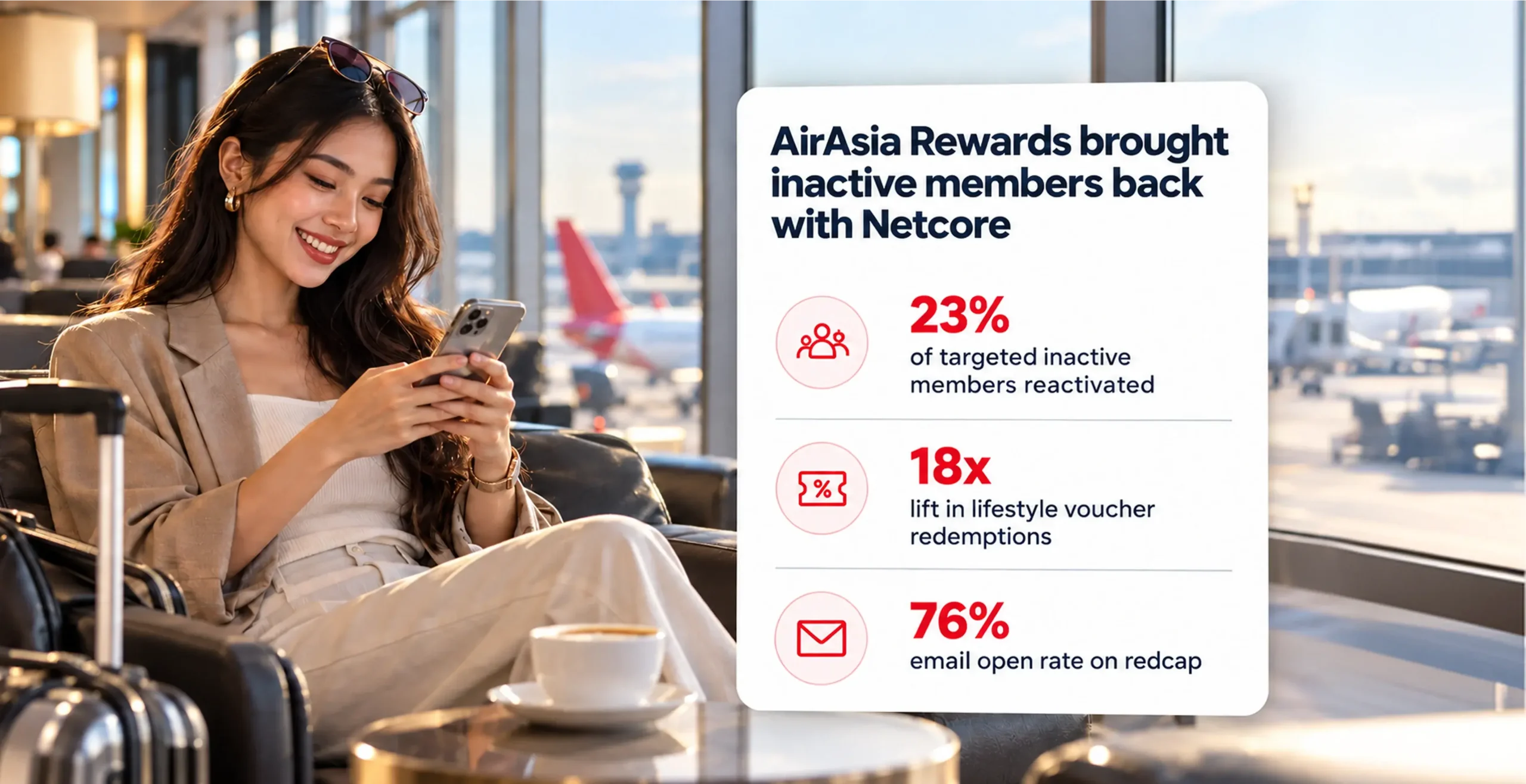
AirAsia Rewards saw an opportunity to reconnect with members and strengthen engagement beyond flight bookings. The focus was on making points redemption more accessible and relevant, particularly for members with lower points balances. By giving members simple ways to turn their points into everyday rewards, the programme aimed to encourage redemption and create more reasons to stay engaged between trips.
Working with Netcore, AirAsia Rewards centred its winback campaign on rewards redeemable from just 5 points, giving members an accessible way to rediscover the value of their points and reconnect with the programme. This was complemented by the transformation of its print magazine into a digital engagement channel.
The approach helped re-engage lapsed members, drive higher lifestyle voucher redemptions and build more consistent engagement beyond the core flight journey.
Targeted inactive members reactivated
Higher voucher redemptions vs. baseline
Sustained monthly magazine open rate
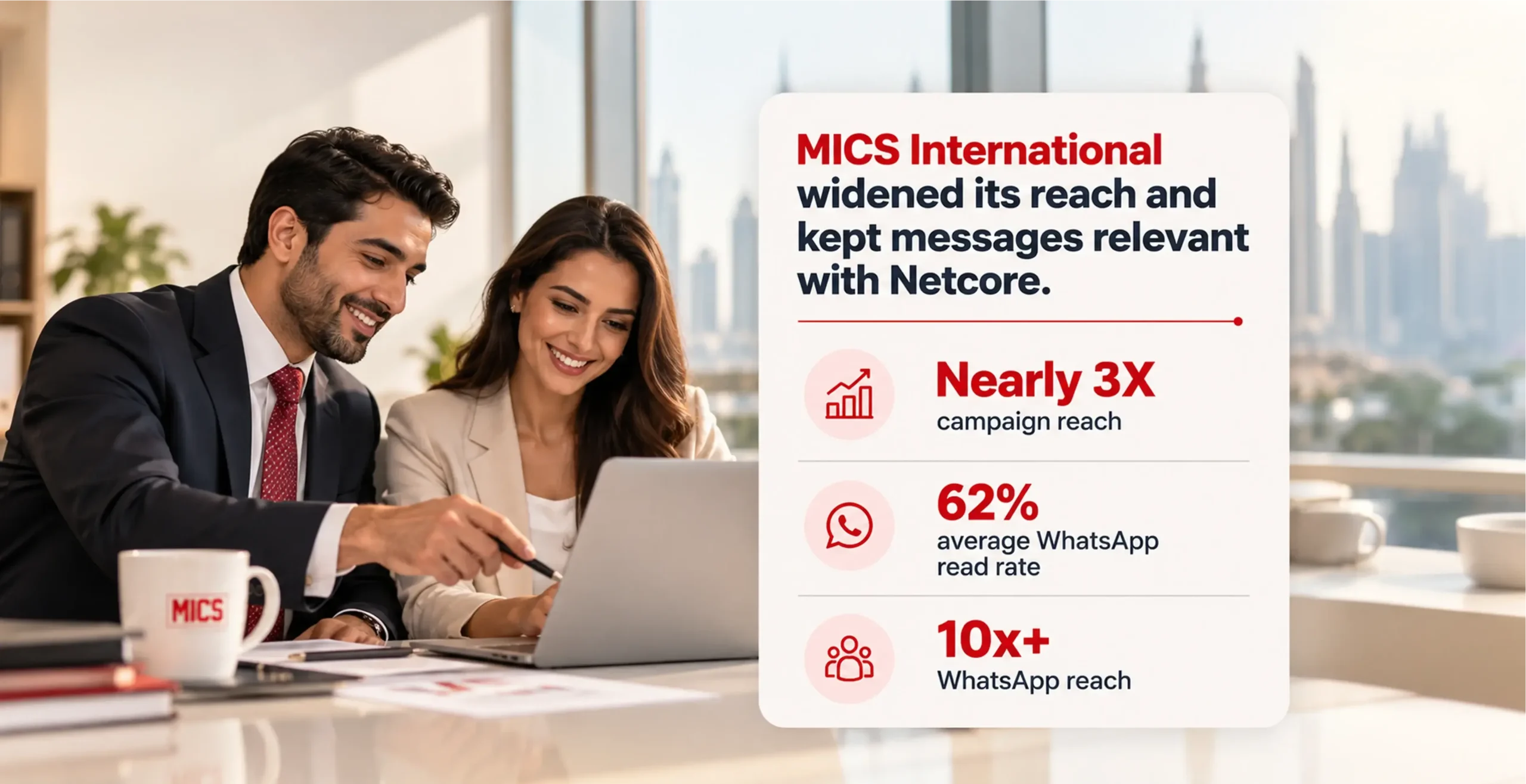
Since 2023, MICS International has run a continuous cadence of regulatory communication for clients navigating one of the world’s fastest-changing tax environments – Corporate Tax, VAT, AML, and transfer pricing rules that have all shifted within a few years of each other. Over that time, MICS’s contact base grew from roughly 40,000 to more than 117,000. Netcore helped the team keep its communication relevant and dependable at that size, through topic-based segmentation and a second channel for time-sensitive updates.
Working with Netcore, MICS organised its email programme by regulatory theme rather than as one-size-fits-all sends, and layered WhatsApp alongside email specifically for the moments that couldn’t wait – webinar reminders, training notices, filing deadlines. Both channels now run from a single platform, giving the team one view of what’s landing and what isn’t.
Expansion in campaign reach
Average email delivery rate
Average WhatsApp read rate
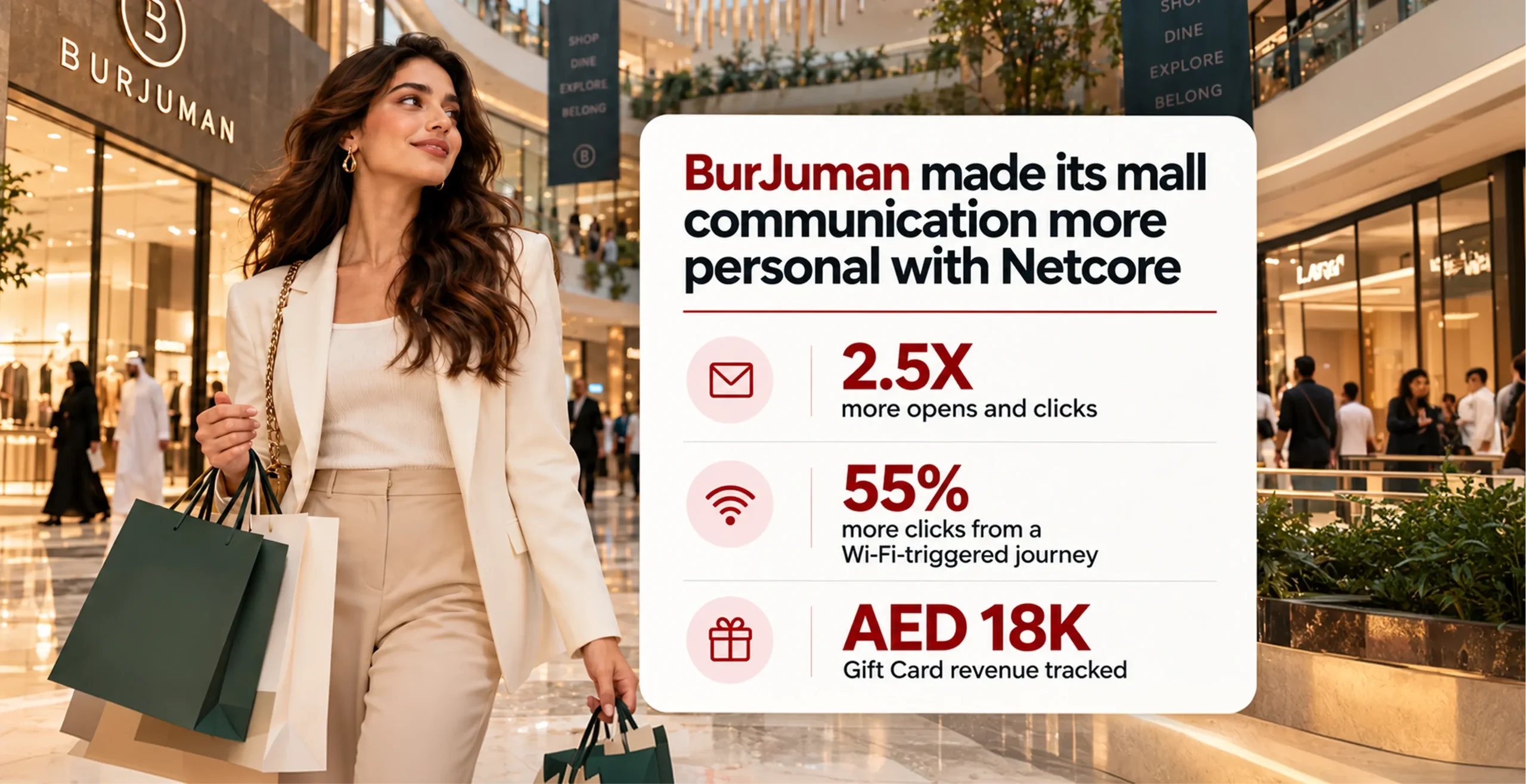
BurJuman is more than just a shopping destination – it is a community hub in the heart of Bur Dubai where residents, tourists and shoppers come to connect. And what keeps this community together is communication that feels personal. However, of the 1.40 million members BurJuman communicated with regularly, the messages felt anything but personal. Most of the database was reached through broad, one-size-fits-all email campaigns. Of the 1.40 million people BurJuman could reach, only 558.9K had been sorted into the lifestyle segments the brand had already built.
Netcore worked with BurJuman to turn this around. They worked closely with BurJuman’s CRM team to revamp the member database – from being a fixed, generic send calendar to a responsive list built on real-time behavior signals such as Wi-Fi activity and campaign feedback. The shift touched everything from broad brand campaigns to the mall’s Gift Card programme and its invitation-only Society membership, and it showed up in both engagement and revenue.
Higher email reach vs. H2 2025
More opens and clicks vs. H2 2025
More clicks from Wi-Fi-triggered journey vs. broad send
Gift Card revenue from 22 tracked orders

When a traveller books a bus ticket, an unseen email isn’t a missed promotion – it is a broken transaction. redBus had the content and timing right, but a visibility gap was quietly capping the reach of every booking confirmation, reminder, and travel update sent. Working together, redBus and Netcore identified why these messages were slipping out of view – and used NIVO – Netcore Inbox Visibility Optimization – programme to drive one of the most sustained visibility turnarounds either team has tracked.
Open rate increased
Click rate increase
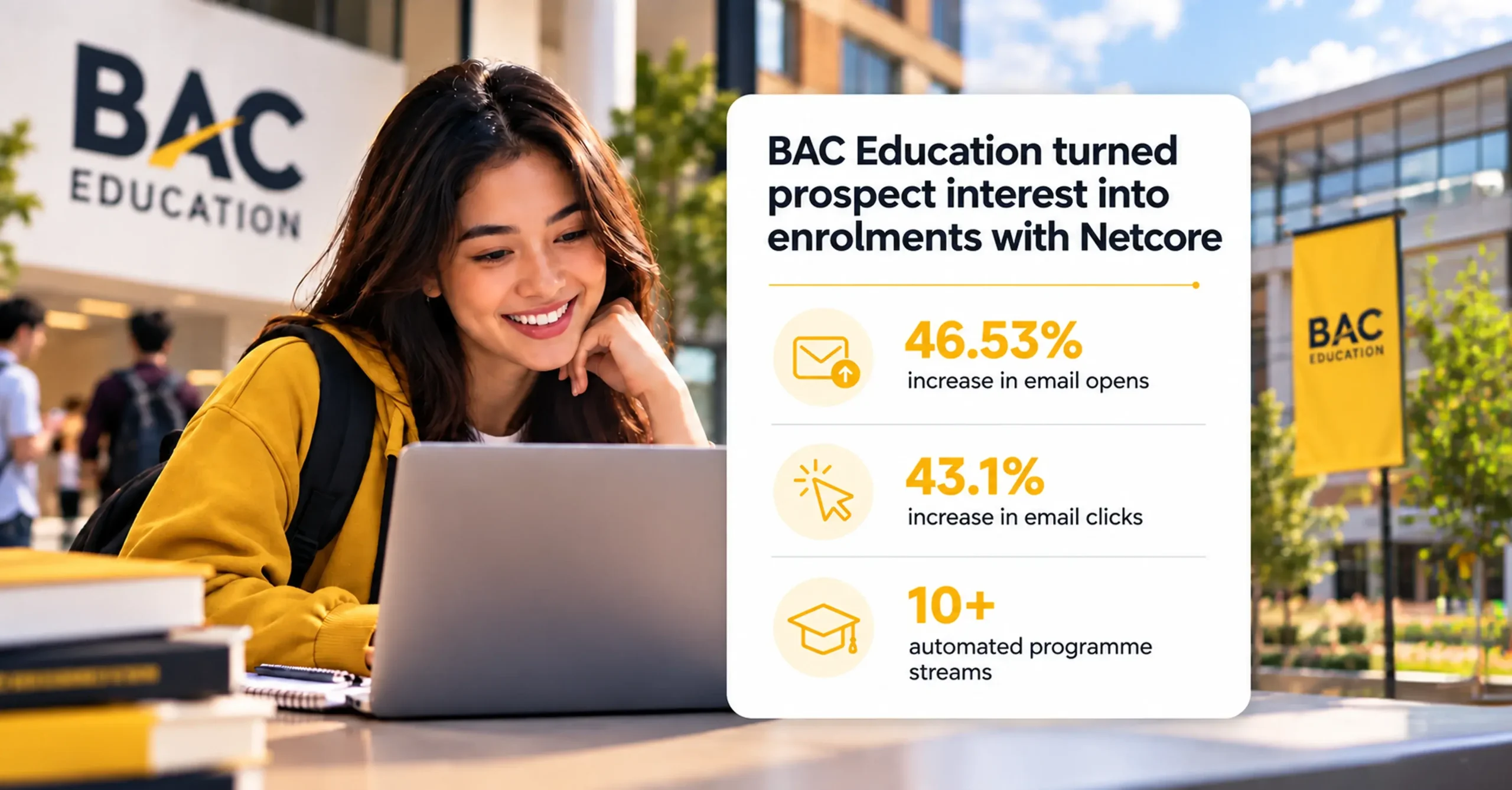
For a private education group managing 10+ academic programmes across multiple institutions, every prospective student’s journey is unique, yet most communication strategies treat them all the same.
BAC Education wanted to break free from generic, batch-and-blast email campaigns and build an intelligent, always-on engagement engine that could nurture prospects from first interest to active enrollment without scaling headcount.
In partnership with Netcore, BAC Education deployed a fully automated lifecycle marketing system powered by programme-level personalisation, behaviour-triggered journeys, A/B testing, and AI-driven Send Time Optimisation.
When the right message reaches the right student, engagement follows. And so does enrolment.
Growth in Email Opens (Q-o-Q)
Growth in Email Clicks (Q-o-Q)
Programme streams on Automated journeys

AJobThing sends email at serious volume, across Malaysia and Indonesia, to employers and jobseekers alike – acting as the connective tissue between two sides of a hiring marketplace. As the programme scaled, the team’s visibility into what actually worked hadn’t scaled with it. The real risk wasn’t sending too little – it was sending at volume with no clear read on what was working, until the channel itself started to wear out. And that gap had a simple cause: campaign reviews ran on manual spreadsheet exports, with no fast way to see what was changing week to week
AJobThing partnered with Netcore.ai to move off manual, spreadsheet-heavy campaign reviews and onto Insight Agent, one of Netcore’s suite of agents that gives you actionable insights. Instead of the CRM team losing days each week to exports and cross-referencing, they simply asked Insight Agent about their full campaign performance and got back the relevant data, the key highlights, a summary, and recommendations, in one exchange.
One of those recommendations reshaped an entire week’s send strategy, and it ran against instinct: target a smaller, sharper audience instead of the whole list. On a programme already worried about list fatigue, sending less felt risky. It turned out to be the fix.
In a representative week-over-week comparison, that shift produced:
Total clicks increased
Click-to-open rate doubled
Unsubscribe rate reduced
Send volume reduced efficiently

3 MIN WATCH

3 MIN WATCH
2 MIN WATCH
2 MIN WATCH
3 MIN WATCH
3 MIN WATCH
4 MIN WATCH
3 MIN WATCH



Book a 30-minute walkthrough and see how Netcore could work for your stack.
Book a Demo →