Diwali Engagement Playbook is now


TL;DR
- Customer journey mapping helps brands visualize customer experiences, while journey analytics reveals how customers actually behave across touchpoints.
- The best platforms combine journey visualization, behavioral and funnel analytics, real-time data, predictive insights, and journey activation to identify drop-offs, optimize experiences, and drive conversions and retention.
- Netcore: Best for AI-powered journey analytics with real-time omnichannel activation and personalization.
- Adobe Customer Journey Analytics: Best for advanced cross-channel analytics within the Adobe ecosystem.
- Salesforce Marketing Cloud: Best for CRM-connected journey orchestration and enterprise marketing automation.
- Mixpanel: Best for product analytics, behavioral tracking, funnels, and retention analysis.
- Amplitude: Best for digital product analytics, journey discovery, and behavioral insights.
- UXPressia: Best for visual customer journey mapping, personas, and collaborative experience design.
- Smaply: Best for customer journey mapping, service blueprints, and CX-focused visualization.
Customer journeys in 2026 are more complex than ever, spanning websites, apps, email, social media, and messaging channels. Understanding how customers move across these touchpoints is critical for improving conversions, reducing drop-offs, and driving retention.
While journey mapping visualizes the customer experience, journey analytics reveals how customers actually behave, where they drop off, what creates friction, and which paths drive conversion. The right journey orchestration platform brings these insights together with real-time data, predictive analytics, and journey activation to help brands turn customer behavior into measurable growth.
How Do Customer Journey Analytics and Mapping Work Together?
Journey mapping shows what the journey looks like. Journey analytics shows what is actually happening within that journey. It all starts with how to create a customer journey map.
For example, a customer journey map may show that a customer moves from an ad to a product page, then to checkout. Journey analytics can reveal that customers from a specific segment frequently visit the product page multiple times before abandoning checkout, indicating a potential friction point.
Together, these capabilities help brands visualize, understand, optimize, and activate customer journeys based on real customer behavior.
Key Capabilities to Look For
When evaluating customer journey analytics and mapping platforms, look for the following capabilities:
- Cross-channel journey visualization: The ability to visualize interactions across channels and touchpoints in a single view.
- Behavioral path analysis: Understand the actual paths customers take and identify patterns across events and interactions.
- Funnel and conversion analysis: Track movement through key journey stages and identify conversion bottlenecks and drop-offs.
- Cohort and segmentation analysis: Compare journey behavior across different customer groups, lifecycle stages, value tiers, or behavioral segments.
- Real-time customer data: Access current behavioral signals and customer interactions to understand what is happening in the journey now.
- Journey drop-off identification: Pinpoint where customers abandon journeys and uncover potential friction points.
- Predictive analytics: Use behavioral patterns and AI to identify likely purchase, churn, conversion, or engagement outcomes.
- Journey orchestration and activation: Turn insights into action by creating segments, triggering journeys, and delivering personalized experiences.
- Integrations: Connect journey data with CDPs, CRMs, analytics platforms, ecommerce systems, and marketing engagement tools to create a more complete view of the customer.
The most effective platforms go beyond simply mapping the customer journey. They connect data, analytics, intelligence, and activation, helping brands understand what customers are doing, why they are doing it, and what action to take next.
Top 7 Customer Journey Analytics and Mapping Platforms
1. Netcore
Netcore combines a unified customer data platform, visual journey orchestration, behavioral analytics, AI-powered insights, and omnichannel activation to help brands understand and optimize customer journeys end-to-end. Instead of simply mapping customer paths, Netcore enables marketers to analyze real-time behavior, identify journey bottlenecks, predict customer intent, and immediately activate personalized experiences across channels.
Standout Features & Integrations
- Unified Customer View: A real-time CDP that brings together customer data across devices and sources to create 360° profiles for journey analysis and personalization.
- Visual Journey Mapping & Orchestration: A drag-and-drop journey builder with visual nodes to design, map, automate, and optimize customer journeys and funnels.
- Behavioral & Funnel Analytics: Built-in funnel, cohort, RFM, and user-path analysis to identify key touchpoints, drop-offs, bottlenecks, and high-performing customer flows.
- AI-Powered Insights & Predictive Analytics: Native AI capabilities, including predictive segmentation, “likely-to” models, and intelligent insights, help marketers anticipate customer behavior and optimize journeys.
- Omnichannel Orchestration: Execute personalized customer journeys across 13+ channels, including Email, Push, WhatsApp, RCS, In-App, Web, and SMS, from a unified journey framework.
- Prebuilt Journey Templates & Automation: Ready-to-use lifecycle journeys for use cases such as cart abandonment, low-stock alerts, birthdays, and customer reactivation help accelerate journey deployment.
- Enterprise Integrations & Delivery: Open APIs, partner integrations, owned delivery infrastructure, and managed onboarding support enterprise-scale implementations and migrations.
- Operational Dashboards & Reporting: Monitor customer interactions, funnel performance, cohort trends, and campaign ROI to continuously identify opportunities for journey optimization.
Pros
- Analytics and activation within a unified platform
- Real-time behavioral insights
- Strong segmentation and predictive capabilities
- Ability to move from insight to campaign activation quickly
- Broad omnichannel capabilities
- Strong fit for ecommerce and enterprise customer engagement
Cons
- Broad platform capabilities may require onboarding and enablement
- May be more comprehensive than required for smaller organizations focused only on journey visualization
2. Adobe Customer Journey Analytics
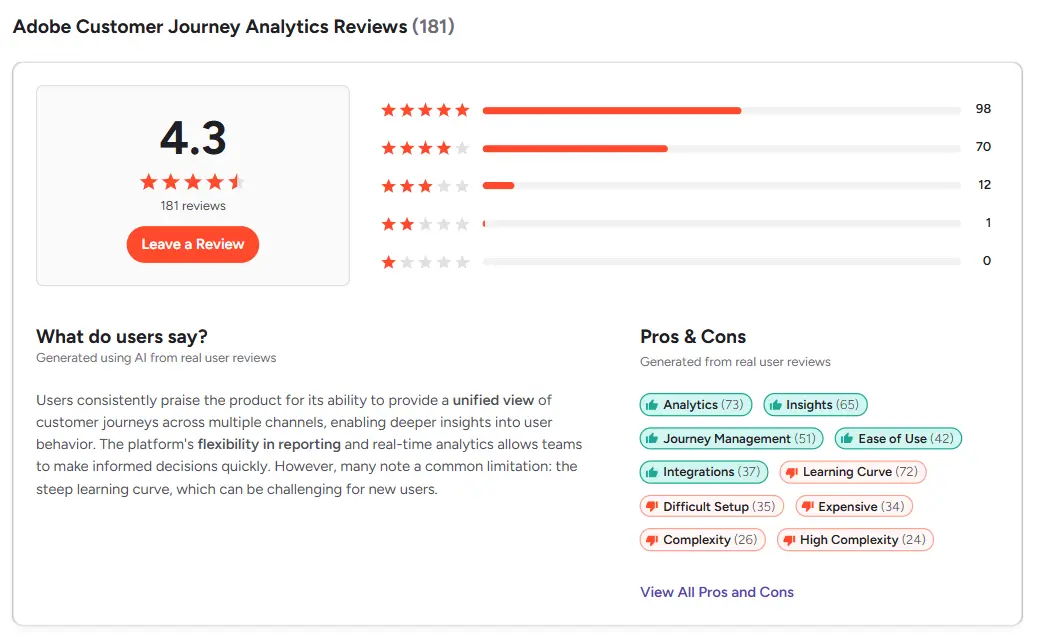
Adobe Customer Journey Analytics is an enterprise analytics solution designed to connect customer interactions across multiple touchpoints and provide a unified view of customer journeys.
Standout Features & Integrations
- Cross-channel journey analysis
- Customer journey visualization
- Real-time and historical data analysis
- Attribution and pathing analysis
- Integration with Adobe Experience Platform
- Integration with Adobe Experience Cloud applications
- Customer segmentation and analytics
Pros
- Strong enterprise analytics capabilities
- Deep integration with Adobe ecosystem
- Powerful cross-channel analysis
- Highly customizable for complex enterprise requirements
Cons
- Complex implementation
- Steep learning curve
- Can require significant technical resources
- Potentially high total cost of ownership
3. Salesforce Agentforce
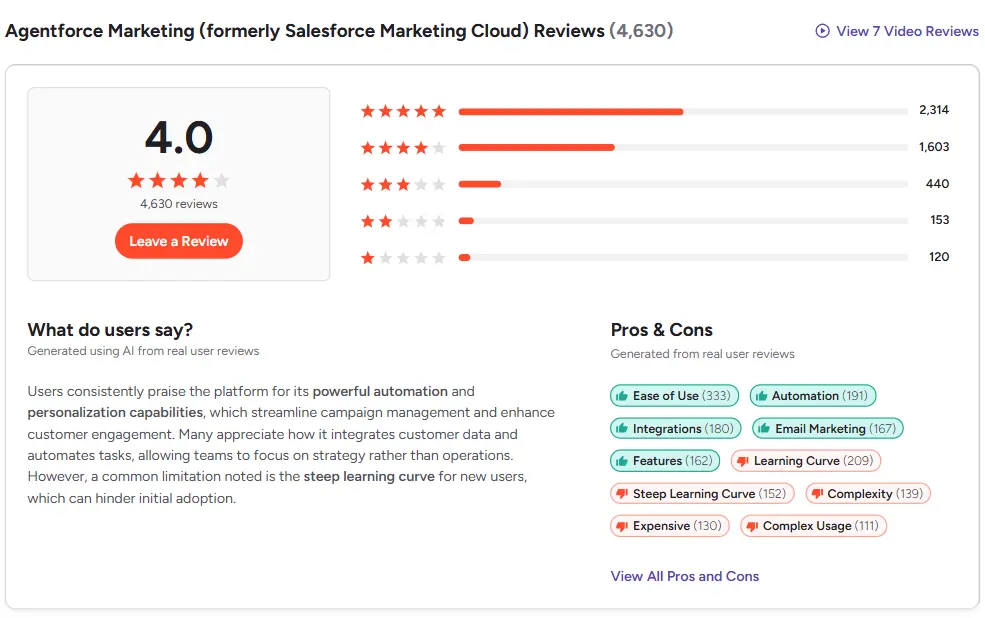
Salesforce Marketing Cloud supports customer journey analysis and orchestration through its broader Salesforce ecosystem, connecting marketing engagement with CRM and customer data.
Standout Features & Integrations
- Journey Builder
- Customer journey orchestration
- Cross-channel campaign tracking
- CRM integration
- Salesforce Data Cloud integration
- Email, SMS, Push, and other channel engagement
- Customer segmentation and personalization
Pros
- Strong CRM integration
- Extensive enterprise ecosystem
- Powerful journey orchestration
- Suitable for complex customer lifecycle programs
Cons
- Can be complex to implement and manage
- Advanced capabilities may require multiple Salesforce products
- High potential total cost of ownership
- Analytics and activation can span multiple Salesforce solutions
4. Mixpanel
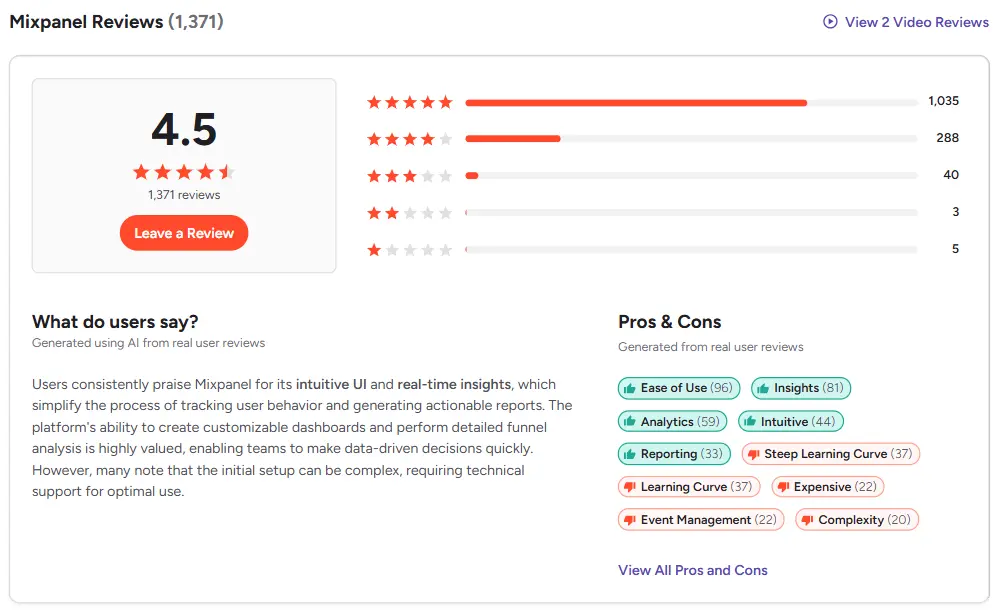
Mixpanel is a product analytics platform focused on understanding how users interact with digital products and identifying behaviors that influence activation, conversion, and retention.
Standout Features & Integrations
- Event-based analytics
- User journey and path analysis
- Funnels
- Retention analysis
- Cohort analysis
- Product usage insights
- A/B testing integrations
- Data warehouse and CDP integrations
Pros
- Strong product analytics
- Excellent event-based behavioral analysis
- Intuitive funnels and retention reports
- Good fit for SaaS and product-led businesses
Cons
- Primarily focused on product analytics rather than full marketing journey orchestration
- Cross-channel marketing activation may require integrations
- Can require careful event instrumentation
5. Amplitude
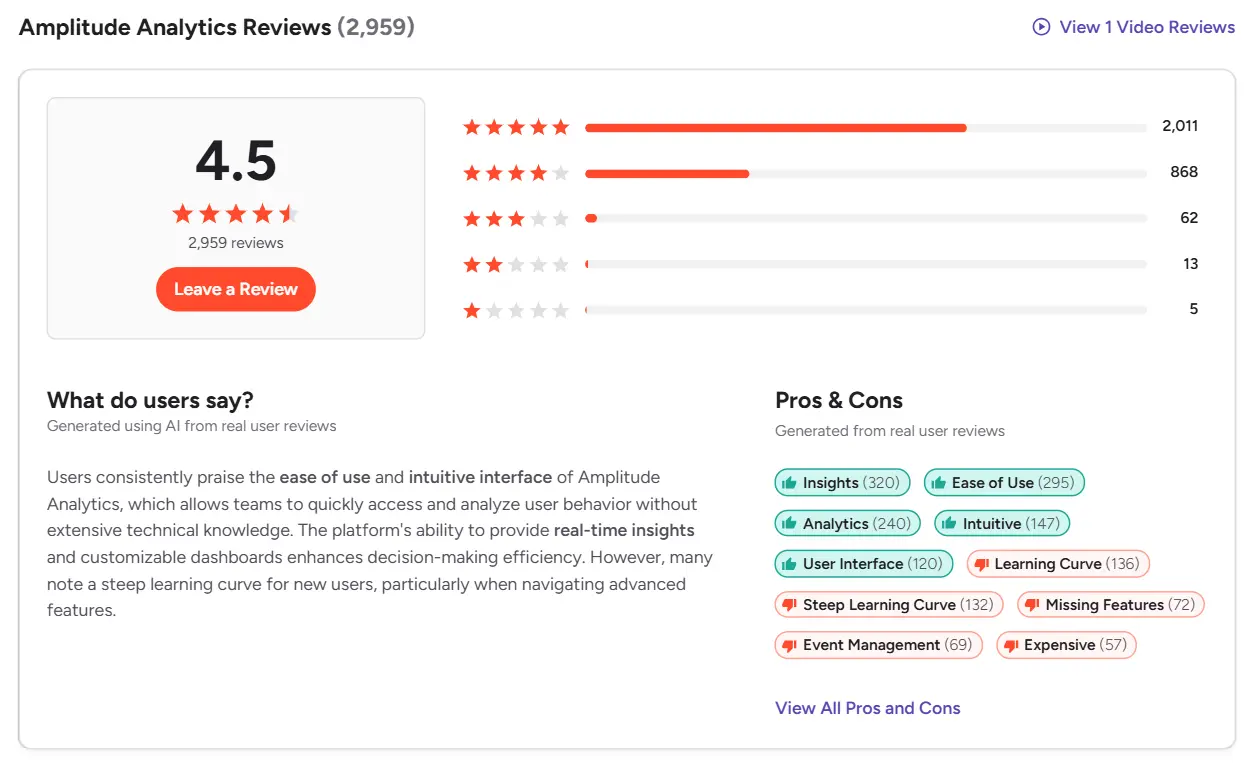
A digital analytics and product intelligence platform that helps businesses understand user behavior, discover customer journeys, and identify opportunities to improve conversion and retention.
Standout Features & Integrations
- Journey and path analysis
- Funnel analysis
- Cohort analysis
- Retention analytics
- Behavioral segmentation
- Experimentation
- Product analytics
- Integration with CDPs, data warehouses, and marketing tools
Pros
- Strong behavioral and product analytics
- Powerful journey discovery
- Excellent funnel and retention analysis
- Strong visualization capabilities
- Well suited for digital products and SaaS
Cons
- More focused on product analytics than end-to-end customer engagement
- Activation often depends on integrations with other marketing platforms
- Can require technical expertise for advanced implementations
6. UXPressia
UXPressia is a dedicated customer journey mapping and experience design platform focused on helping teams visually map customer interactions and identify experience gaps.
Standout Features & Integrations
- Customer journey maps
- Experience maps
- Personas
- Stakeholder collaboration
- Journey visualization
- Emotional journey mapping
- Templates and collaborative workflows
- Integrations with business and collaboration tools
Pros
- Easy-to-use visual journey mapping
- Strong collaboration capabilities
- Excellent for workshops and experience design
- Useful for documenting customer experiences
Cons
- More focused on journey mapping than behavioral analytics
- Limited real-time customer data analysis
- Limited native campaign activation capabilities
7. Smaply
Smaply is a customer experience management and journey mapping platform designed to help organizations visualize customer journeys, personas, and service experiences.
Standout Features & Integrations
- Customer journey mapping
- Persona creation
- Stakeholder maps
- Service blueprints
- Experience visualization
- Collaborative journey planning
- Templates and team workflows
Pros
- Strong customer experience visualization
- Easy collaboration
- Useful for service design and CX teams
- Strong journey mapping capabilities
Cons
- Primarily focused on journey mapping rather than quantitative journey analytics
- Limited behavioral data analysis
- Limited real-time journey monitoring and campaign activation
Customer Journey Analytics vs. Customer Journey Mapping
You need journey analytics if your goal is to drive measurable revenue; you only need journey mapping if you are brainstorming UX concepts. Journey mapping is a static, theoretical exercise that visualizes an idealized path a customer might take. It relies on generalized personas and assumptions. Journey analytics, conversely, is dynamic and empirical. It ingests massive volumes of real-time behavioral data to show you exactly what customers are actually doing across all channels. In 2026, purchasing a standalone mapping tool without the analytics engine to execute and measure the results guarantees a negative ROI on your software investment.
Quick Comparison of Customer Journey Analytics & Mapping Platforms
| Platform | Best For | Journey Analytics | Journey Mapping | Behavioral Analytics | Real-Time Data | Activation |
| Netcore | AI-powered journey analytics + engagement | ✓ | ✓ | Advanced | ✓ | Native |
| Adobe CJA | Enterprise analytics | ✓ | ✓ | Advanced | ✓ | Via ecosystem |
| Salesforce Marketing Cloud | Enterprise journey orchestration | ✓ | ✓ | Advanced | ✓ | Native |
| Mixpanel | Product analytics | ✓ | Limited | Advanced | ✓ | Via integrations |
| Amplitude | Product & behavioral analytics | ✓ | Limited | Advanced | ✓ | Via integrations |
| UXPressia | Visual journey mapping | Limited | ✓ | Limited | No | No |
| Smaply | CX and service design | Limited | ✓ | Limited | No | No |
Choose Netcore if:
- You want analytics and journey activation in one platform
- You need real-time behavioral journey insights
- You want predictive and AI-powered customer intelligence
- You need omnichannel journey orchestration
- You want to turn journey insights into immediate customer engagement
Final Take
Customer journey analytics is evolving from simply visualizing where customers go to understanding why they behave the way they do, and what to do next.
The best platform depends on whether your priority is journey mapping, product analytics, enterprise data analysis, or real-time customer engagement.
For brands that want to connect behavioral intelligence with immediate journey activation, platforms that combine analytics, segmentation, personalization, and omnichannel engagement can offer a significant advantage, turning customer journey data into measurable business outcomes rather than leaving insights trapped in dashboards.