Turn browsers into buyers, buyers into regulars
Connect store aisles and screens seamlessly
Earn trust with secure, compliant engagement
Move enquiries from showroom to ownership
Keep audiences watching, reading, subscribing
Fill bookings, bring travellers back again
Lift enrolments, keep learners on track
Scale engagement fast, without scaling cost
Embed engagement into your product, ship faster

How DeeMoney Rebuilt, Re-engaged, and Reinforced Relationships

In cross-border remittance – where every transaction carries someone’s rent, someone’s loan, someone’s family – trust isn’t a brand attribute. It’s the product. When DeeMoney, Thailand’s largest non-bank remittance player processing one in every three inbound transfers, temporarily paused services, they risked losing the one thing users depended on most: the certainty that when money needed to move, DeeMoney would move it.
When operations resumed in July 2025, the challenge wasn’t just re-engagement – it was trust reconstruction. By partnering with Netcore, DeeMoney deployed a precision-led strategy powered by behavioral segmentation, RFM analysis, predictive churn modeling, and omnichannel orchestration. The result was not a spike. It was a structural shift.
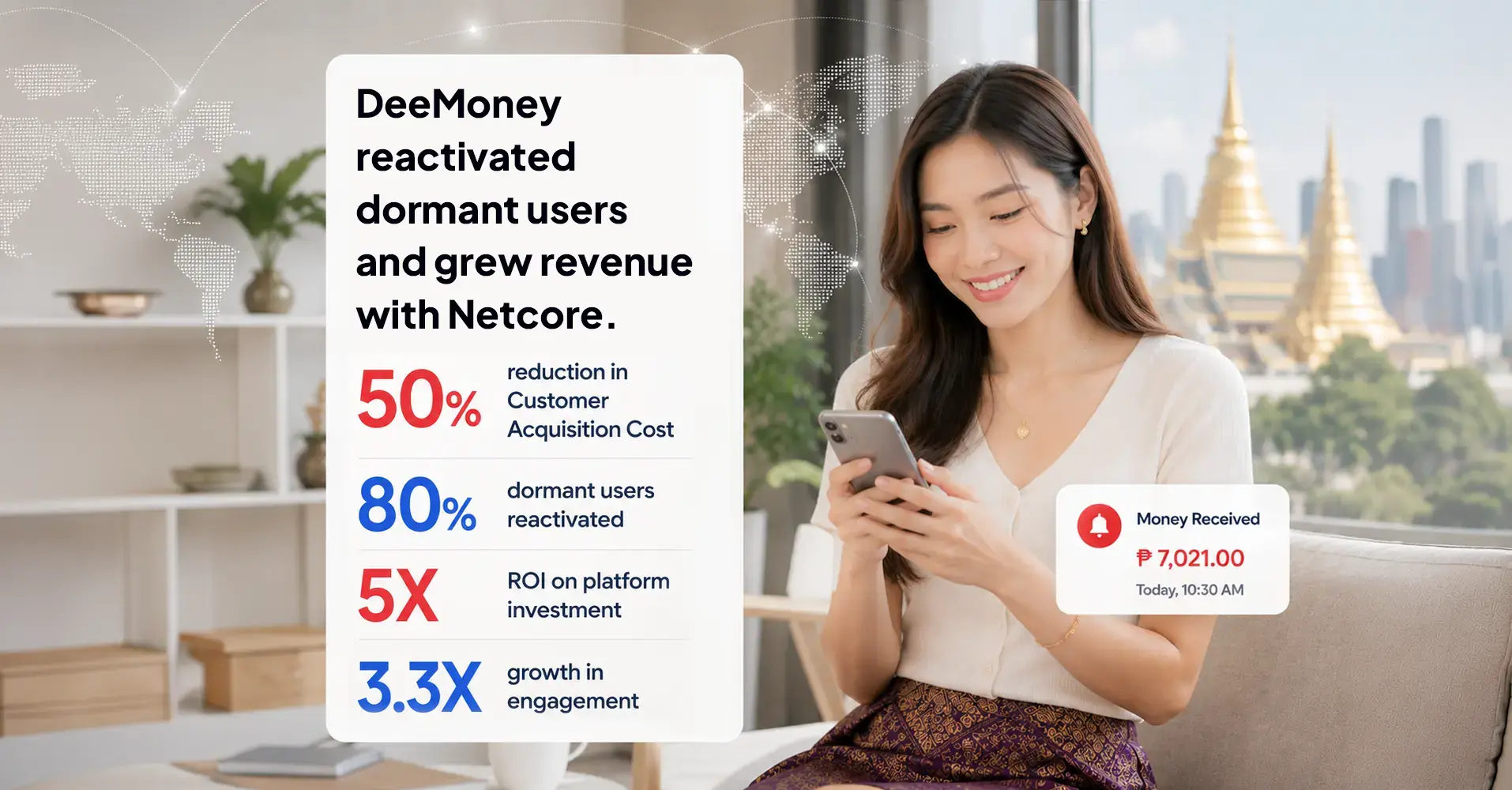
Dormant users successfully reactivated
Growth in engagement – July to January
ROI on Netcore platform investment
Reduction in Customer Acquisition Cost (10,000B → 2,000B)
Increase in Customer Lifetime Value
Growth in transaction volume
DeeMoney achieved its highest revenue growth since 2024 – powered by precision-led engagement, without any additional spend.
DeeMoney is Thailand’s largest non-bank remittance platform. “One in three transactions that come into Thailand go through DeeMoney,” says Vaibhav Gupta, Chief Marketing Officer.
That customer-facing product is built for one primary user: the expatriate. Migrant workers, professionals, and families from India, the Philippines, Myanmar, Japan, the US, the UK, and Europe – living and working in Thailand, sending money home to support the people they left behind. 93–95% of all users are on mobile. And for most of them, DeeMoney is not merely a financial utility. It is a lifeline.
There’s a teacher from the Philippines who has a kid back in Manila and she needs to send urgent money in pesos. And she cannot wait till Monday. There are certain things that just do not understand business and working days.
– Vaibhav Gupta, CMO, DeeMoney
This is the human reality behind the product. And it is why DeeMoney’s core promise – Money Anytime, Anywhere – is more than a tagline, it is a technical commitment.
DeeMoney has built a marketing philosophy that most consumer fintech brands spend years trying to articulate. “We’re not trying to be your friend or your lover. We want to be your trusted peer – a brand that you can rely on, day in day out,” says Vaibhav.
For a need-based product like remittance, this clarity matters. Users don’t send money because a notification inspires them. They send because a loan EMI is due, a parent needs support, or payday has arrived. Marketing’s job isn’t to create that intent, it’s to be present, relevant, and trustworthy when it already exists.
DeeMoney’s user base is not homogeneous. Indian expats send once a month, driven by SIPs, loan EMIs, and family support. Filipino expats send every 15 days, often aligned to the 15th-and-last payday structure common across OFW households. High-volume senders who had experienced delays were the hardest to re-engage, the financial stakes of trusting again were simply higher. In a market where a competitor is one tap away, rebuilding trust had to be sequenced carefully, not broadcast broadly.
The challenge wasn’t broken campaigns – it was the absence of a precision-led growth engine. Six critical gaps surfaced:
DeeMoney turned to Netcore – its customer engagement partner – to build the intelligence layer needed before a single message was sent. The Netcore team worked as an embedded strategic partner, co-designing the reactivation framework with DeeMoney’s marketing team and translating behavioral data into campaign decisions.
The brief was clear: understand the user base first. Then engage with purpose. What emerged was a reactivation playbook built on five interconnected capabilities – and a trust-rebuilding psychology that was as deliberate as any A/B test.
Before data science could do its work, the team had to solve a more fundamental problem: convincing churned users to give DeeMoney one more chance. Three steps, sequenced deliberately.
It was mostly communication from honesty and data that helped.
– Vaibhav Gupta, CMO, DeeMoney
1. Smart Segmentation – Understanding Who to Reach
Users categorized by nationality, behavior, and transaction patterns. Indian expats send monthly. Filipino expats send every 15 days. Each segment got its own cadence, tone, and messaging – not a blast campaign.


2. RFM Analysis – Knowing Who to Prioritize
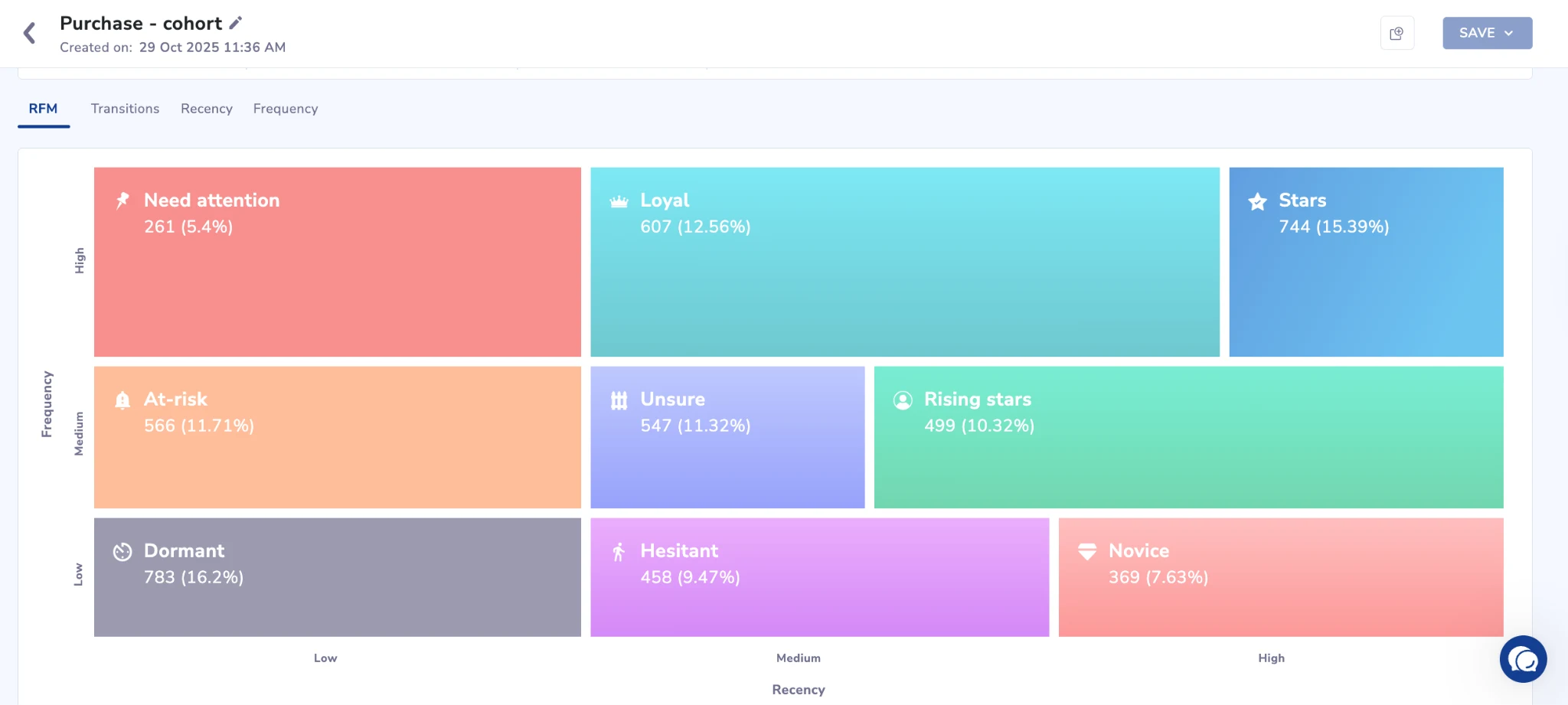
Recency, Frequency, and Monetary analysis applied through a nationality lens – because what looks like churn for one profile is normal behavior for another. High-value senders needed more time and more proof before they were ready to return.

3. Funnel Analysis – Fixing What Was Broken
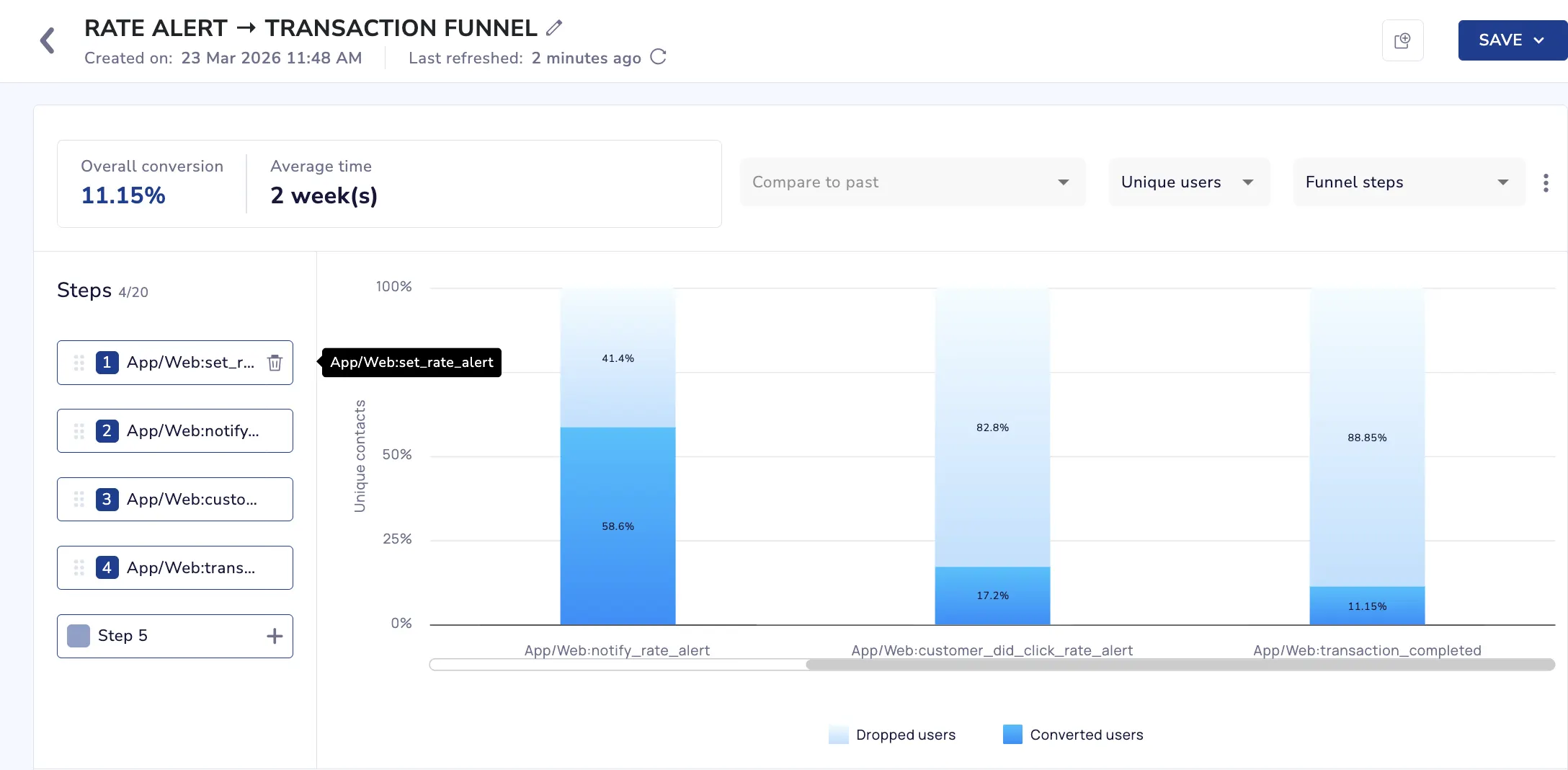
Full user journey mapped from app open to transaction completion. Drop-off points identified. Campaigns targeted at the moment of hesitation – not the user broadly.

4. Predictive Churn Modeling – Acting Before the Signal
DeeMoney’s users are habit-based. A first-week sender who hasn’t transacted by week two is a signal, not noise. Netcore’s models tracked these cycles and triggered contextually relevant nudges – before the user was lost.
Most users are very habit-based. If you’re not transacting within that time phase, I already know I’ve lost you. So we are a bit more aggressive than a normal product, because we know you are anyway going to transfer – you’ve either gone to a competitor or something’s gone wrong.
– Vaibhav Gupta, CMO, DeeMoney
5. Multi-Channel Campaign Orchestration – Delivering at Scale
With the intelligence foundation in place, the campaign execution began.


Over the July 2025 to January 2026 period, DeeMoney and Netcore orchestrated:
Total campaigns executed
Personalised messages delivered
Average message delivery rate
Total unique clicks generated


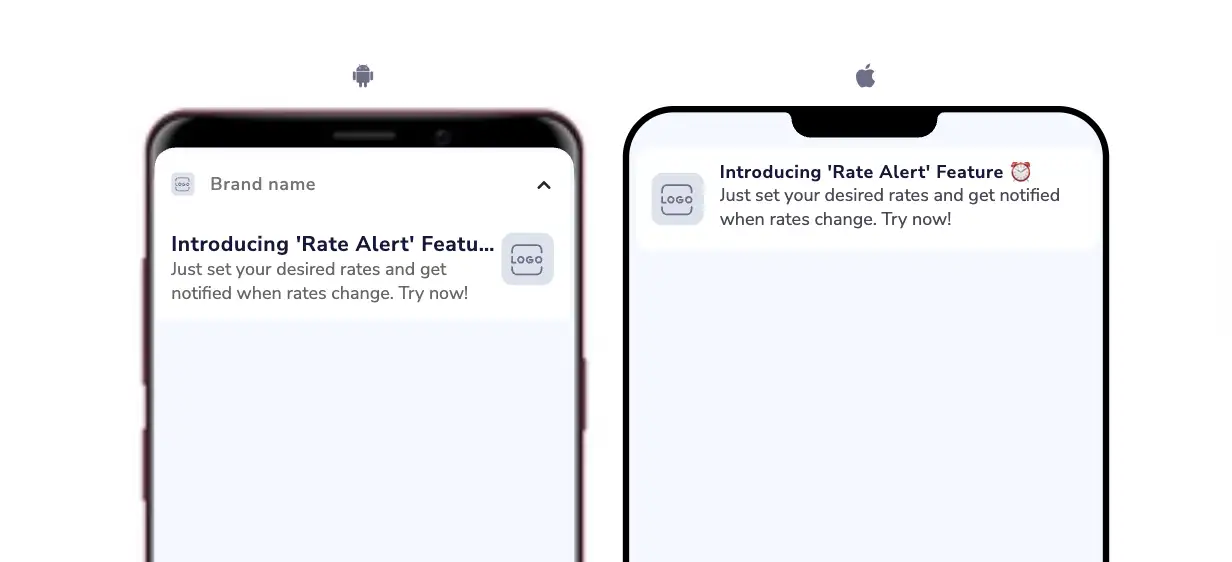
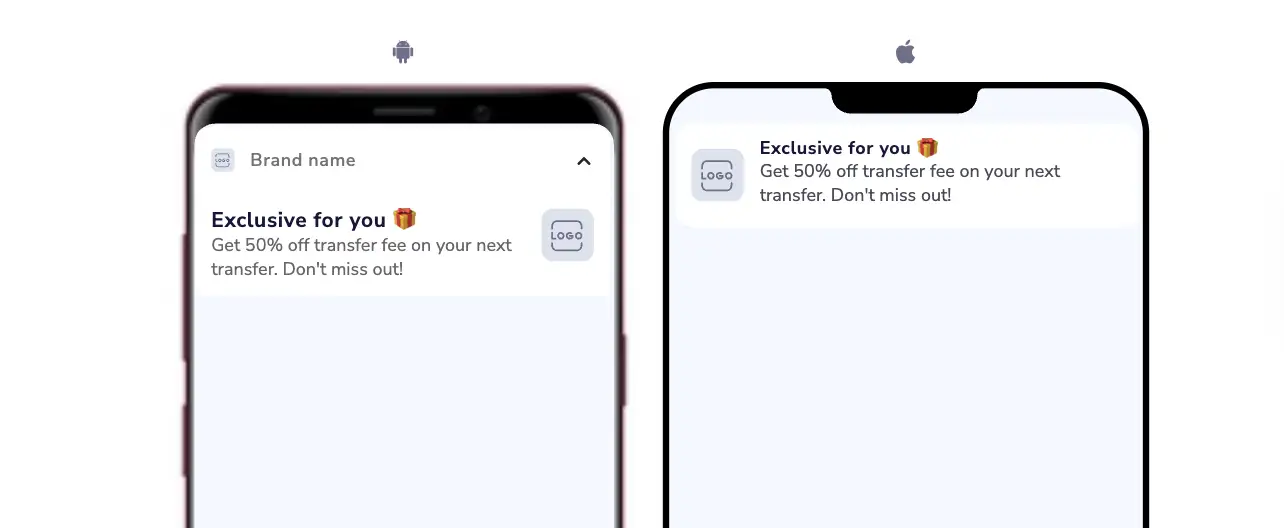
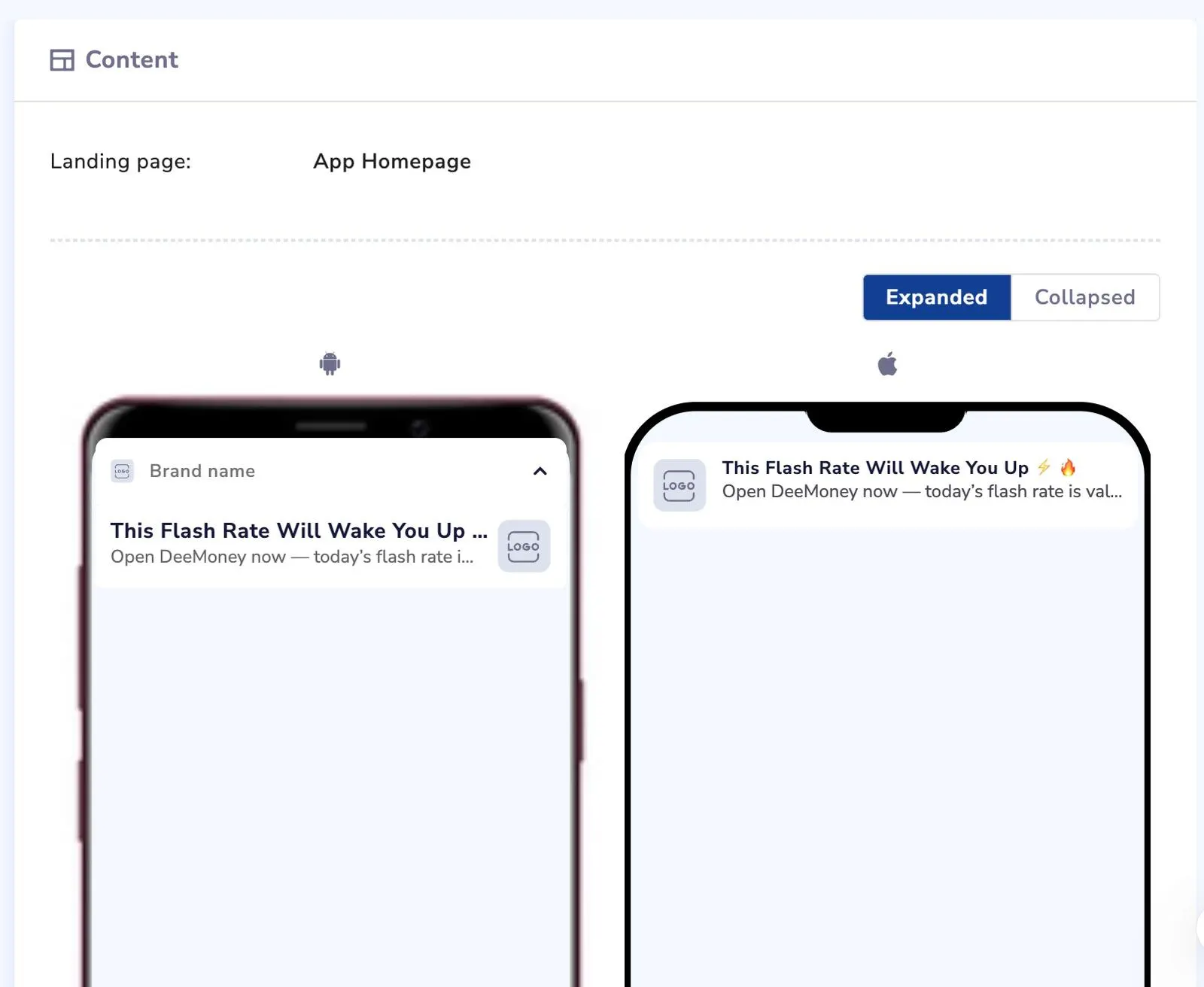
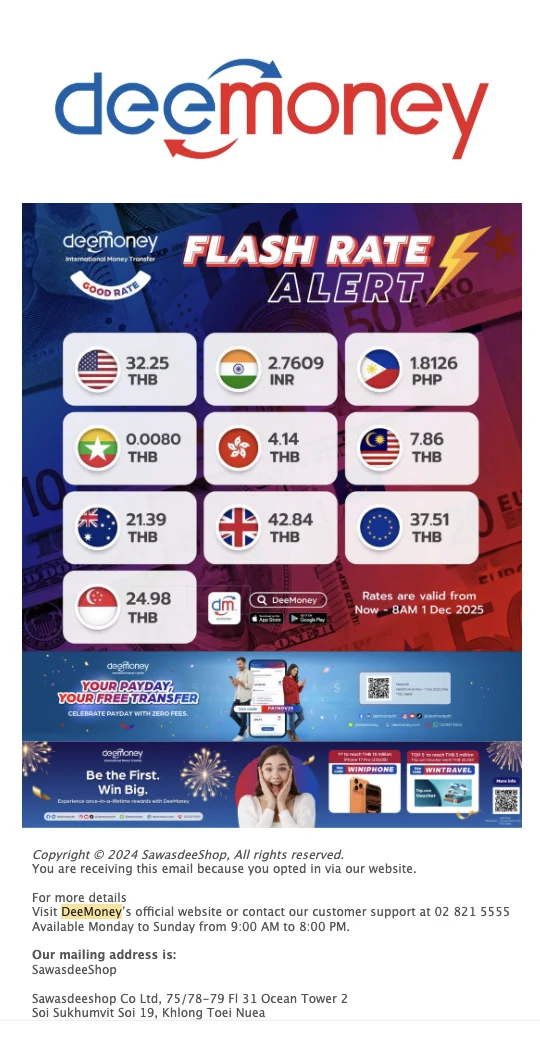
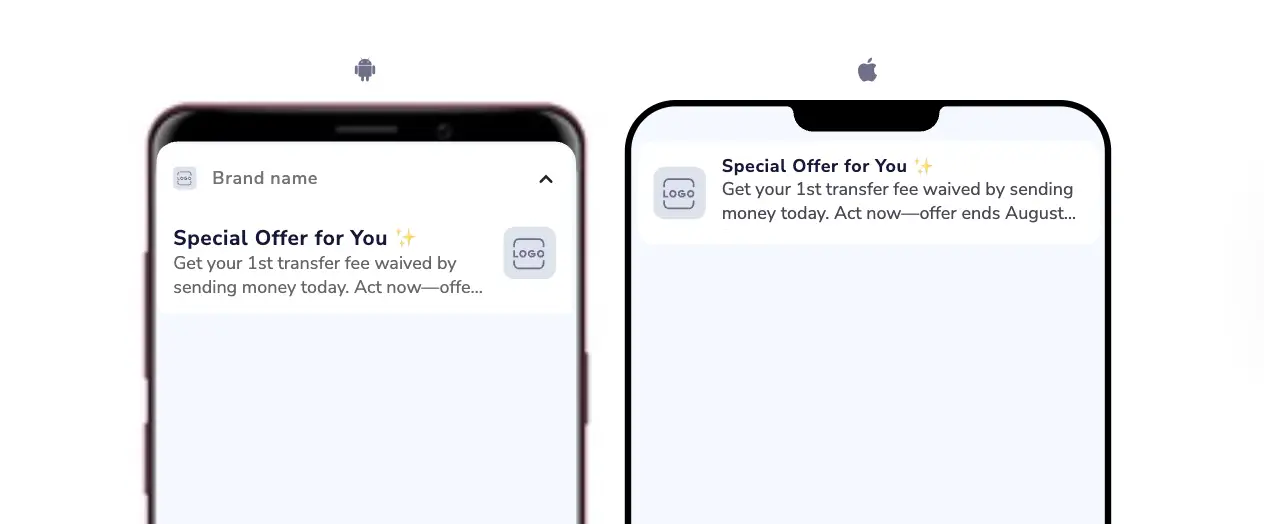
App Push was the primary channel, accounting for 87.5% of campaigns and achieving a 1.90% average CTR. Email served as a high-fidelity trust channel – delivering a 96.4% delivery rate, the highest of any channel – reinforcing platform credibility at key moments in the user journey.
The shift: from generic campaigns sent to everyone, to 6.28 million messages that each reflected a specific user’s behavior, nationality, value tier, and journey stage.
Vaibhav is clear that what Netcore provides goes beyond the platform – the RFM cohorts, churn models, and funnel visibility are valuable, but it is the human layer on top that converts insight into action. The CSM team didn’t hand over a dashboard and step back – they co-created the strategy, and brought the experience of hundreds of similar engagements into a genuinely difficult re-launch.
You can push notifications from OneSignal also. But the support that we get – if something’s breaking we can immediately tag Charishma, and it’s always great to have someone who’s seen those journeys come back and say: you should do this rather than that.
– Vaibhav Gupta, CMO, DeeMoney
The shift to intelligence-led omnichannel engagement transformed DeeMoney’s marketing from a cost center into a direct revenue driver. What changed was not just the numbers. It was the structural capability behind them – a permanent upgrade to how DeeMoney understands and engages its user base.
Of dormant users successfully reactivated
Growth in engagement from July to January
Total conversions across all campaigns
Messages successfully delivered
ROI on the Netcore platform investment
CAC reduction – from 10,000 Baht to 2,000 Baht per customer
Increase in Customer Lifetime Value (CLTV)
Growth in transaction volume
Improvement in conversion rate
Average click rate across all campaigns
Email channel delivery rate
App push average CTR
One of the most significant – and unexpected – outcomes of the reactivation period was what happened to transaction behavior after free transfer codes were introduced. Users who had previously sent one large transfer began splitting them into multiple smaller ones.
A user who had been sending 50,000 Baht in one transaction started sending two transactions of 25,000 Baht. The total monthly value stayed the same – but transaction frequency increased. And over time, as comfort returned, transaction sizes began growing again too.
This behavioral shift is now driving a meaningful rise in CLTV. Users are transacting more often. The habit is deepening. And a more frequent user is a more loyal one.
Most significantly: DeeMoney achieved its highest revenue growth since 2024. The reactivation program didn’t just bring users back – it rebuilt their relationship with the platform, increased their transactional value, and laid the foundation for sustainable long-term growth.
The reactivation phase proved the model – and DeeMoney is now doubling down on the capabilities that drove it. The focus ahead is deeper churn prediction, sharper lifecycle journeys, and more proactive engagement: identifying at-risk users earlier, triggering the right nudge at the right moment, and ensuring no reactivated user slips back into dormancy. Three new product lines are also in development – each demanding a more sophisticated segmentation and behavioral engagement architecture than anything DeeMoney has run before. The same Netcore infrastructure that rebuilt the user base is now being built upon to protect and grow it.
The next chapter for DeeMoney is not about recovering lost ground. It is about building the kind of engagement infrastructure that makes losing ground unlikely in the first place.


Vaibhav Gupta
Chief Marketing Officer, DeeMoneyWith Netcore, we were able to identify user segments and patterns. We identified our repeat users and built predictive churn systems. This allowed us to plan our campaigns a lot better. We used this to help plan our user acquisition strategies and allowed us to drive the highest amount of increase in revenue since 2024.
Please wait while you are redirected to the right page...