Imagine this everyday scene: A shopper named Sarah is riding the bus home after a long workday. Browsing on her phone, she spots a pair of running shoes she has wanted for weeks. She selects her size, clicks “Add to Cart,” and starts filling out her delivery address.
Suddenly, her bus hits her stop. She grabs her bag, steps off, gets distracted, and completely forgets about the shoes. The browser tab closes, and Sarah moves on with her evening.
To the store owner, Sarah is just another lost visitor. But behind the scenes, something critical happened: Sarah didn’t leave because she hated the shoes. She left because life got in the way.
Every single day, online stores spend massive ad budgets driving interested buyers like Sarah to their sites. Yet nearly seven out of ten shoppers walk away right at the finish line. Sending a generic sales newsletter three days later won’t save this sale. By then, Sarah has likely bought from a competitor or forgotten what she was looking for.
This is where merchandising triggers come in. They act like an attentive sales assistant in a physical store, someone who notices when a customer drops an item or walks toward the exit, stepping in at the exact right second with a friendly, helpful nudge.
What Are Merchandising Triggers?
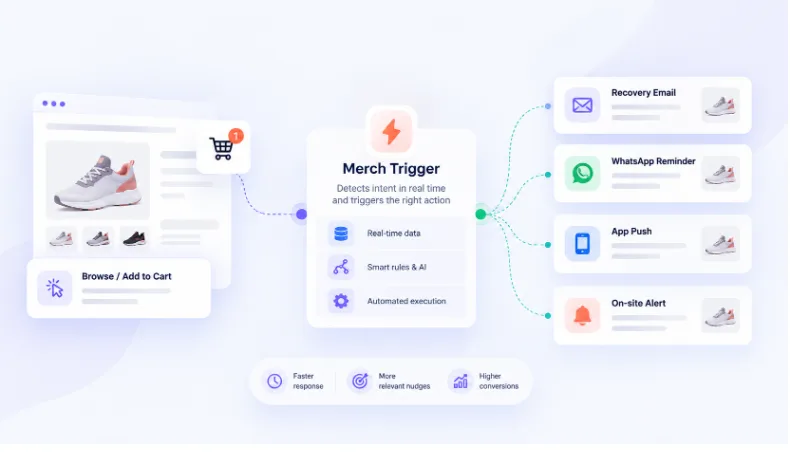
A merchandising trigger is an automated, behavior-based message sent to a shopper based on a specific action they just took or failed to finish on your website or app.
Instead of guessing what your audience wants, merchandising triggers react in real time to what a customer is actually doing.
This is fundamentally different from traditional marketing:
- Action-Based vs. Mass Blasts: Where batch-and-blast campaigns send a single promotional email to thousands of people on a Tuesday morning, a merchandising trigger waits until an individual shopper shows intent, like adding a coat to their cart.
- Immediate Reactions vs. Scheduled Campaigns: Standard campaigns are planned weeks in advance, but merchandising triggers fire within minutes of a drop-off while buying interest is still at its peak.
- Dynamic Content vs. Generic Offers: While regular newsletters rely on static discounts, merchandising triggers dynamically pull in the exact item, image, size, and price the shopper was just viewing.
Sitting inside platforms like Netcore, merchandising triggers bridge the gap between live site behavior and automated messaging across email, SMS, WhatsApp, and push notifications.
The Silent Leaks: Why and How Online Stores Lose Money
To fix a leaking bucket, you first have to identify where the holes are. Online shoppers rarely abandon their carts out of frustration; usually, small points of friction compound until they walk away.
Unexpected fees added at the final step like high shipping costs or taxes are the primary cause of immediate drop-offs. Complex checkout processes forcing mandatory account creation turn quick purchases into tedious chores. Many buyers also use shopping carts as temporary wishlists while they check competitor sites for lower prices or coupon codes.
Beyond that, simple real-world distractions like phone calls or lost connections interrupt purchases mid-checkout.
When you trace a customer’s path through your store, revenue leaks across four primary funnel stages:
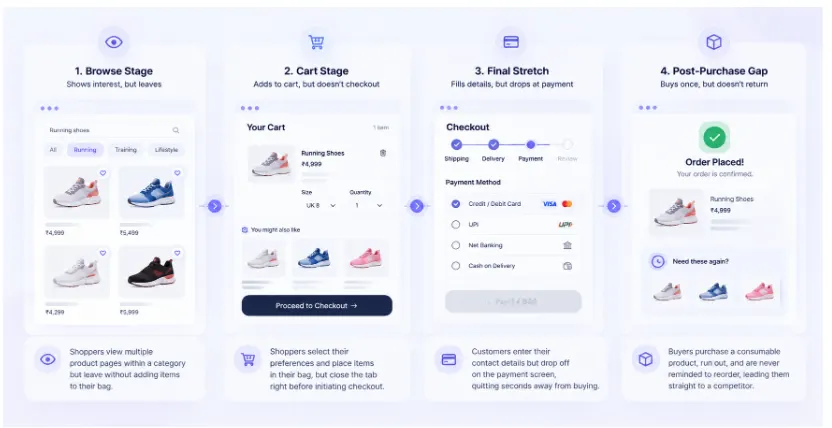
Most of these lost sales are completely recoverable. They simply require a timely, relevant prompt to re-engage the shopper before they move on.
How Merchandising Triggers Work Behind the Scenes
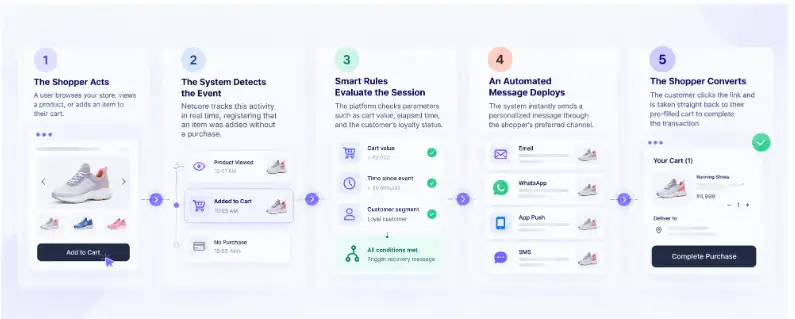
For example, Sarah adds running shoes to her cart but leaves before paying. An hour later, Netcore can automatically send her a WhatsApp reminder showing the exact shoes, her selected size, current price, and a direct link back to her cart. If she still doesn’t purchase, the journey can follow up with a reminder about free shipping or limited stock. Once she buys, the journey stops automatically.
This automated approach gives stores major operational advantages over manual outreach:
Unmatched Scale: Handles tens of thousands of individual customer journeys simultaneously without requiring manual effort from your team.
Optimal Timing: Messages reach shoppers within 30 to 60 minutes of abandonment, capturing intent while product interest remains fresh.
Process Consistency: Every eligible customer receives a tailored experience based on proven engagement rules.
The 4 Core Types of Merchandising Triggers Every Store Needs
Effective recovery strategies adapt based on how far the shopper has moved through the buying journey.
1. Cart Abandonment Triggers
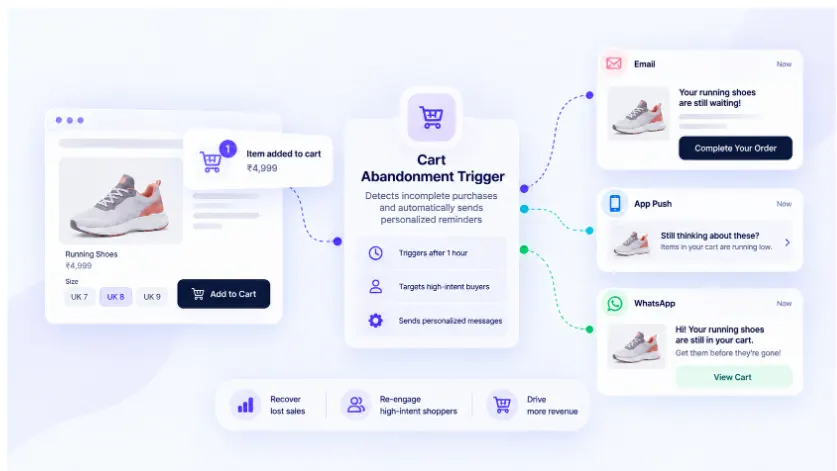
When a customer places an item in their cart but fails to complete the order within an hour, cart abandonment triggers guide these high-intent buyers back to complete their transaction.
Delivered cart abandonment triggers via Email, Push Notifications, or WhatsApp, these messages can show the product they left behind, highlight low inventory, or add social proof such as recent purchases. If the first reminder goes unopened, a follow-up such as free shipping can provide an additional reason to return.
For example, Sarah adds a pair of running shoes to her cart but leaves without checking out. An hour later, she gets a reminder showing the shoes she left behind with a direct link to complete her purchase. If she still doesn’t return, a follow-up can give her an extra reason to come back, such as free shipping or a low-stock alert. Once Sarah purchases, the journey automatically stops.
2. Browse Abandonment Triggers
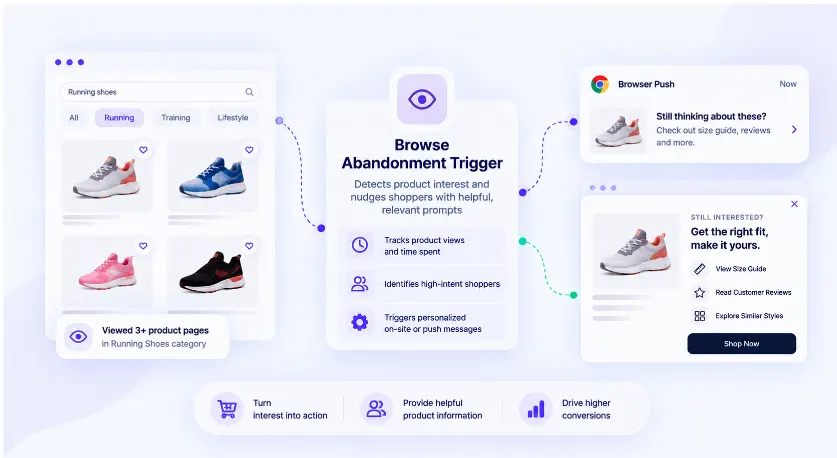
When a shopper views specific product pages repeatedly or spends significant time in a category without adding anything to their cart, browse triggers can help them make a decision.
Delivered through browser push or on-site popups, these lightweight check-ins can offer useful information such as size charts, customer reviews, or similar products.
For example: A shopper repeatedly views a pair of sneakers but never adds them to their cart. A browser push can remind them about the sneakers, along with reviews, a size guide, or similar products.
3. Checkout Abandonment Triggers
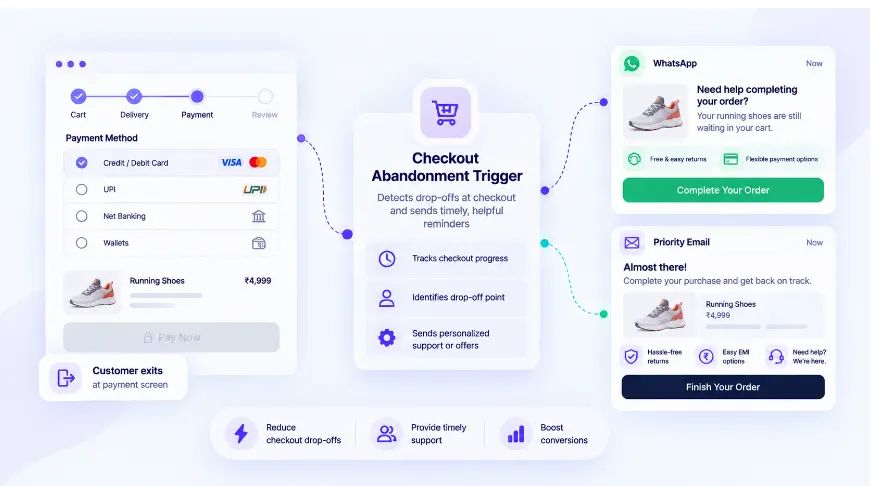
When a customer enters delivery details or reaches the payment screen but exits before completing the purchase, checkout triggers can help remove the final barriers.
Reaching out through WhatsApp or priority email allows brands to offer support, reinforce return guarantees, or remind shoppers about flexible payment options such as installment plans or digital wallet.
For example: A shopper reaches the payment page but drops off. A WhatsApp reminder can bring them back to their saved cart while highlighting available payment options or easy returns.
4. Post-Purchase and Re-Order Triggers
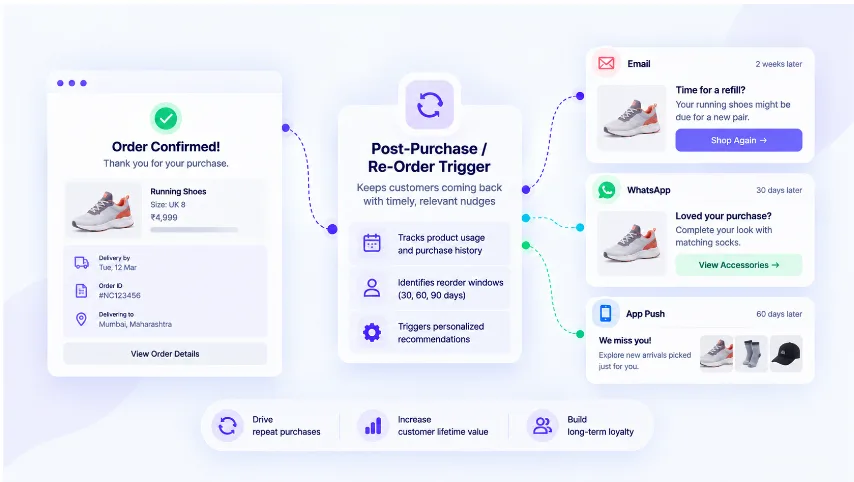
The customer journey doesn’t end at checkout. Post-purchase triggers help drive repeat purchases by sending restock reminders based on product usage, suggesting relevant accessories after a purchase, or reaching out to customers who haven’t returned in 60 to 90 days.
For example: A skincare brand can remind a customer to reorder their face serum around the time their previous bottle is likely to run out, or recommend products that complement their recent purchase.
Turn Shopper Intent into Revenue with Netcore
The value of merchandising triggers comes from what happens behind the scenes. Netcore connects shopper behavior, automated journeys, personalization, and measurement to help marketers turn those moments of intent into completed purchases.
- Know what shoppers are doing: Track product views, cart additions, and checkout activity in real time, so you can respond while interest is still fresh.
- Build journeys without code: Create automated, multi-step recovery journeys with a simple visual journey builder, without depending on engineering teams.
- Make every message relevant: Automatically add the right product, image, price, and cart link to each message, giving shoppers an easy path back to purchase.
- See the revenue you recover: Track recovered orders and revenue, test different approaches, and compare results against control groups to understand what actually drove incremental revenue.
The result is simple: less manual effort for marketers and more opportunities to convert the shoppers already showing intent.
Make Every Recovery Opportunity Count
Once your merchandising triggers are in place, the next step is making sure they work without hurting the customer experience or your margins.
- Start with high-intent shoppers: Begin with cart and checkout abandoners. They are already close to purchase and offer the fastest opportunity to recover revenue.
- Respond while intent is fresh: Send the first recovery message within 30 to 60 minutes, while the product is still top of mind.
- Don’t discount by default: Start with simple reminders, free shipping, or easy returns before immediately offering discounts.
- Make returning easy: Take shoppers directly to their saved cart or the product they were considering, without unnecessary steps.
- Measure what you actually recover: Keep a small group of shoppers unmessaged to understand how much revenue your merchandising triggers genuinely recovered.
Avoid These Simple Mistakes
Even a well-planned recovery strategy can lose its impact when the execution gets in the way.
- Waiting too long: A message sent 24 to 48 hours later may reach shoppers after they’ve already moved on or purchased elsewhere.
- Making messages generic: A simple “Come back and shop with us” is easy to ignore. Showing the exact product a shopper viewed or added to their cart makes the message far more relevant.
- Sending shoppers to the wrong place: Broken links or experiences that don’t work well on mobile can create another point of drop-off.
- Messaging after purchase: Once a shopper completes an order, stop the recovery journey. Reminding someone to buy something they’ve already purchased only creates a poor customer experience.
From Abandoned Intent to Recovered Revenue
Every abandoned cart isn’t a lost customer. Sometimes, shoppers simply need the right reminder at the right moment.
That’s the opportunity merchandising triggers create. Instead of sending the same message to everyone and hoping it converts, brands can respond to what each shopper is actually doing with relevant content, timely nudges, and an easier path back to purchase.
From a product view to an abandoned cart, a payment-page drop-off, or a missed reorder, every interaction can become an opportunity to bring a shopper back.
With Netcore, marketers can turn these moments of intent into automated, personalized experiences across channels and ultimately recover more of the revenue that would otherwise be left behind.
Because the goal isn’t to send more messages. It’s to make every high-intent moment count.