TL;DR
- Only 7% of retailers globally are genuinely unified, while 62% of shoppers prefer a brand that runs both a store and an online one.
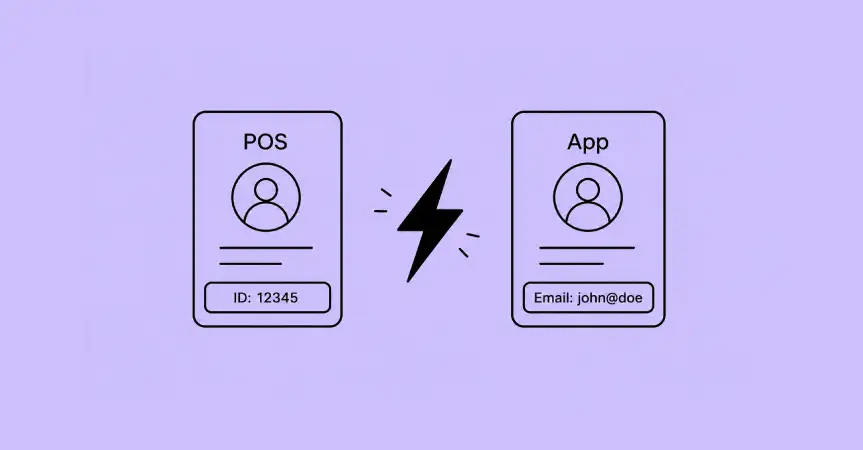
- The gap isn’t technology. Every system (POS, site, engagement platform) keeps its own version of the customer, and nothing reconciles them, which quietly costs retailers in wasted spend and bad attribution.
- Retailers who’ve unified their data see roughly 1.5x conversion, 24% higher satisfaction, and about half the market’s churn rate.
Ask a retailer whether they’re omnichannel and the answer is almost always yes. The stores are there. The app is there. The site works.
Of more than 400 retailers assessed globally in 2026, 7% were genuinely unified. A third were still at the most basic level. Running both channels is the part almost everyone has figured out. Knowing that it’s the same shopper moving between them is where most stop.
That gap costs something. 62% of shoppers globally say they’d rather buy from a brand that runs both a store and an online one. Not one or the other. Both, from the same brand, without noticing where one ends and the other begins. What they’re choosing is the connection, not the coverage.
Why nobody can tell it’s the same shopper
It’s not a technology problem. Most retailers already have what they need. The problem is that nobody can answer one question: is the person standing in aisle four the same person who left a full cart on your site on Tuesday night?
Nothing in your stack was built to answer that. The POS rings up sales and tracks stock. The ecommerce platform sells online. Your engagement platform runs the campaigns. The loyalty tool holds the points. Each one keeps its own version of the customer, and each version is correct as far as that system can see. Working out that they’re the same person is a separate job.
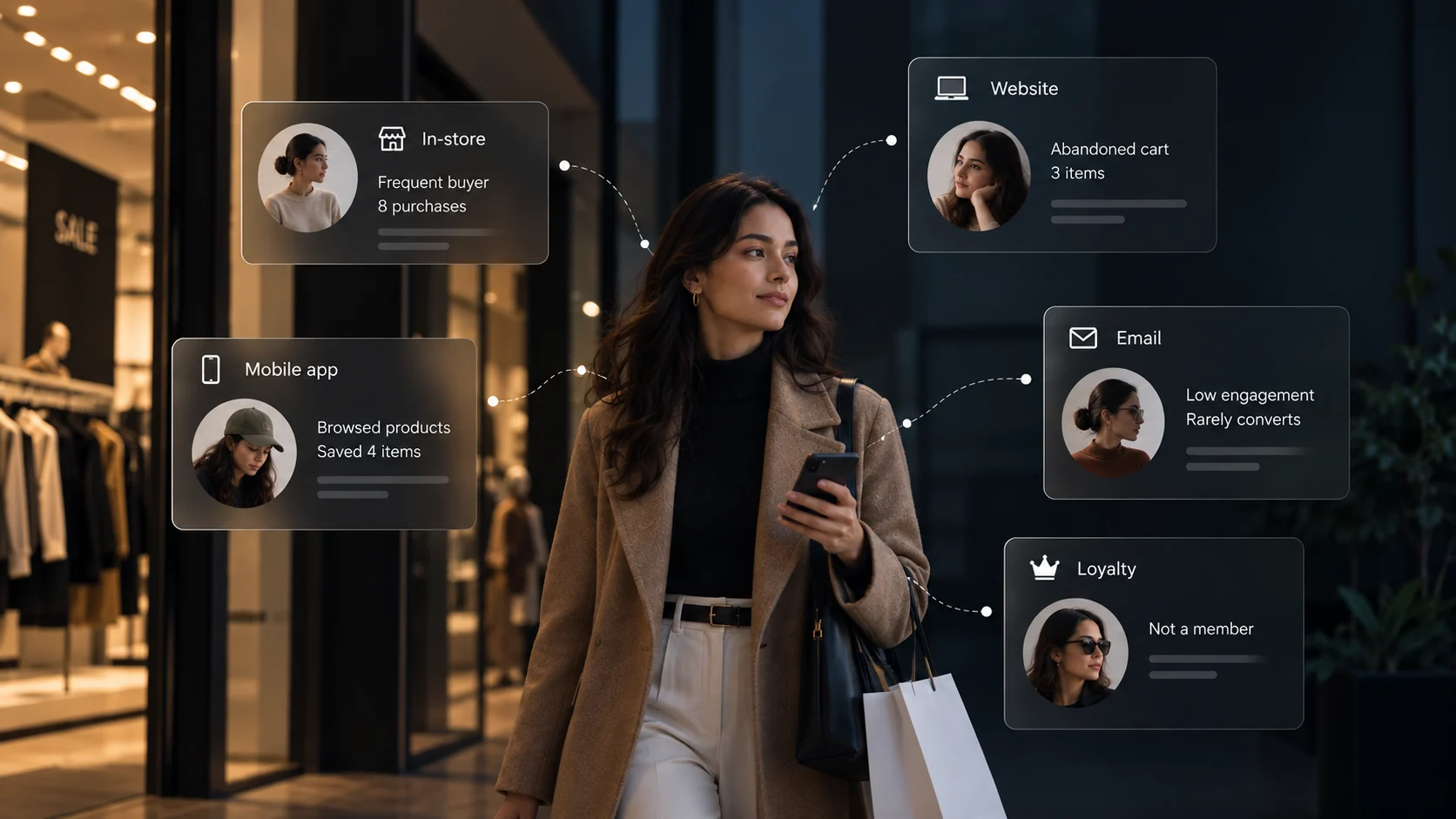
The data isn’t missing. It’s sitting in silos, and nothing joins it up.
So the same person sits in your business twice. In the POS there’s a customer who buys regularly and spends well. In your engagement platform there’s a contact who browses, opens the occasional email and rarely converts.
Your campaigns run on the second record. That’s the only one your engagement platform can see.
What it costs you
A customer who shops mostly in your stores looks inactive in your engagement platform. Their purchases are recorded, just not where your campaigns can see them. So every decision you make about that person is based on the small amount they do online.
They get offers written for new customers. They sit in the audiences you build to reach people who haven’t bought yet, so you pay to advertise to someone who already shops with you. If they go quiet online for a few months, a re-engagement email goes out, even if they bought something in store last week.
This isn’t a small group. Buying across more than one channel is the normal case now, not the exception. And it hits your best customers hardest, since they’re usually the ones spending across both.
Attribution has the same gap. A campaign that sends someone into a store gets no credit for the sale, because the sale is sitting where your reporting can’t see it. The campaign looks like it did nothing. Run that for a few quarters and that’s how store-driving spend gets cut.
The bar keeps moving
Nearly four in ten of the things that set leading retailers apart in 2024 are now just the minimum. Real-time stock visibility. Digital wallets. Support that carries across channels. Two years ago those got you ahead. Now they only stop you falling behind.
That catches most retailers out. You plan the work against where the market is now, and by the time it’s live the market has moved on.
Going slowly has another cost, and it’s the one worth knowing about. Manhattan Associates’ Unified Commerce Benchmark, run with Incisiv, sorts retailers into four groups depending on how much of the experience they’ve actually joined up, and the returns aren’t spread evenly across those groups. Most of the payoff sits with the retailers who’ve gone all the way, not the ones halfway there.
This explains something a lot of teams have been through without being able to name it. You connect two systems, the customer view gets better, and the numbers hardly budge. It doesn’t mean the project failed. It means you’re in the middle of it. The payoff comes when the picture is complete, and stopping halfway gets you very little.
The way people search is changing
Around 42% of shoppers now use AI while they shop. What does this mean? They no longer like searching in keywords. They prefer a store like experience where they can talk to an agent in their natural language, and get personalised recommendations.
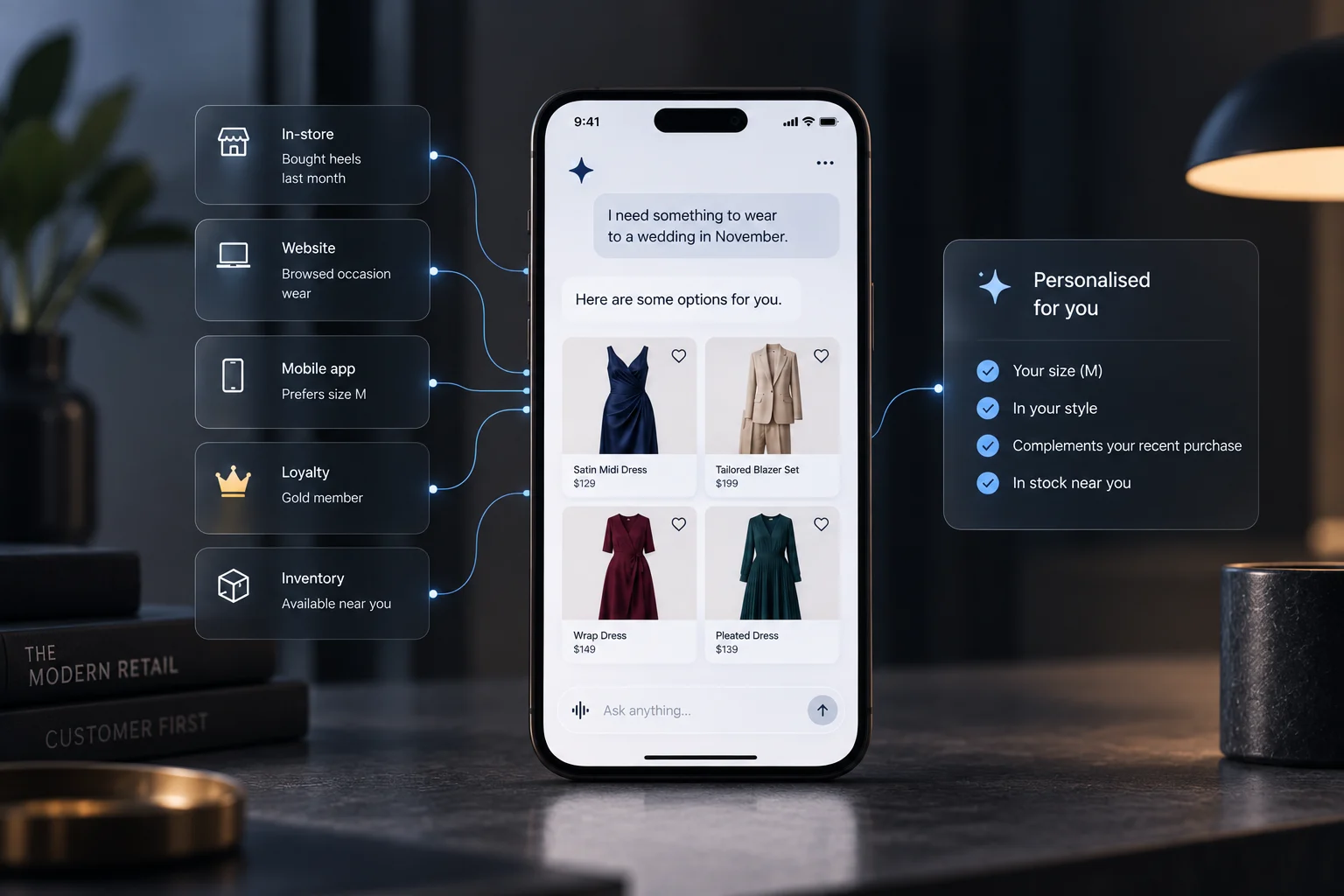
Imagine an AI agent that acts as an online sales person your customers can talk to. Someone asks for something to wear to a wedding in November. What comes back is four options in their size, in stock, and complimenting the shoes they bought in your store last week. That’s what a true phygital experience looks like. But this is only possible if the data across your channels doesn’t sit in silos.
A true omnichannel experience means it can see all of it. The store visits, the online browsing, the returns, the size they settled on after trying two. Once that sits in one place, the agent answers the way someone who knows the customer would answer, and it doesn’t matter which side of your business the knowing came from.
One brand, not a list of channels
The goal isn’t more channels. It’s one customer.
For years, omnichannel has been treated as a question of presence: are you in stores, on the web, in an app, on WhatsApp? Most retailers can tick those boxes now. Only 7% count as genuinely unified. The harder question isn’t presence, it’s whether those channels know anything about each other when a shopper moves between them.
That’s the difference between having multiple ways to shop and giving someone one experience. A store purchase should change what the customer sees online. Something they browse online should be a useful context when they walk into a store. A return shouldn’t disappear because it happened on a different system. A campaign should still get credit when the journey it started ends at a till instead of a checkout page.
Retailers who’ve closed that gap aren’t guessing at the payoff. They convert about 1.5 times more shoppers than retailers still working on it, and churn runs at roughly half the market rate. Spend climbs with every extra channel a customer uses, and retailers with a genuinely connected experience have seen repeat store visits rise 23% within six months.
Retailers don’t need another place to meet the customer. They need the places they already have to recognise the same person. That’s when omnichannel stops being a list of channels and starts being one brand.
Final Take
- Only 7% of retailers are genuinely unified, against 62% of shoppers who want exactly that.
- The problem is structural: every system keeps its own version of the customer.
- The cost hides in wasted ad spend, blanket discounts, and attribution that punishes what’s working.
- Partial fixes barely pay off, the return is concentrated at full maturity.
- The fix is one real-time customer record feeding every system, not another channel or tool.