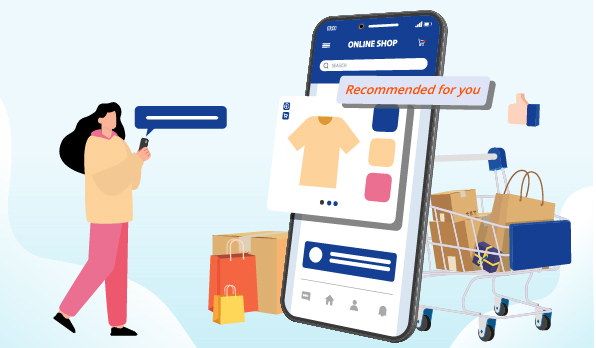
For heritage retail brands, the challenge isn’t simply getting customers into the store. It’s making sure the relationship continues after they walk out.
Years of offline presence may have built strong brand recognition, trust, and loyalty. But once the customer leaves the store, the brand often loses visibility into what they’re interested in, what they considered buying, and what might bring them back. At the same time, digital customers expect more like relevant product recommendations, timely communication, and experiences that reflect their individual preferences.
For lifestyle retailers spanning Apparel, Home & Lifestyle, and Personal Care, this creates a difficult growth equation: increase store footfall, keep customers engaged between purchases, and turn existing customer relationships into repeat digital revenue.
One such lifestyle retail brand was facing exactly this challenge earlier to using Netcore.ai. Despite a strong product portfolio and an established customer base, its digital marketing relied heavily on broad, campaign-led communication. Customers with very different behaviors and interests were often receiving similar messages.
The opportunity was to move beyond simply sending more campaigns, and start understanding who each customer was, what they were likely to want next, and when and where to engage them.
The brand shifted to AI-powered, behavior-driven customer engagement, using customer signals to make communication more relevant across the lifecycle.
The result? Digital revenue doubled, with a 9X ROI in just 120 days.
But the more interesting story is what changed behind those numbers.
The Problem: A Diverse Customer Base Was Getting Broad Messages
On paper, the brand had everything it needed to grow online.
It had a wide product catalog, strong brand recognition, and years of customer relationships built through its physical retail presence.
But when the team looked at its digital engagement, there was a clear disconnect.
A customer browsing home décor could receive much the same communication as someone shopping for festive apparel.
Someone who had added a product to their cart could be treated like someone who had simply visited the website.
And a customer who had shown a strong interest in a particular category wasn’t necessarily getting communication that reflected that interest.
The marketing team could see the problem: the breadth of the product catalog wasn’t being reflected in the way customers were being engaged.
This problem was familiar to many retail marketers whom we had interacted with.
Campaigns were going out consistently, but the experience could still feel generic.
The challenge wasn’t simply getting more people to the website.
It was figuring out how to make better use of the customers who were already there.
The Breakthrough
The biggest change started with a fairly simple question: What are customers actually telling us through their behavior?
A customer doesn’t always tell a brand what they want directly.
But their actions often provide clues.
They browse a product.
They add something to their cart.
They save an item to their wishlist.
They return to a category.
They explore another product after making a purchase.
Those actions are signals.
The brand began using those signals to make its engagement more relevant.
Instead of relying primarily on broad or manually defined audiences, it moved toward AI-powered segmentation based on customer behavior, price sensitivity, and category affinity.
That meant the marketing team could start thinking less about sending the next campaign and more about responding to what customers were already doing.
It was a subtle shift in thinking, but an important one:
From “What should we send?” to “What does this customer need next?”
What Changed: From Campaign-Led to Behavior-Led Engagement
Before the shift, much of the engagement revolved around scheduled campaigns.
After the shift, campaigns were still important. But they were no longer the only way the brand communicated with customers.
Customer behavior became another trigger.
If someone abandoned a cart, that action could trigger a timely reminder.
If someone showed interest in a product, the brand could follow up with a relevant nudge.
If a customer saved something to their wishlist, the brand could reconnect with them around that specific interest.
This meant marketing became more responsive.
Instead of waiting for the next campaign calendar slot, the brand could engage customers when there was a reason to engage them.
The Solution: Building an Always-On Engagement Engine
The change was brought to life through a combination of automated journeys and targeted campaigns.
1. Automated Journeys That Responded to Intent
The brand introduced more than seven behavior-triggered journeys, including:
- Cart reminders
- Product nudges
- Wishlist alerts
- Cross-sell journeys
These journeys ran continuously in the background.
A customer didn’t need to wait for a marketer to launch a campaign to receive a relevant message. Their own interaction with the brand could trigger the next step.
For example, someone who left a product in their cart could be reminded about it.
Someone who showed interest in a product could receive a relevant follow-up.
And someone who had already purchased could be introduced to products that made sense as a next purchase.
The important difference was simple: The customer action became the trigger.
2. Campaigns That Still Created Demand
Automation wasn’t about replacing campaigns.
The brand continued running more than 25 campaigns across Email, WhatsApp, and App Push, covering apparel launches, influencer-curated products, discounts, and seasonal collections.
The difference was that these campaigns now worked alongside the automated journeys.
Campaigns created momentum around important commercial moments.
Automated journeys captured individual intent between those moments.
Together, they gave the brand two ways to engage customers: planned communication when the brand had something to say, and responsive communication when the customer gave it a reason to.
The Results: The Revenue Impact Was Clear
The change delivered results within a relatively short period.
In just 120 days:
- 2X Digital revenue
- 9X Return on investment
- 50% of incremental revenue came from cart and product abandonment journeys
The last number is particularly interesting.
Half of the incremental revenue came from cart and product abandonment journeys.
These weren’t customers who needed to be convinced that the brand existed. They had already shown interest.
They had browsed. They had considered a product.
Some had gone as far as adding it to their cart.
The opportunity was to respond to that existing intent at the right moment.
That made abandonment journeys more than just a tactical CRM activity. They became an important part of the brand’s digital revenue engine.
Why It Worked?
The brand didn’t use AI to replace its identity or turn every interaction into a sales message.
It used Agentic AI in marketing to answer a different question:
How can we make the existing brand experience more relevant to each customer?
The brand voice remained the same. The products remained the same.
What changed was who received what, and when.
That distinction matters.
For a heritage retailer, technology doesn’t have to mean becoming less personal. In fact, better use of customer behavior can help recreate some of the relevance that customers traditionally experienced in physical stores.
A store associate might remember what a customer likes or notice what they are looking at.
Digital engagement needs its own version of that contextual understanding.
Agentic AI in marketing helped provide it at scale.
What Other Retail Brands Can Take Away
1. Your biggest opportunity may already be in your customer base
A strong customer base or CRM doesn’t automatically translate into strong digital revenue.
Sometimes the opportunity isn’t acquiring more customers. It’s understanding the existing ones better and giving them more relevant reasons to return.
2. Customer behavior can tell you more than a broad audience label
Knowing that someone belongs to a particular demographic or category is useful.
Knowing that they just browsed a product, abandoned a cart, or repeatedly explored a category can be much more actionable for the customer engagement.
Those signals tell you what may be interested in right now.
3. Abandonment journeys deserve more than a checkbox
It’s easy to think of cart abandonment as just another automated journey.
But in this case, cart and product abandonment journeys generated 50% of incremental revenue.
That makes them worth treating as a strategic growth lever, not simply an automation best practice.
4. Heritage and technology can reinforce each other
The brand didn’t have to choose between what made it successful historically and what digital customers expect today.
Its heritage remained the foundation.
Agentic marketing simply helped the brand carry that relationship into more customer interactions, at greater scale and with better timing.
The Bigger Lesson
The most important change wasn’t the introduction of agentic marketing in customer journey.
It was a change in how the brand thought about customer engagement.
Instead of asking how to send more campaigns, the team started asking how to make every interaction more relevant.
Instead of treating customers as broad audiences, it began paying closer attention to their individual behavior.
And instead of relying entirely on the campaign calendar, it allowed customer intent to trigger conversations.
That shift helped the brand generate 2X digital revenue and a 9X ROI in 120 days.
For retailers, the lesson is straightforward:
Digital growth doesn’t necessarily require becoming a different brand. It may simply require becoming better at understanding the customers you already have.
And when that understanding is powered by an agentic marketing platform and turned into timely, automated engagement, the result can be a digital experience offered by a brand that actually knows what its customers care about. Talk to us, and understand how to implement the same for your business.