




There’s a reason most marketing leaders dread platform migrations. Not because they don’t want better technology, but because the path from legacy stack to modern platform is littered with data loss, broken journeys, and months of team bandwidth spent on plumbing instead of performance.
But here’s what the brands that migrate well know: the risk isn’t in moving. It’s in how you move.
Netcore has facilitated successful migrations for brands across industries from Senco Gold & Diamonds and The Souled Store to PayU, ClearTax, Metropolis, Skullcandy, Bighaat, Plum, VisionPlus, and 7-Eleven. Across these migrations, a consistent set of principles has emerged that separates transformative switches from painful ones. Here’s what actually works.
1. Treat Migration as a Phased Program, Not a Project
The single most common mistake in any platform migration is treating it as a binary switch: old platform off, new platform on. In reality, every successful migration is a phased program with distinct milestones, validation gates, and rollback plans at each stage.
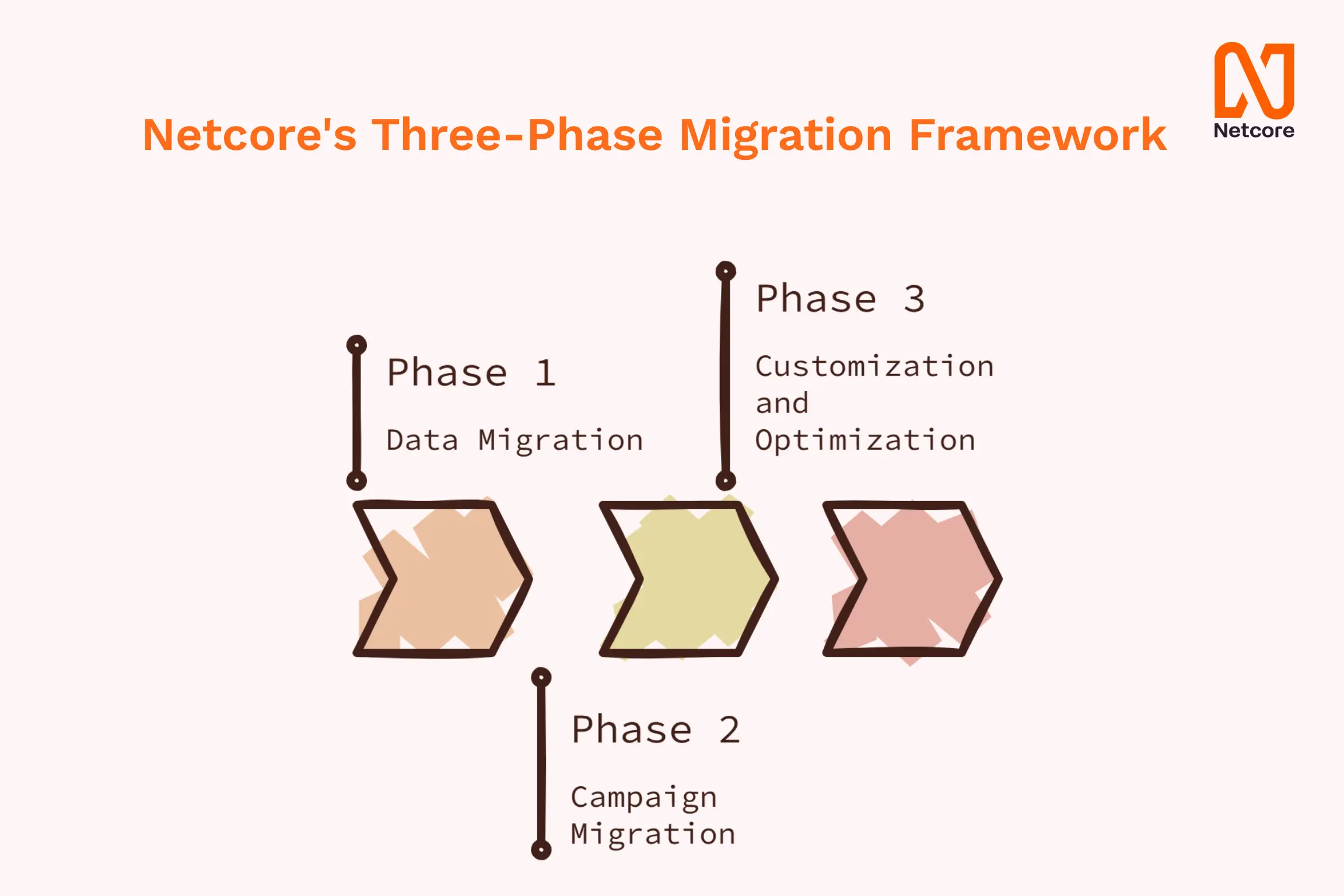
Netcore’s three-phase migration framework reflects this:
Phase 1 Data Migration: Customer profiles, behavioral events, historical purchases, and engagement records move first. Nothing else is built on a shaky foundation.
Phase 2 Campaign Migration: Templates, automation workflows, and journey logic are replicated, not just copied, but reconstructed with modern capabilities layered in.
Phase 3 Customization and Optimization: This is where the real differentiation happens. Gaps are diagnosed, tailored features replace outdated algorithms, and the new stack is tuned for performance.
This phased approach means brands like Metropolis and ClearTax could stay operational on legacy systems while Netcore was being configured in parallel, eliminating the binary risk that makes CMOs lose sleep.
2. Fix Your Data Before It Follows You Into the New Platform
One of the most underappreciated realities of MarTech migration: your new platform is only as good as the data you bring into it. Legacy platforms often harbor years of accumulated inaccuracies, duplicate profiles, stale contact details, unreachable segments, and miscategorized events that quietly corrupt your deliverability and segmentation logic.
Netcore’s migration methodology includes a dedicated data accuracy and reachability correction layer. Before a single campaign goes live, user base data is audited, corrected, and validated, improving message deliverability from the first send and preventing the downstream damage that bad data causes to sender reputation.
For brands like Bighaat and Plum, operating in categories where deliverability directly impacts repeat purchase rates, this step alone has driven measurable improvements in reach before any AI or personalization even enters the picture.
3. Don’t Just Migrate Features, Improve Them
Legacy platforms persist not because they’re good, but because teams have built workarounds, custom scripts, and unofficial processes around their limitations. A migration that simply replicates what existed before is a missed opportunity.
The smarter approach is bespoke feature replacement: identifying where legacy algorithms were weak, where integrations were brittle, and where custom logic had been bolted on to compensate, then rebuilding those capabilities properly in the new stack.
For brands like Skullcandy and VisionPlus operating across markets, this often means replacing fragmented, market-specific setups with a unified delivery infrastructure. Consolidating transactional and promotional email delivery on a single platform, for instance, doesn’t just simplify operations, it gives marketing teams a unified view of customer communication that was simply impossible before.
4. Rebuild Journeys With Outcomes in Mind, Not Just Continuity
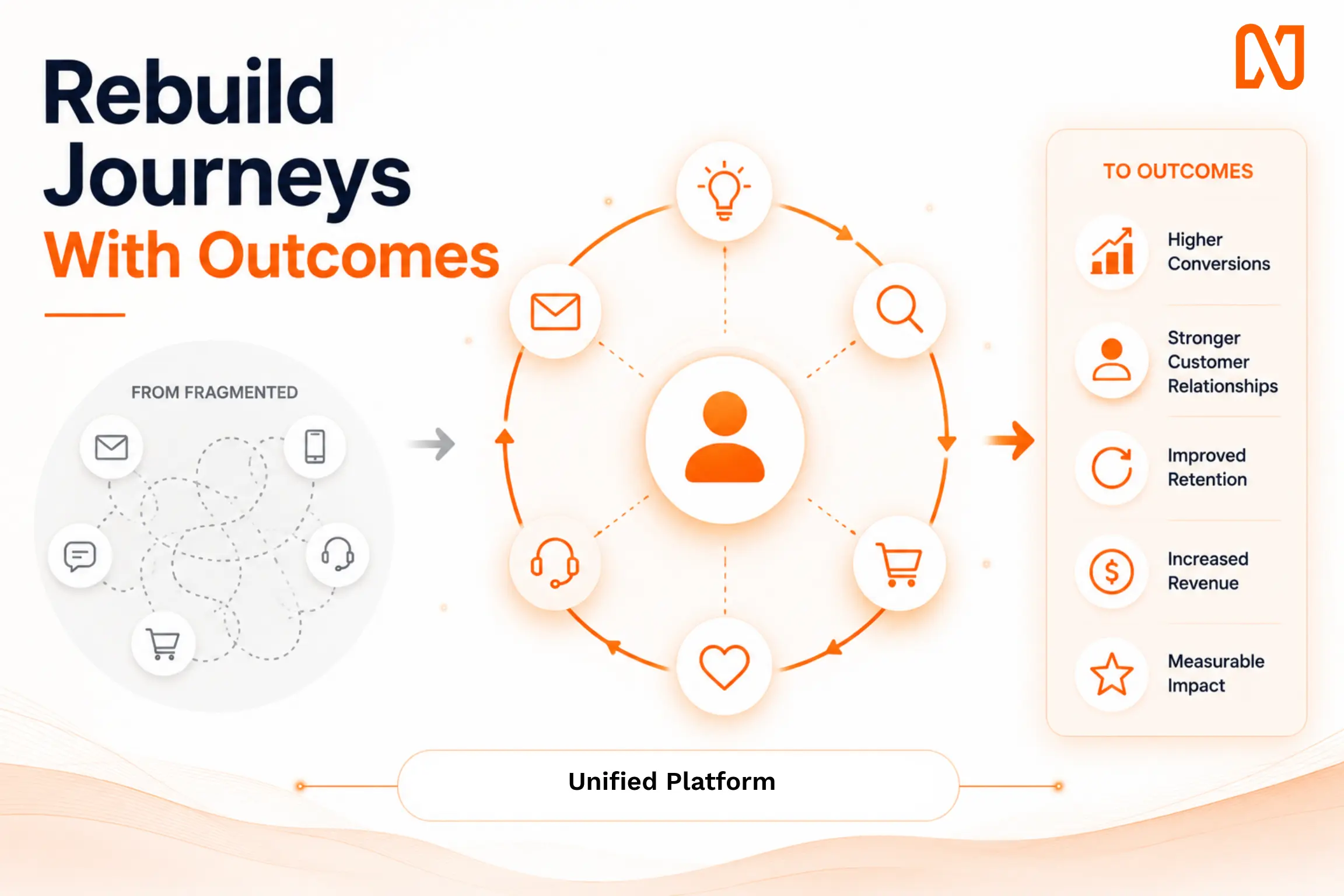
The most dangerous phrase in a migration brief is “just make it work like before.” Replicating broken or underperforming journeys in a more capable platform doesn’t make them better it just makes them faster.
Netcore’s approach to journey rebuilding goes further. Customer journeys in push and email are not just migrated, they are reconstructed with engagement data, behavioral triggers, and AI-driven personalization that legacy platforms couldn’t support.
The results speak for themselves. Pomelo Fashion, after migrating from a legacy platform, saw a 5x boost in click-to-order rates and a 31% uplift in conversions driven not by switching platforms, but by rebuilding journeys that actually responded to customer behavior in real time.
For brands like The Souled Store and 7-Eleven, where the customer lifecycle spans discovery, repeat purchase, and loyalty journey quality isn’t a nice-to-have. It’s the metric.
5. Measure the Migration, Not Just the Destination
One of the markers of a mature migration partner is the presence of live migration tracking dashboards and defined success metrics at every phase, not just at go-live. This gives marketing teams visibility into data completeness, campaign parity, and delivery performance throughout the migration, not just after it.
For enterprise brands like PayU and Senco Gold & Diamonds, where customer communication spans multiple product lines, geographies, and compliance frameworks, this kind of transparency isn’t optional. It’s the difference between a migration that builds internal confidence and one that erodes it.
Key Takeaway
What’s become clear across Netcore’s migration portfolio is that the brands most willing to invest in a rigorous migration process are the ones that emerge with the most durable competitive advantages. They don’t just get a faster platform; they get cleaner data, better journeys, more integrated operations, and AI capabilities that compound over time.
Legacy platforms don’t just limit what you can do today. They limit what your data can tell you, what your journeys can respond to, and what your team can build next quarter.
The brands that recognize migration as a strategic investment, not a technical necessity, are the ones that end up outpacing competitors still nursing their legacy stacks along. Ready to migrate to Netcore, consult us today.
The question for 2026 isn’t whether to migrate. It’s whether your migration will be a copy-paste exercise or a genuine transformation.