TL;DR
Looking for the best Salesforce Marketing Cloud (SFMC) alternatives? While SFMC offers powerful enterprise marketing automation, businesses may seek simpler implementation, more flexible pricing, deeper personalization, or AI-powered customer engagement.
Here are the top alternatives to consider:
- Netcore: Best for AI-powered and agentic marketing, enterprise personalization, and native omnichannel customer engagement.
- Adobe Experience Cloud: Best for enterprise analytics, personalization, and integrated digital experiences.
- Braze: Best for real-time customer engagement and cross-channel journey orchestration.
Salesforce Marketing Cloud has long been the gold standard for marketing automation. But for many ecommerce brands in 2026, it’s starting to feel more like a golden cage, powerful but heavy, feature-rich but clunky, promising omnichannel agility but delivering too many bottlenecks.
That’s where this article comes in. Explore the top alternatives for Salesforce Marketing Cloud, including Netcore, HubSpot Marketing Hub, Insider One, Adobe Experience Cloud, MoEngage, Braze, Klaviyo, Iterable, and SAP Emarsys.
I’ll walk you through the best Salesforce Marketing Cloud alternatives available today, platforms that ecommerce leaders are turning to for real-time engagement, AI-driven personalization, and leaner, faster campaign execution. Whether you’re a CMO recalibrating ROI or a marketing ops leader looking to future-proof your stack, this post gives you the clarity to make the switch with confidence.
Spoiler: Netcore stands tall in this lineup of customer engagement platforms, and we’ll show you exactly why.
Let’s dive in.
Quick Verdict: Best Salesforce Marketing Cloud Alternatives by Category
The best Salesforce Marketing Cloud alternative depends on your priorities. Some platforms are better suited to enterprise-grade personalization and analytics, while others offer simpler campaign management, faster implementation, or AI-powered customer engagement. Here’s a quick breakdown of the top options by use case.
- Best for Agentic Marketing and Omnichannel Engagement: Netcore – combines AI agents, customer segmentation, predictive personalization, and native omnichannel execution to help enterprise brands optimize customer engagement and retention.
- Best for Enterprise Marketing Automation: Adobe Experience Cloud – Suits large enterprises looking for advanced analytics, personalization, and marketing capabilities across the Adobe ecosystem.
- Best for Customer Journey Orchestration: Braze – Ideal for digital-first businesses that need real-time, cross-channel messaging and personalized customer journeys.
- Best for Mobile-First Engagement: MoEngage – Helps consumer brands use behavioral analytics and automated journeys to improve app engagement, retention, and repeat purchases.
Why Teams Are Looking for Salesforce Alternatives
Salesforce works, but not always if you need speed, simplicity, transparency, and real-time.
- Training burden: Admin-heavy setup and annual recertification just to launch basic workflows
- Batch-only automation: Personalized messaging can lag minutes or hours
- All-inclusive pricing shock: Base licenses + add-ons + customization fees = expensive surprises
- Tech-dependence: Marketing teams can’t launch campaigns without developer support
- Integration issues: Legacy architecture means delayed syncing and occasional outages
- Data silos everywhere: Team-friendly reporting feels superficial or hard to access
If this sounds familiar, you’re not alone, and it’s a great reason to look elsewhere.
What to Prioritize in a Salesforce Replacement
The ideal platform is real-time, seamless, and designed for marketers—not IT teams.
Must-Have Capabilities:
- Real-time engagement: No batch limits; segmentation and campaigns must trigger instantly
- Omnichannel reach: Email, push, SMS, WhatsApp, web; connected under one roof
- AI for behavior: Forecast interest, churn, and affinity without manual tagging
- Ease of use: No-code campaign builders with a marketer-first interface
- Predictable pricing: Scalable licenses, transparent add-ons, ROI-focused structure
With these priorities, you’re positioned to evaluate serious Salesforce alternatives.
Netcore
Netcore matches Salesforce feature-by-feature, but stands apart in price, speed, and simplicity.
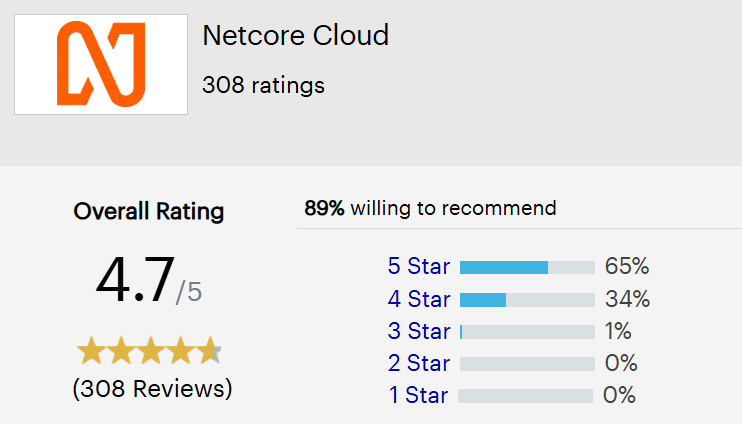
Compare Netcore and Salesforce Marketing Cloud on G2
Key Features That Stand Out vs. Salesforce Marketing Cloud
1. Event-Native Architecture (No SQL Dependency)
The Problem with Salesforce:
- The relational data model requires SQL for segmentation
- 30–40% of marketing bandwidth lost to data prep and table joins
- New marketers require months to ramp up
- Marketing velocity bottlenecked by SQL specialists
How Netcore Solves It:
- Unified event-native data model capturing real-time behavior across:
- SDK events (web & app)
- Attribute updates
- Campaign interactions
- Chatbots
- Backend (S2S) events
- Marketers segment using behavior directly, no SQL queries, no primary key mapping, no table gymnastics
- Supports aggregations, property-level filtering, affinity & RFM natively
2. Real-Time Triggers (vs. 1-Hour Batch Cycles)
The Problem with Salesforce:
- Batch-driven 30–60 minute refresh lag
- Intent cools before activation
- First-session drop-offs unrecovered
- 15–25% first-session conversions lost
- CAC efficiency declines
How Netcore Solves It:
- Live SDK + JS ingestion powering sub-3-second triggers
- No batch refresh cycles
- Journeys activate while the user is still browsing, searching, or onboarding.
- Intent captured at peak consideration, not hours later.
3. Autonomous Multi-Agent Orchestration (AI Executes, Not Just Recommends)
The Problem with Salesforce:
- Einstein AI provides suggestions
- Humans execute manually
- Channel selection remains manual
- 70–80% of execution remains manual despite AI investment
- 80% of campaign time spent building workflows
- AI ROI diluted
How Netcore Solves It:
- Purpose-built multi-agent system that senses, reasons, & acts:
- Segment Agent → micro-segmentation at scale
- Scheduler Agent → optimal timing & channel selection
- Content Agent → multi-channel personalization
- Insights Agent → real-time intelligence
- Co-Marketer → strategic command layer
- All operating within enterprise guardrails (PII protection, encryption, audit trails)
- AI doesn’t just recommend, it collaborates and executes
- Moves from rule-based automation to goal-driven orchestration
4. Unified Native Omnichannel Stack (No Add-Ons)
The Problem with Salesforce:
- WhatsApp = add-on
- RCS = add-on
- Analytics = external tool
- 40–60% inflated TCO beyond license
- Multi-vendor dependency
- Data movement across tools
- ROI obscured by ecosystem cost
- Innovation budget consumed by infrastructure
How Netcore Solves It:
- Email, Push, In-App, WhatsApp, RCS, Web; one orchestration engine.
- Built-in analytics (funnels, trends, cohorts, UPA; embedded inside execution)
- No exports, no sync delays, no data fragmentation.
- Unified behavior layer where search, product views, and drop-offs connect directly to journeys.
5. 30–45 Day Migration vs. 6–12 Month Implementations
The Problem with Salesforce:
- 6–12 month rollout typical
- External SIs required
- Stabilization cycles delay ROI
- Velocity paused during migration
- Competitive momentum lost
- Technology becomes the project
- Minimal ROI in year one
How Netcore Solves It:
- Dedicated migration squad
- Structured onboarding blueprint
- Zero downtime transition
- CRM-agnostic activation (bi-directional Salesforce connector)
- Open data architecture (no vendor lock-in)
- Go-live in 30–45 days
6. Mobile-Native Growth Engine (App-Led Revenue)
The Problem with Salesforce:
- Mobile is an add-on, not the core engine
- SDK events processed post-sync, not in-session
- Push and in-app analytics are fragmented across layers.
- 30–60 min behavior-to-message delay
- Engineering dependency for in-app triggers
- No autonomous channel routing
- 15–25% first-session conversions are unrecovered.
- 70–80% experimentation ceiling
How Netcore Solves It:
- SDK with sub-3s real-time triggers
- Unified Push, In-App, WhatsApp & Web orchestration
- App behavior directly activates journeys (no sync cycles)
- AI agents auto-optimize timing, channel & content
- In-session intent activates instantly, without engineering or batch delays
7. Open Data Architecture (No Vendor Lock-In)
The Problem with Salesforce:
- Suite-native lock-in
- Data trapped in a relational model
- Compliance complexity
- Regional deployment constraints
How Netcore Solves It:
- Real-time streaming to AWS/GCP within seconds
- Controlled regional deployment options
- Full data transparency across systems
- No captivity, no sync dependency
- Bi-directional Salesforce connector (send + receive)
8. Outcome-Linked Pricing (75% Fixed / 25% Variable)
The Problem with Salesforce:
- Volume-based pricing
- Hidden add-on costs spiral at renewal
- WhatsApp, RCS, and analytics each add new line items
- Zero data tax penalty masking true TCO
- Performance risk stays with the customer.
How Netcore Solves It:
- Fixed Cost + 25% Variable Component, like Performance-aligned (flexes down if targets aren’t met)
- Unified stack included: Email, Push, In-App, WhatsApp, RCS, Web + AI Agents, no feature gatekeeping
- Zero data tax (no penalties for customer growth or event scale)
- Marketer-first platform (no-code execution reduces SQL specialist dependency)
- Skin in the game: variable flexes with outcomes.
Salesforce Marketing Cloud Vs Netcore
| Feature | Salesforce Marketing Cloud | Netcore |
|---|---|---|
| Personalization | Batch triggers | Predictive, real-time |
| Campaign setup | IT-heavy workflows | DIY, visual builder |
| Cost | Layered licenses | Transparent tiers |
| Channel reach | Core channels only | Email, Web, Push, RCS, WhatsApp, SMS |
| AI & predictions | Limited | Deep, intent-based models |
| Integration | Complex | Easy connector setup |
| Scalability | Often IT-limited | Designed for marketer scalability |
Top Salesforce Marketing Cloud Alternatives
While Salesforce Marketing Cloud is a popular enterprise solution, it’s far from the only option. Several Salesforce Marketing Cloud Alternatives offer unique strengths, whether you need better mobile reach, simpler automation, or AI-powered segmentation. Below is a curated comparison of top contenders ecommerce marketers are evaluating in 2026.
Top Customer Engagement Platforms Comparison
| Platform | Key Features | Cons | Rating (out of 5) |
|---|---|---|---|
| Netcore | Agentic AI workflows, omnichannel engagement, product discovery, AMP email, real-time personalization | Not Ideal for brands seeking a basic messaging tool. | 4.5 |
| Salesforce Marketing Cloud | Deep CRM integration, Journey Builder, enterprise ecosystem | Complex setup, expensive, slower execution | 4.2 |
| HubSpot Marketing Hub | All-in-one CRM + marketing, easy UI, automation workflows | Limited scalability for enterprise, expensive at scale | 4.4 |
| Insider One | AI personalization, CDP, omnichannel journeys | High cost, limited product experience capabilities | 4.8 |
| Adobe Marketo Engage | Advanced analytics, enterprise personalization, CDP | Very expensive, long implementation cycles | 4.1 |
| MoEngage | Push, email, journeys, mobile-first engagement | Limited AI depth, weaker omnichannel execution | 4.5 |
| Braze | Real-time journeys, APIs, in-app messaging | Premium pricing, technical complexity | 4.5 |
| Klaviyo | Email + SMS for ecommerce, easy automation | Limited beyond ecommerce, costly at scale | 4.6 |
| Iterable | Cross-channel campaigns, flexible data model | Requires technical expertise, slower onboarding | 4.4 |
| SAP Emarsys | Omnichannel automation, SAP ecosystem integration | Rigid workflows, less flexibility vs modern tools | 4.2 |
1. Adobe Experience Cloud
Adobe Experience Cloud is an enterprise customer experience platform built on Adobe Experience Platform. It unifies customer data, journey orchestration, and personalization to deliver real-time omnichannel experiences.
Why Choose It:
- Real-Time CDP with unified customer profiles
- Adobe Journey Optimizer for multi-channel orchestration.
- AI-powered segmentation and decisioning
- Identity Graph for comprehensive customer views
- Comprehensive analytics and privacy-conscious personalization.
- Trusted by enterprises for complex, multi-brand campaigns.
Pricing: Custom quote based on monthly active users (MAUs), plan tier, and engagement requirements. Pricing is available through its sales team.
2. SAP Emarsys
SAP Engagement Cloud (formerly Emarsys) is an enterprise engagement platform combining AI-powered personalization with operational orchestration. It connects customer insights to real-time business signals across commerce, service, and operations.
Why Choose It:
- Enterprise Edition with governance and compliance controls
- Real-time orchestration tied to inventory and ERP data
- AI-assisted content creation and universal schema building
- Multi-regional support for global enterprises
- Integrated with SAP Commerce and Service clouds.
Pricing: Custom annual pricing based on contact volume, selected modules, and integrations; contact SAP for a quote.
3. Iterable
Iterable is an AI-powered customer communication platform built for moment-based marketing. It combines real-time behavioral data with intelligent automation to deliver personalized, cross-channel experiences at enterprise scale.
Why Choose It:
- Moments-based marketing capturing peak intent
- Smart Ingest for cloud data warehouse integration
- Flexible API-first architecture for customization
- Workflow Studio for complex multi-channel journeys
- Iterable AI Suite with predictive goals
- Better onboarding than Braze.
Pricing: Enterprise, quote-based pricing with an integrated platform fee covering channels; the final cost depends on your contract and usage.
4. HubSpot Marketing Hub
HubSpot Marketing Hub is an all-in-one platform combining email marketing, landing pages, automation, and analytics. Built on HubSpot’s CRM, it centralizes marketing functions to eliminate fragmented workflows.
Why Choose It:
- Free plan with email marketing, forms, and chatbots
- AI-powered content creation and subject lines
- Unified data across marketing and sales
- 400+ integrations and drag-and-drop builders
- Ideal for mid-market teams wanting all-in-one simplicity with CRM alignment.
Pricing: HubSpot offers a free CRM, with Marketing Hub now priced $15/seat per month (Starter, billed annually) up to $3,600/month for Enterprise, which includes 10,000 contacts. Costs climb as your contact list and seat count grow.
5. Braze
Braze is a market-leading customer engagement platform enabling multi-channel messaging at scale. It combines real-time segmentation, powerful journey orchestration through Canvas, and behavioural data integration for personalized omnichannel campaigns.
Why Choose It:
- Advanced real-time segmentation capabilities
- Powerful Canvas journey orchestration tool
- Established market leader with proven ROI
- Multi-channel messaging (email, push, SMS, in-app, web)
- Scalable infrastructure for high-volume operations.
Pricing: Custom pricing based on monthly active users (MAUs), platform edition, and usage credits. Offers Go, Select, Pro, and Enterprise editions
6. Klaviyo
Klaviyo is the all-in-one marketing platform purpose-built for e-commerce and D2C brands. It combines email, SMS, and behavioural data to drive revenue through plug-and-play automations and AI-powered personalisation.
Why Choose It:
- Deepest Shopify integration in the market
- Pre-built automation templates for rapid deployment
- AI Composer for instant campaign creation
- Very user-friendly interface (8.8/10 ease)
- 193,000+ brands using the platform
- Ideal for e-commerce; less suitable for enterprise.
Pricing: Klaviyo has a free plan up to 250 contacts and paid email plans from around $20/month.
7. MoEngage
MoEngage is an insights-led customer engagement platform combining product analytics and AI-powered marketing automation. It enables omnichannel campaigns across email, SMS, push, in-app, and web with real-time personalization and journey orchestration.
Why Choose It:
- Sherpa AI with intelligent path optimization and next-best-action.
- Deep RFM segmentation and predictive analytics
- Visual no-code builder for campaign creation
- Trusted by 1,350+ global brands
- Strong segmentation and automation without a steep learning curve.
- Seamless multi-channel engagement in one dashboard
Pricing: Custom pricing for Growth and Enterprise plans, typically based on monthly tracked users (MTUs), channels, and add-ons.
8. Insider One
Insider One is an AI-powered customer engagement platform with unified CDP and cross-channel orchestration across WhatsApp, SMS, email, web, app, and site search. It enables predictive, generative, and agentic AI-driven personalization.
Why Choose It:
- Unified CDP for real-time customer segmentation
- 150+ out-of-the-box triggers and behavioral signals
- Trusted by 2,000+ brands across 15 industries
- High-touch enterprise support with a proactive success team.
Pricing: Custom pricing based on customer scale, channels, and platform requirements; enterprise pricing is provided through a sales quote.
Final Take
If you’re an ecommerce decision-maker stuck on setup delays, performance lags, and ballooning costs, it’s time to switch. Netcore brings marketer-founded simplicity, intent-driven AI, and seamless omnichannel engagement.
Book your Netcore demo today if you’re serious about AI-powered personalization, predictable costs, and execution speed, your ecommerce flywheel is ready to fire.
Book Demo Now