A high app-download count can look impressive on a dashboard. But for a quick service restaurant (QSR), downloads only matter if they turn into orders.
A leading QSR chain had already built a strong digital customer base in Indonesia and wanted its app to become more than an ordering utility. The bigger opportunity was to make the app a more active part of the customer relationship, helping users discover offers, complete orders, and come back more often.
The problem was not a lack of customers. It was what happened between the download and the next order.
By using personalized in-app engagement across different stages of the customer journey, the brand increased its conversion rate by 23% and drove 40% more clicks on personalized rich-media pushes.
The Challenge: Hungry Customers, Slipping Orders
QSR customers tend to have short decision windows.
Someone opens an app because they are hungry, sees an offer, browses a few products, and either places an order or moves on. There is little patience for irrelevant messages or unnecessary friction.
For this brand, demand was already there. Brand awareness was strong, customers were using the app, and promotions were generating interest. But the funnel was leaking at several points.
Three problems stood out.
- Downloads were not translating into active usage.
Installing an app does not mean a customer understands what it can do. New users could miss deals, ordering features, loyalty benefits, or other functionality simply because nobody was guiding them through the experience.
- Customers were dropping off before checkout.
Browsing was happening, but not every session ended with an order. A customer might explore the menu or an offer and leave without completing the purchase.
- Getting the first order was not enough.
The business needed customers to return. For a QSR, sustainable digital growth depends on repeat ordering, not simply acquiring another app user every time.
Taken together, the issue was a familiar funnel problem: acquisition was working, but activation, conversion, and retention had room for improvement.
The answer was not another blanket notification campaign.
The Strategy Behind Improvement in App Engagement
The brand shifted its focus from simply driving users back to the app to making the app experience more useful once customers were there.
The strategy centred on personalized engagement at different moments in the customer journey.
Three levers became particularly important.
1. Walkthrough nudges for activation
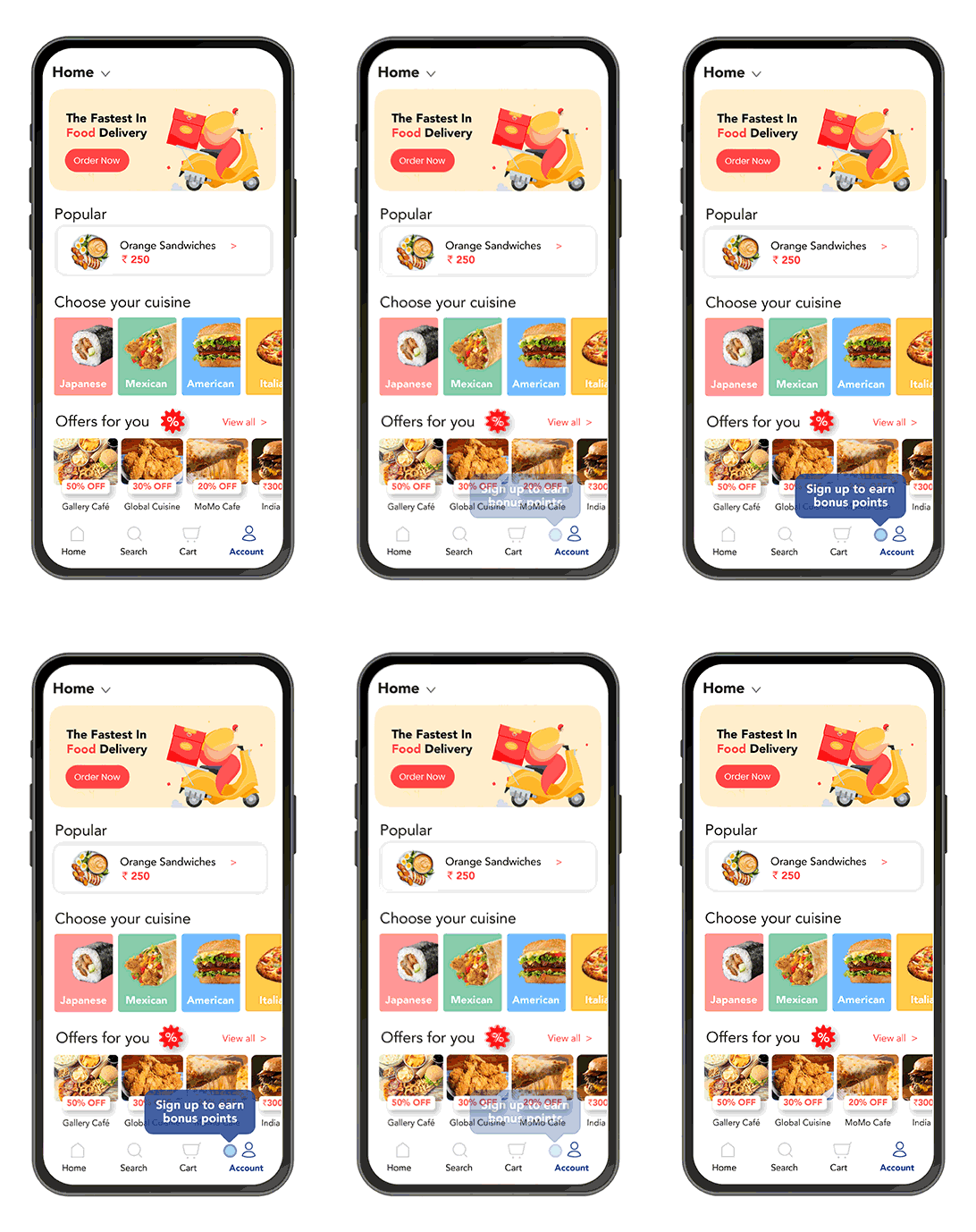
New and existing users were guided toward deals, features, and actions they might otherwise overlook.
Instead of assuming that an app download would naturally become regular usage, the brand used walkthroughs to show customers what was available and give them a reason to explore.
This helped bridge the gap between “installed” and “active.”
2. Rich-media pushes for timely action
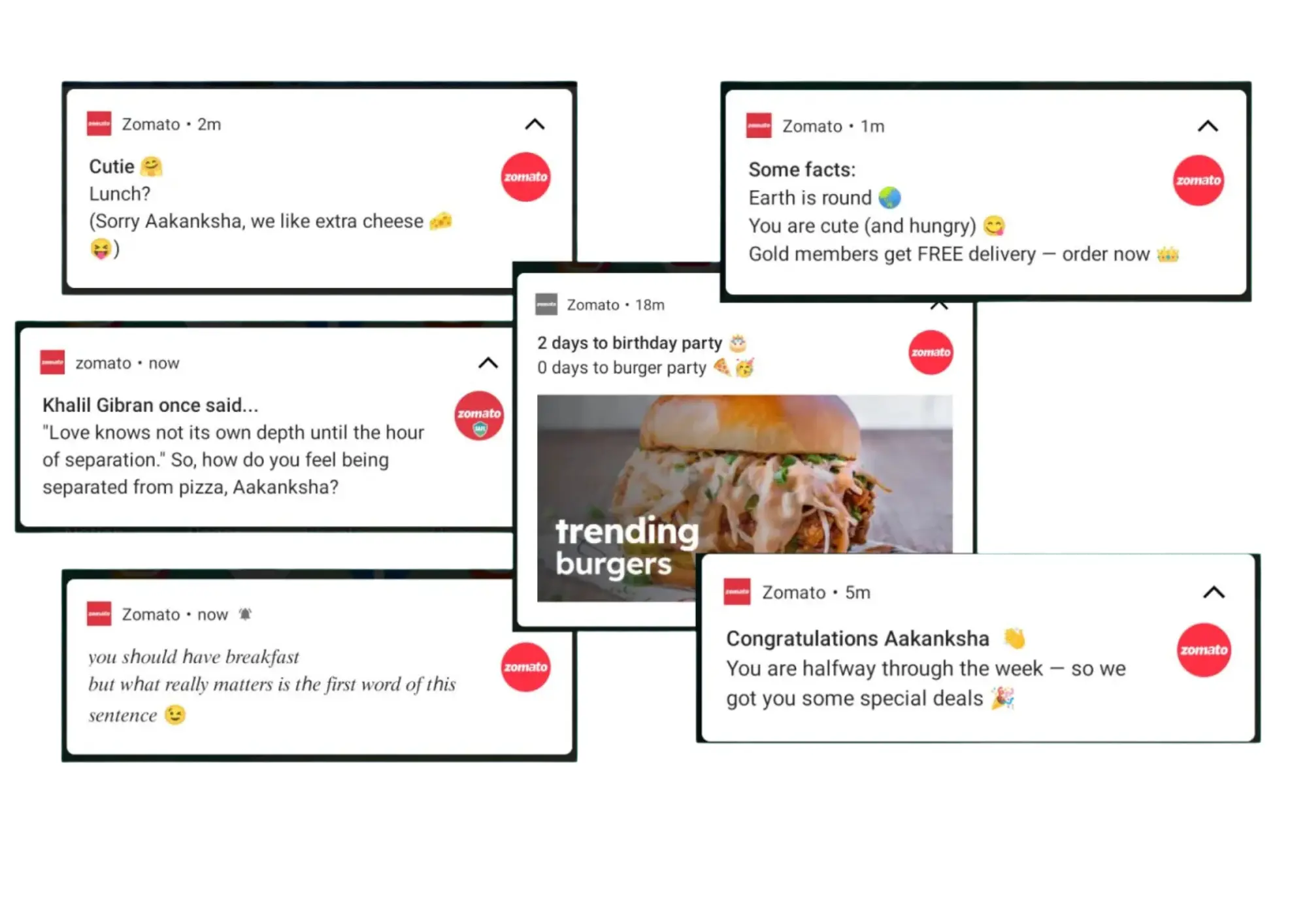
Example of rich-media push for QSR brands
Static notifications can easily disappear into a crowded notification tray.
The brand introduced richer push experiences using promotional visuals, countdowns, limited-time offers, and interactive elements such as product or topping choices.
The objective was simple: make the offer easier to understand and give customers a reason to act now.
For a QSR, timing matters. A limited-time offer that feels relevant at the right moment can be much more effective than a generic “Order now” notification.
3. In-app messages to sustain engagement
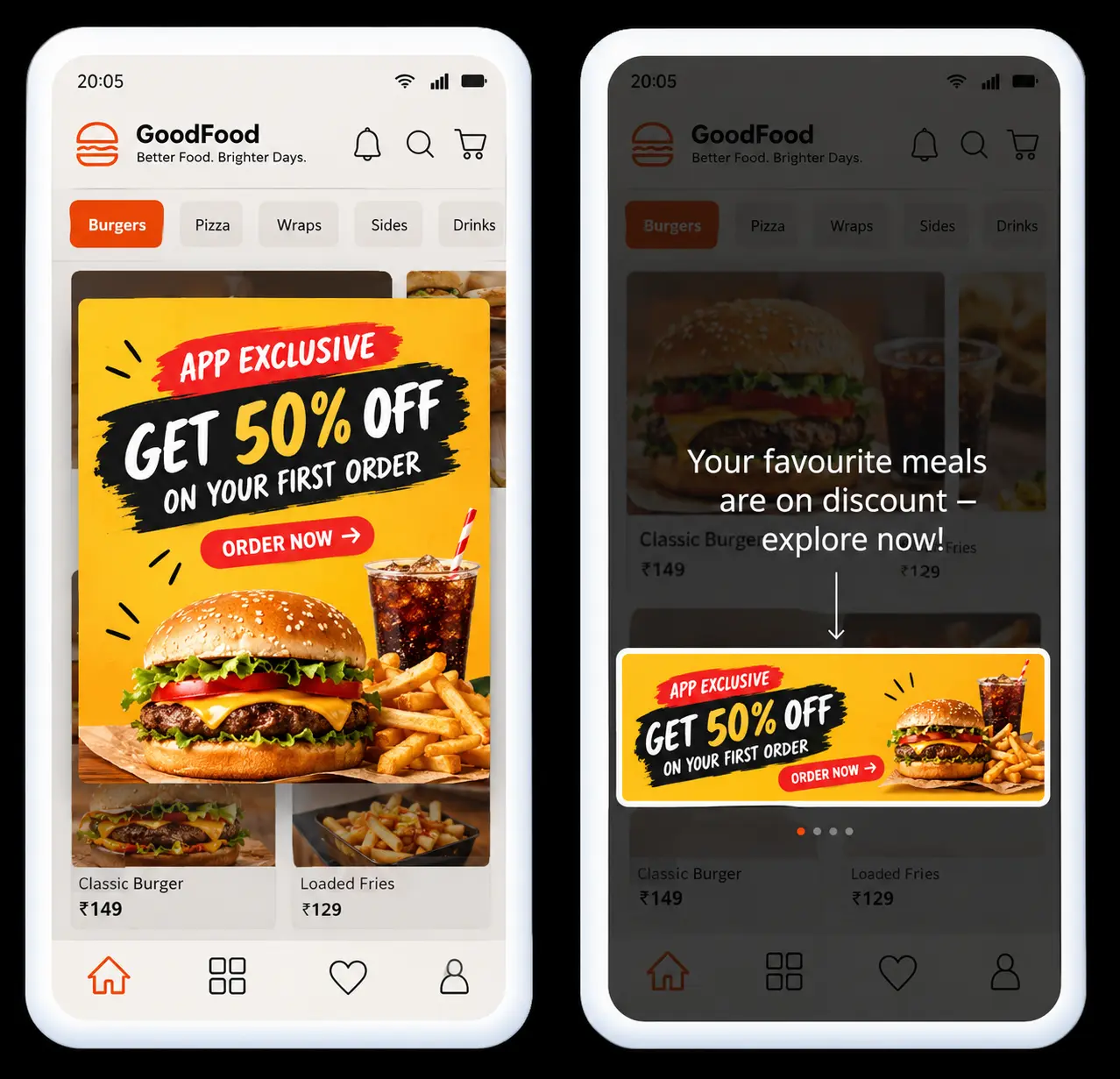
Example of an in-app notification sent by a QSR app.
The third layer focused on what happened once customers were already inside the app.
In-app messages allowed the brand to communicate without pulling customers away from the ordering experience. Offers, recommendations, reminders, and other messages could appear in context rather than arriving as another standalone notification.
That distinction matters.
The brand was no longer treating engagement as something that happened around the app. It was becoming part of the app experience itself.
Why This Approach Worked
The strategy worked because each engagement mechanism addressed a different point in the funnel.
Walkthroughs addressed activation. Instead of leaving new or dormant users to figure out the app themselves, the brand gave them a guided path toward meaningful actions.
Rich-media pushes addressed conversion. Countdown-led promotions and visually engaging offers created a stronger reason to return and complete an order, particularly when the offer had a clear time boundary.
In-app messaging supported retention. Continued communication inside the app helped keep the brand relevant between orders and gave customers additional reasons to return.
The broader lesson is important: personalization does not necessarily mean creating a completely different experience for every customer.
Sometimes it means getting the timing, message, format, and context right.
A customer browsing the menu needs a different nudge from someone who has just installed the app. A dormant user needs a different reason to return from a regular customer who already orders every week.
The more closely engagement matches that context, the less the brand has to rely on volume.
The Results: More Engagement, More Orders
The change showed up in the metrics that mattered.
- 23% higher conversion rate, meaning more app visitors moved from browsing to completed orders.
- 40% more clicks on personalized rich-media pushes, demonstrating stronger engagement with visual, interactive formats.
- Fewer drop-offs and more opportunities for repeat orders, addressing both conversion and retention.
The results also changed the way digital engagement could be viewed internally.
The app was no longer simply another ordering channel. It had become an environment where the brand could actively guide customers, respond to behaviour, and create reasons to return.
For a QSR, that matters because the economics of digital growth are not just about acquiring another customer. They are about getting more value from customers who already know the brand.
What QSR Brands Can Take Away
1. Downloads are a starting point, not a growth metric.
An activation strategy is what turns an installed app into an active customer channel.
2. Richer formats can make promotional messages more actionable.
Countdowns, visuals, and interactive elements give customers more context than a static notification.
3. Checkout drop-off does not always require a checkout redesign.
A well-timed intervention earlier in the journey can sometimes prevent the customer from reaching the point of abandonment.
4. Retention is partly an engagement problem.
A strong product gets customers to order. Consistent, relevant engagement gives them reasons to come back.
5. Personalization compounds across the funnel.
Better activation creates more active users. Better engagement can improve conversion. Better post-purchase engagement creates more opportunities for repeat orders.
From Downloaded App to Daily Habit
In QSR, the competitive advantage is rarely just having an app. Most major brands already do.
The harder question is whether customers have a reason to open it, order from it, and return to it.
This brand’s experience shows that the answer does not always require more messages or more promotions. It can come from making each interaction more relevant to where the customer is in the journey.
For QSR and food-delivery brands, that means treating the app as a customer experience layer, not simply an ordering utility.
Walkthrough nudges can turn downloads into usage. Rich-media engagement can turn interest into action. Timely in-app messaging can turn an order into the next visit.
That is how an app moves from being something customers have installed to something they habitually use. Are you a QSR brand interested in increasing revenue through your app & want to provide an interactive customer experience? Talk to us today.