Mass marketing is losing relevance. Yet ecommerce personalization remains a challenge: 71% of consumers expect personalized interactions, while 76% get frustrated when brands fail to deliver. Fragmented data, disconnected channels, stale recommendations, and rule-based journeys make true one-to-one engagement difficult. Now, AI is changing the game, helping brands move from personalization at scale to autonomous, real-time customer engagement.
Why One-to-One Marketing Matters Now
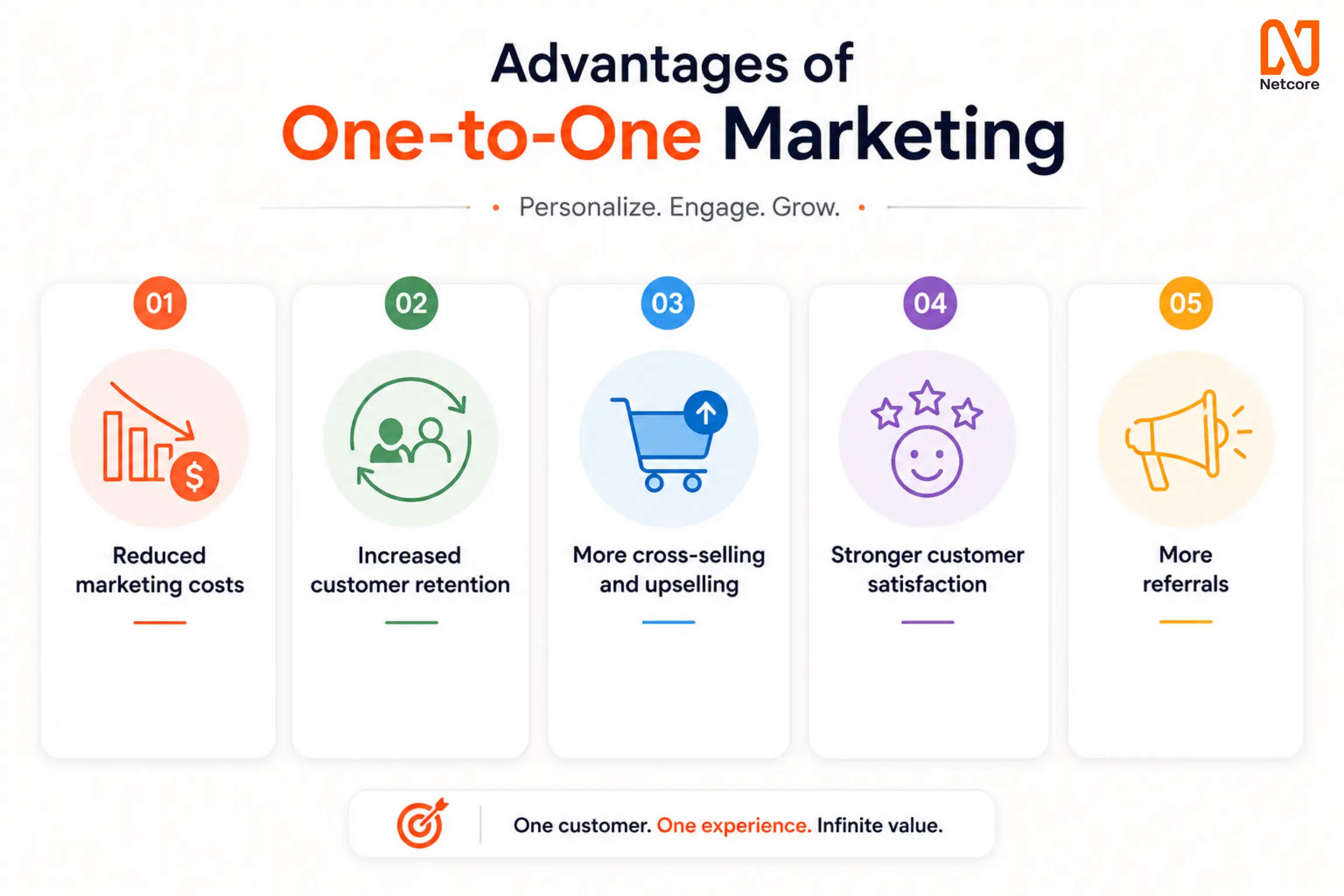
Customer expectations have been reset by the best experiences in the market, the Amazons and Netflixes of the world – and that “Amazon-level” personalization is now the baseline everywhere, including smaller ecommerce brands. What used to require an enterprise budget and a data science team is now accessible through off-the-shelf platforms. The payoff is real: personalized experiences consistently drive higher conversion rates, larger basket sizes, and stronger retention than generic, batch-and-blast marketing ever could. We will talk about one-to-one marketing in this blog to explore hyper-personalization.
Core Strategies for One-to-One Marketing
Behavioral segmentation and triggers. Instead of static customer lists, brands now track real-time behavior, browsing patterns, cart activity, purchase history, and trigger messages accordingly. Cart abandonment emails, browse abandonment nudges, and post-purchase follow-ups all fall into this category, and they consistently outperform scheduled campaigns because they’re timely and relevant.
Dynamic product recommendations. “Customers like you also bought” and “based on your recent browsing” recommendations aren’t just nice-to-haves anymore; they’re revenue drivers, both on-site and inside email and SMS. Most agentic marketing platforms are offering product recommendations powered by AI.
Personalized email and SMS journeys. The shift here is from batch-and-blast to lifecycle-based flows: welcome series, replenishment reminders, win-back campaigns, each triggered by where an individual customer actually is in their journey, not a calendar date.
Predictive personalization. Using purchase history and AI models, brands can now anticipate needs before customers express them, reminding a customer to reorder a product before they run out, or surfacing the “next best product” based on patterns across similar shoppers.
The Role of Agentic Marketing
The newest and arguably most significant shift is agentic marketing: the move from tools that suggest to AI agents that act. Traditional personalization engines recommend a product or flag a segment, but a human (or a rigid, pre-set workflow) still has to execute the next step. Agentic marketing removes that bottleneck. AI agents can independently plan, execute, and adjust marketing actions for each customer, deciding in real time whether to send an email or an SMS, what offer to surface, or when to pause outreach because a customer looks fatigued.
The difference from ordinary automation is decision-making. A rules-based workflow follows the same “if this, then that” logic for every customer. An agentic system adapts on the fly, learning and adjusting per individual. That’s what finally makes true one-to-one marketing scalable: a single agent can manage thousands of unique customer journeys simultaneously, something static workflows were never built to do.
How Netcore Makes One-to-One Marketing in Ecommerce Better
Netcore puts agentic marketing into practice across the entire customer journey: discover, decide, and buy.
Discover. Netcore’s semantic search engine interprets customer intent rather than just matching keywords, so typos and vague searches no longer cost conversions, fewer zero-result pages, more product discovery. Its Shopping Agent goes further, acting as a personal shopping assistant that understands customer data, reads sentiment, and responds like a top sales expert, guiding, filtering, and recommending to reduce friction and cut cart abandonment.
Decide. Netcore’s intent-led personalization moves brands beyond broad demographic targeting (“Hi 20–30 year-olds…”) toward true individual relevance (“Hi Sara, here’s what you’ll love next”). Interpreting customer data in real time, helps brands act on what a customer is likely to do next, not just react to what they did last week.
Buy. This is where agentic AI fully shows up. Co-Marketer AI and its agentic team scale personalized campaigns without the manual grunt work, freeing marketers to focus on creative strategy instead of execution. Personalization stays consistent even as customers move across channels like app, email, WhatsApp, and web, so brands stay present without becoming spam. And content personalization in banners, layouts, and CTAs adapts in real time, with rules set once and left to run on autopilot.
Together, these capabilities show agentic marketing in action: AI agents handling discovery, decisioning, and conversion as one connected system, not three disconnected tools.
Key Takeaway
One-to-one marketing is evolving from personalized messaging into autonomous, agent-driven relationships, and the brands that adopt it early will be the ones customers keep coming back to. The challenge has always been scale, you can’t manually personalize for millions of shoppers. That’s where an ecommerce agentic marketing platform comes in: AI agents that create segments targeted down to a single customer, and generate the insights needed to make every message feel personal, at whatever scale you’re operating at. Talk to us, to understand how the agentic marketing platform can solve your personalization challenges,