TL;DR
- What is Cross-Channel Marketing? Cross-channel marketing connects multiple customer touchpoints such as Email, SMS, Push, WhatsApp, and Web; to deliver a more consistent and connected customer experience.
- Top Cross-Channel Marketing Platforms: Netcore, Braze, Salesforce Agentforce, Adobe Marketo Engage, HubSpot, Klaviyo, and ActiveCampaign.
Customers today move across multiple touchpoints before making a purchase or becoming loyal to a brand. They may discover a product through an ad, browse a website, receive an email, engage with a push notification, and complete their purchase through WhatsApp. Cross-channel marketing platforms help brands connect these interactions and deliver more consistent, relevant customer experiences.
However, not every platform offers the same depth of orchestration. Some focus on true omnichannel engagement, while others specialize in multi-channel automation, CRM-led marketing, or ecommerce lifecycle campaigns. This guide compares the top cross-channel marketing platforms to help businesses identify the right fit.
Quick Verdict: Best Cross-Channel Marketing Platforms by Category
- Best Omnichannel Platform: Netcore – Best for AI-native omnichannel engagement, personalization, and real-time customer journey orchestration.
- Best Real-Time Engagement Platform: Braze – Best for mobile-first, real-time customer engagement and lifecycle marketing.
- Best CRM-First Platform: Salesforce Agentforce – Best for enterprises combining CRM data, AI agents, and customer engagement.
- Best B2B Marketing Automation: Adobe Marketo Engage – Best for lead nurturing, ABM, and enterprise B2B marketing.
- Best Integrated Marketing Platform: HubSpot – Best for businesses wanting CRM, marketing, and sales capabilities in one ecosystem.
- Best Ecommerce Platform: Klaviyo – Best for ecommerce brands focused on personalized email, SMS, and lifecycle marketing.
- Best SMB Automation Platform: ActiveCampaign – Best for growing businesses seeking flexible automation and customer journey management.
Top Cross-Channel Marketing Platforms
1. Netcore
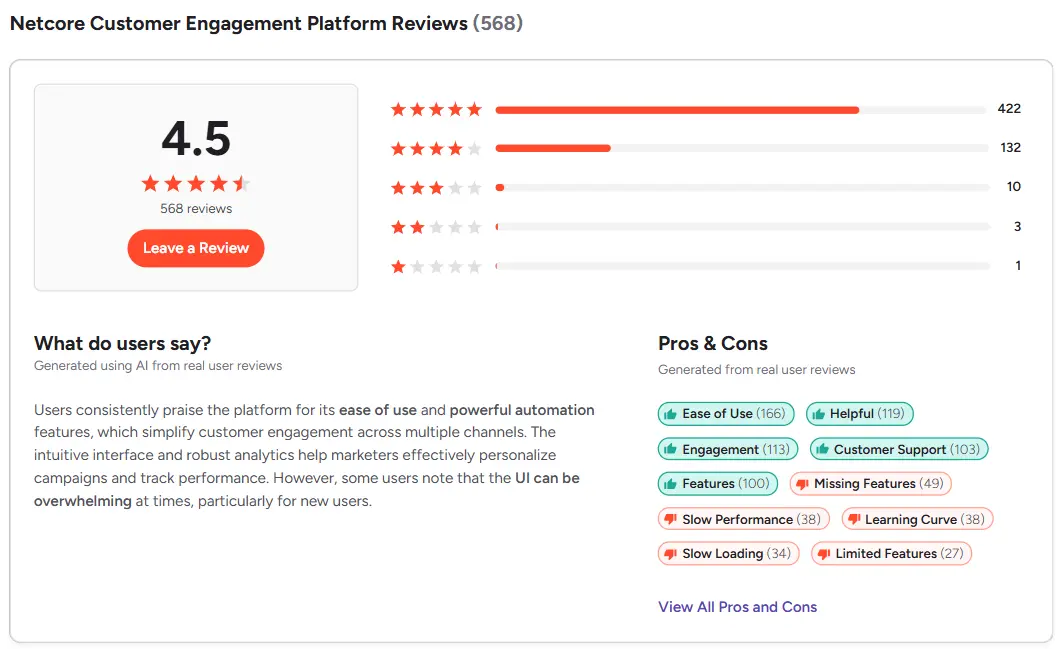
Source: G2
Netcore is a full-stack, Agentic marketing platform that unifies customer data, native channel infrastructure, and agentic AI to orchestrate real-time cross-channel journeys. With owned delivery infrastructure across key channels, it helps enterprises improve deliverability, accelerate execution, and drive measurable revenue outcomes.
Standout Features: Agentic AI for predictive segmentation, real-time intent detection, send-time and content optimization, no-code journey orchestration, AI-powered search, catalog intelligence, product recommendations, and real-time analytics.
Pros: Native channel infrastructure for greater deliverability and operational control; autonomous AI agents for real-time decisioning; unified customer profiles and marketer-led journey orchestration; enterprise-scale infrastructure processing billions of interactions; built-in product discovery and personalization; rapid migration and time-to-value; and outcome-based pricing options.
Cons: Its not suitable for teams who are not used to operating using omnichannel platform or have existing workflows in disjointed platforms
Best For: Enterprises looking for a full-stack, AI-native platform that combines customer intelligence, owned channel infrastructure, real-time agentic AI, personalization, and omnichannel orchestration to drive measurable revenue growth.
2. Braze
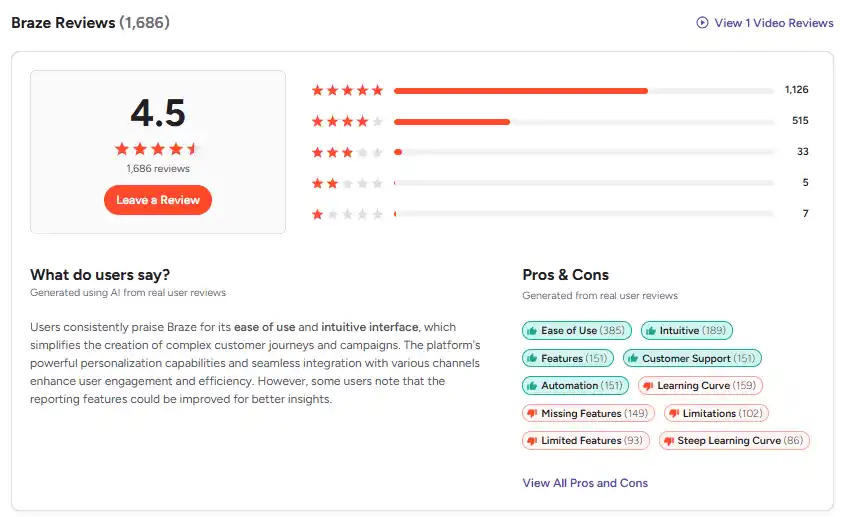
Braze is a customer engagement platform focused on real-time, personalized interactions across digital channels and lifecycle marketing.
Standout Features: Email, Push, In-App Messaging, Content Cards, SMS, segmentation, experimentation, personalization, and journey orchestration.
Pros: Strong real-time engagement, mobile capabilities, lifecycle marketing, and enterprise scalability.
Cons: Advanced implementations can require technical resources and additional integrations for broader analytics and customer data requirements.
Best For: Enterprise brands prioritizing real-time engagement and sophisticated lifecycle marketing.
3. Salesforce Agentforce
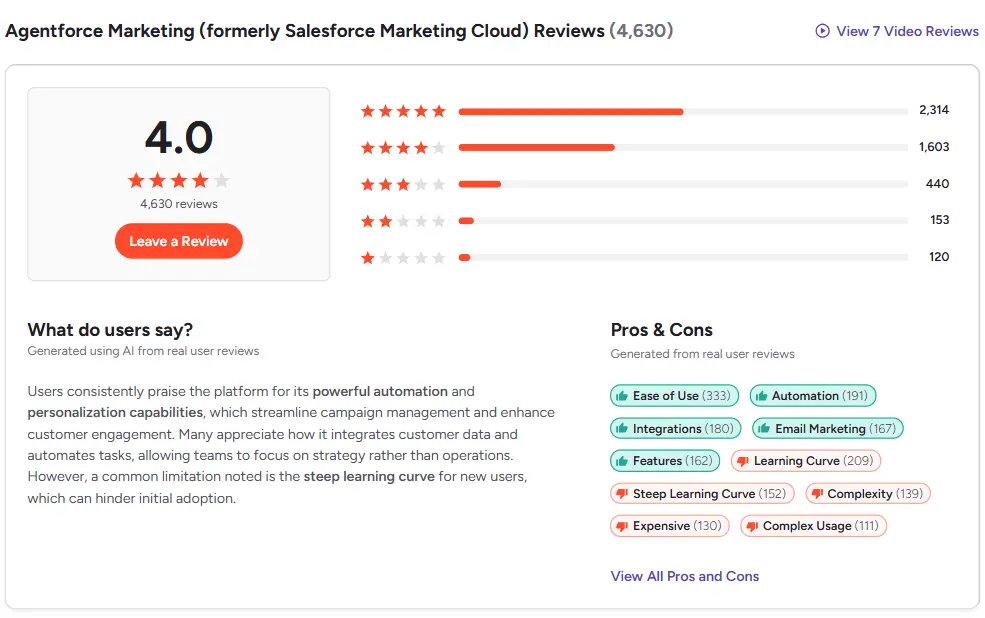
Salesforce Agentforce brings AI agents into the Salesforce ecosystem, enabling enterprises to connect CRM data with customer-facing workflows and engagement.
Standout Features: AI agents, CRM integration, customer data activation, marketing automation, personalization, and journey orchestration.
Pros: Deep CRM integration, extensive enterprise capabilities, and AI-powered automation.
Cons: Implementation can be complex, and advanced use cases may require multiple Salesforce products.
Best For: Large enterprises already invested in the Salesforce ecosystem.
4. Adobe Marketo Engage
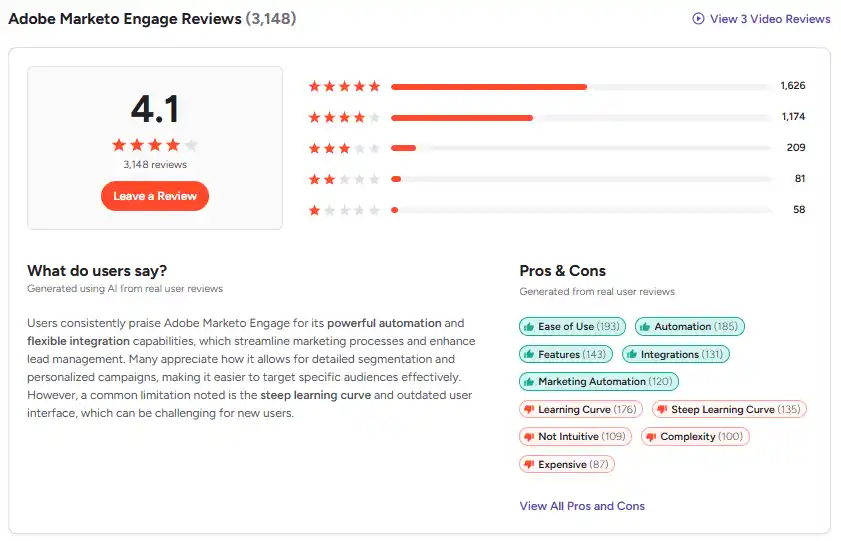
Adobe Marketo Engage is an enterprise marketing automation platform focused primarily on B2B marketing, lead management, nurturing, and account-based marketing.
Standout Features: Lead management, ABM, email marketing, lead nurturing, campaign automation, personalization, and CRM integrations.
Pros: Strong B2B automation, lead nurturing, ABM, and enterprise scalability.
Cons: Steep learning curve and technical requirements for advanced implementations.
Best For: B2B enterprises focused on demand generation, ABM, and revenue marketing.
5. HubSpot
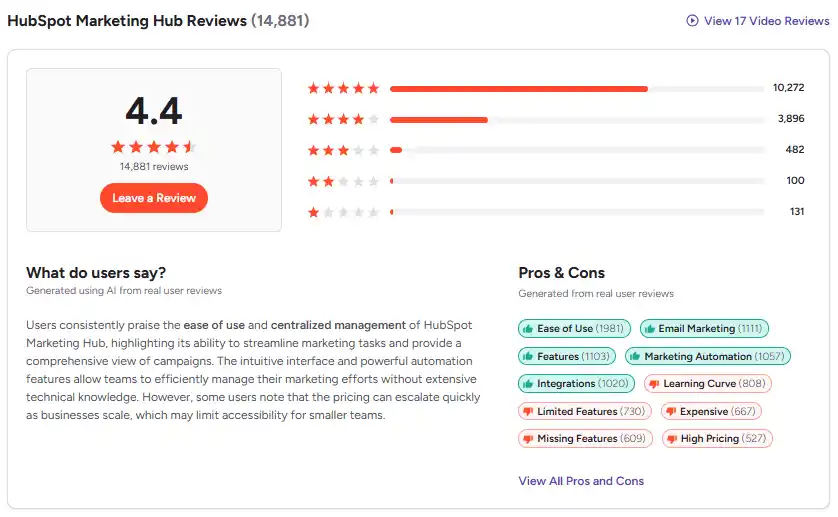
HubSpot combines CRM, marketing, sales, and customer service capabilities, enabling businesses to manage customer interactions across multiple touchpoints.
Standout Features: Email marketing, marketing automation, CRM, landing pages, social media, segmentation, lead nurturing, and reporting.
Pros: Easy to use, strong CRM integration, and an integrated marketing ecosystem.
Cons: Costs can increase as customer databases and feature requirements grow. Advanced ecommerce personalization may require additional integrations.
Best For: Growing businesses looking for an integrated CRM-first marketing platform.
6. Klaviyo
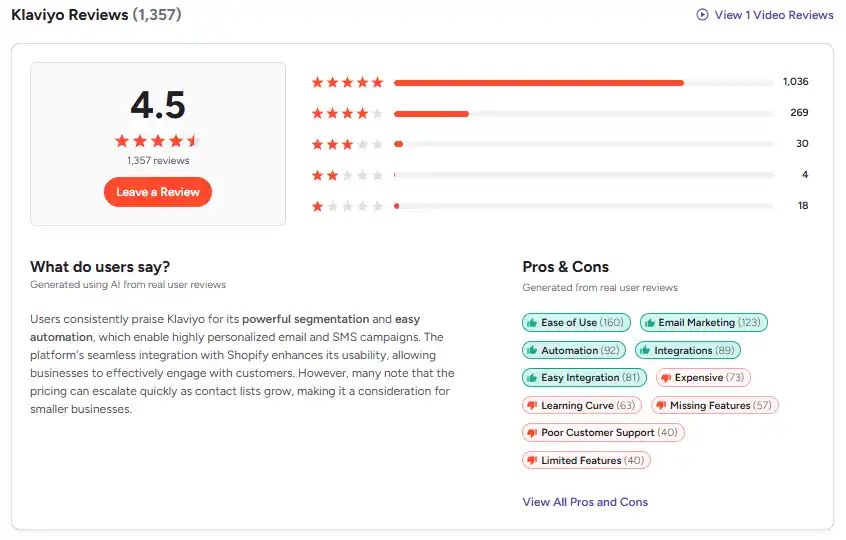
Klaviyo is an ecommerce-focused customer engagement platform built around personalized email, SMS, customer segmentation, and lifecycle automation.
Standout Features: Email, SMS, behavioral segmentation, automated flows, product recommendations, ecommerce integrations, and customer analytics.
Pros: Strong ecommerce integrations, personalization, segmentation, and lifecycle automation.
Cons: Primarily centered on Email and SMS, with broader omnichannel requirements potentially requiring additional solutions.
Best For: Ecommerce and DTC brands focused on retention, lifecycle marketing, and personalized customer engagement.
7. ActiveCampaign
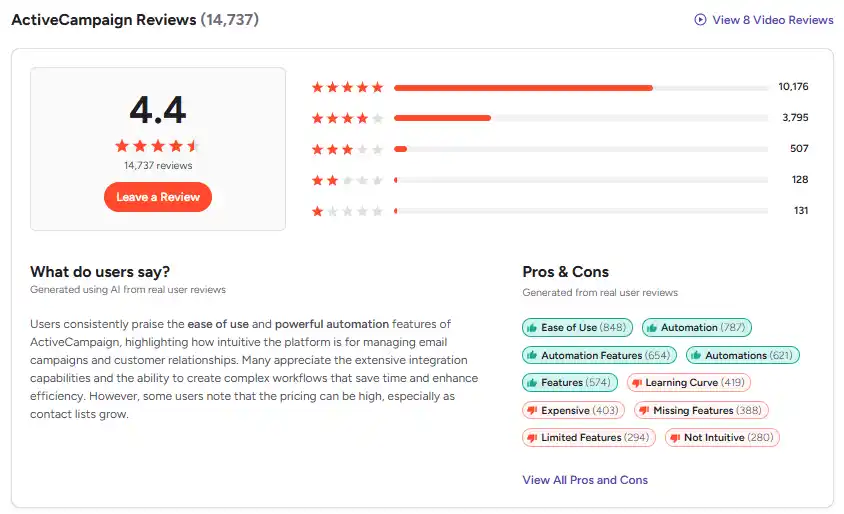
ActiveCampaign combines marketing automation and CRM capabilities to help businesses create personalized customer journeys and automate engagement.
Standout Features: Email marketing, automation, CRM, segmentation, lead scoring, SMS integrations, and automated workflows.
Pros: Flexible automation, strong CRM capabilities, and suitable for small and mid-sized businesses.
Cons: Advanced capabilities can have a learning curve, while broader omnichannel engagement may depend on integrations.
Best For: SMBs and growing businesses seeking flexible marketing automation without enterprise-level complexity.
Cross-Channel Marketing Platforms: Head-to-Head Comparison
| Platform | Primary Focus | Best For | Key Strength |
|---|---|---|---|
| Netcore | Omnichannel | Enterprise | AI-native customer engagement |
| Braze | Omnichannel | Enterprise | Real-time lifecycle engagement |
| Salesforce Agentforce | CRM-first | Enterprise | CRM + AI agents |
| Adobe Marketo Engage | CRM-first | B2B Enterprise | ABM and marketing automation |
| HubSpot | Multi-channel | SMB–Enterprise | CRM-led marketing |
| Klaviyo | Ecommerce | Ecommerce/DTC | Email and SMS lifecycle marketing |
| ActiveCampaign | Multi-channel | SMB | Marketing automation |
Omnichannel vs Multi-Channel vs CRM-First: Which Platform Do You Need?
Omnichannel platforms such as Netcore and Braze are designed to connect customer interactions across channels and orchestrate personalized journeys in real time.
Multi-channel platforms such as HubSpot and ActiveCampaign help businesses manage campaigns across several channels but may rely more heavily on integrations for broader engagement requirements.
CRM-first platforms such as Salesforce Agentforce and Adobe Marketo Engage place customer and account data at the center of marketing, making them particularly relevant for enterprise and B2B organizations.
How to Choose the Best Cross-Channel Marketing Platform
Consider these factors before making a decision:
- Channels: Does the cross-channel platform support channels you need like Email, Push, WhatsApp, SMS, RCS, In-App, and Web engagement.
- Data: Can the platform unify real-time customer and behavioral data?
- AI: Does it offer predictive segmentation, AI-powered recommendations, decisioning, and optimization?
- Orchestration: Can you design and optimize journeys across multiple channels?
- Personalization: Can engagement adapt to real-time customer intent?
- Scalability: Can the platform handle your customer and message volumes?
- Total cost of Ownership: Consider licensing, implementation, integrations, channel costs, and technical resources.
Final Take
The best cross-channel marketing platform depends on your business model, customer journey complexity, channels, and data architecture. For enterprises looking to move beyond disconnected campaigns toward AI-powered, real-time omnichannel engagement, Netcore stands out by combining customer intelligence, personalization, journey orchestration, and multi-channel activation in one platform. Meanwhile, Braze, Salesforce Agentforce, and Adobe Marketo Engage serve specific enterprise engagement and CRM-led needs, while HubSpot, Klaviyo, and ActiveCampaign offer strong options for integrated marketing automation and ecommerce lifecycle engagement.