




TL;DR
- Ecommerce personalization software helps online brands deliver relevant experiences based on customer behavior, preferences, purchase history, and real-time intent.
- The best platforms combine AI-powered recommendations, behavioral segmentation, personalized search, product discovery, merchandising, dynamic content, and omnichannel engagement.
- Netcore: Best for AI-native ecommerce personalization, combining product recommendations, AI Search, merchandising, predictive intelligence, and omnichannel engagement.
- Bloomreach: Best for ecommerce personalization and digital experience optimization with AI-powered search, merchandising, and recommendations.
- Adobe: Best for enterprises seeking advanced personalization integrated with a broader digital experience ecosystem.
- Salesforce: Best for businesses looking to connect ecommerce personalization with CRM and customer data.
- Klaviyo: Best for DTC and ecommerce brands focused on personalized email, SMS, and lifecycle marketing.
- Insider: Best for omnichannel personalization and AI-driven customer experience orchestration.
- Dynamic Yield: Best for experimentation, recommendations, and personalized digital experiences.
- Nosto: Best for ecommerce personalization, product recommendations, and merchandising.
Today’s ecommerce customers expect more than generic shopping experiences; they expect every interaction to feel relevant, timely, and personalized. Whether they’re browsing your homepage, opening an email, or searching for products, shoppers want brands to understand their preferences and recommend products that match their interests. In fact, personalization has become one of the biggest competitive differentiators, with AI enabling brands to deliver tailored experiences at scale across every touchpoint.
This shift has fueled the rise of ecommerce personalization software. These platforms use customer data, real-time behavioral signals, and machine learning to personalize product recommendations, website content, promotions, search results, and marketing campaigns. The result is a more engaging shopping experience that increases conversions, boosts average order value (AOV), improves customer retention, and drives higher customer lifetime value (CLV).
However, with dozens of personalization platforms available, choosing the right solution can be challenging. Some platforms specialize in AI-powered product recommendations, while others offer comprehensive capabilities such as omnichannel personalization, customer journey orchestration, predictive analytics, experimentation, and dynamic content optimization. The ideal platform depends on your business size, ecommerce ecosystem, personalization goals, and long-term growth strategy.
In this guide, we’ve evaluated the top 8 ecommerce personalization software platforms in 2026. Whether you’re a fast-growing D2C brand or a global enterprise retailer, this comparison will help you identify the platform that best fits your ecommerce personalization strategy.
1. Netcore Cloud
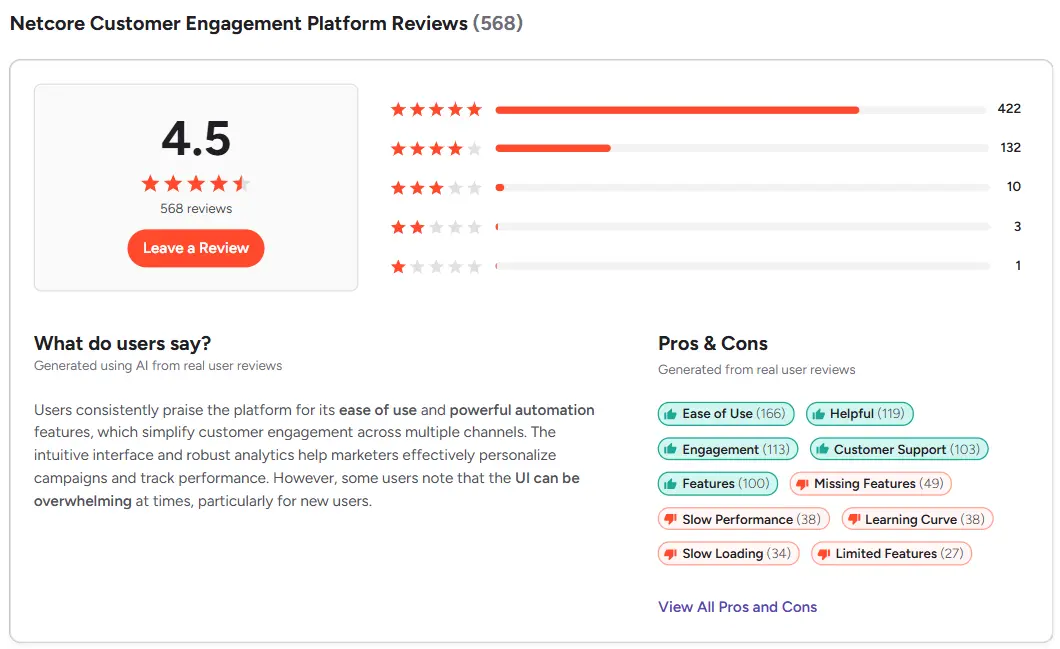
Best for: Mid-market and enterprise ecommerce brands looking for AI-powered omnichannel personalization.
Netcore combines a Customer Engagement Platform (CEP), AI-powered personalization, product recommendations, customer journey orchestration, and predictive analytics into a single solution. Its recommendation engine leverages real-time behavioral data, purchase history, and affinity modeling to deliver personalized experiences across websites, mobile apps, email, WhatsApp, and push notifications.
Unlike standalone recommendation engines, Netcore enables brands to activate personalization throughout the customer lifecycle, from product discovery and cart recovery to retention and loyalty campaigns with its ecommerce agentic marketing platform.
Key Features
- AI-powered product recommendations
- Personalized AI-powered search
- Dynamic website personalization
- Omnichannel journey orchestration
- Predictive customer segmentation
- Real-time decisioning
- Product affinity and cross-sell recommendations
- Personalized email, WhatsApp, SMS, and push notifications
- Advanced analytics and experimentation
Pros
- Unified customer engagement and personalization platform
- Strong omnichannel capabilities
- Enterprise-grade AI models
- Easy integration with major ecommerce platforms
Cons
Its advanced AI-powered recommendations and search personalization might not be required for some ecommerce businesses with limited SKUs and not complex product variants.
2. Dynamic Yield
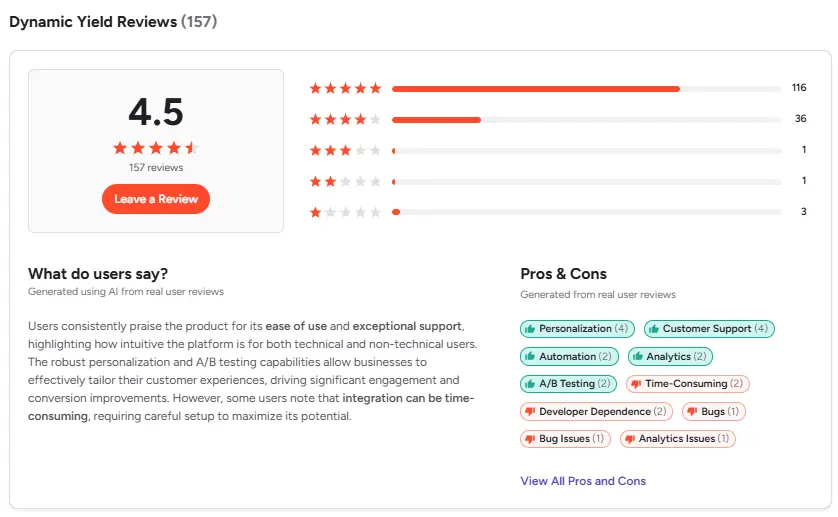
Best for: Large retailers focused on website optimization and experimentation.
Dynamic Yield is known for its sophisticated personalization and A/B testing capabilities. The platform enables brands to personalize website content, product recommendations, promotions, and search experiences using machine learning.
It also supports experimentation at scale, allowing ecommerce teams to validate personalization strategies before rolling them out to all customers.
Key Features
- AI-powered recommendations
- Dynamic content personalization
- Predictive targeting
- Experimentation and A/B testing
- Personalized promotions
- API-first architecture
Pros
- Excellent experimentation capabilities
- Flexible implementation
- Enterprise-ready personalization
Cons
- Requires technical resources for advanced implementations.
Explore top Dynamic Yield Alternatives.
3. Insider One
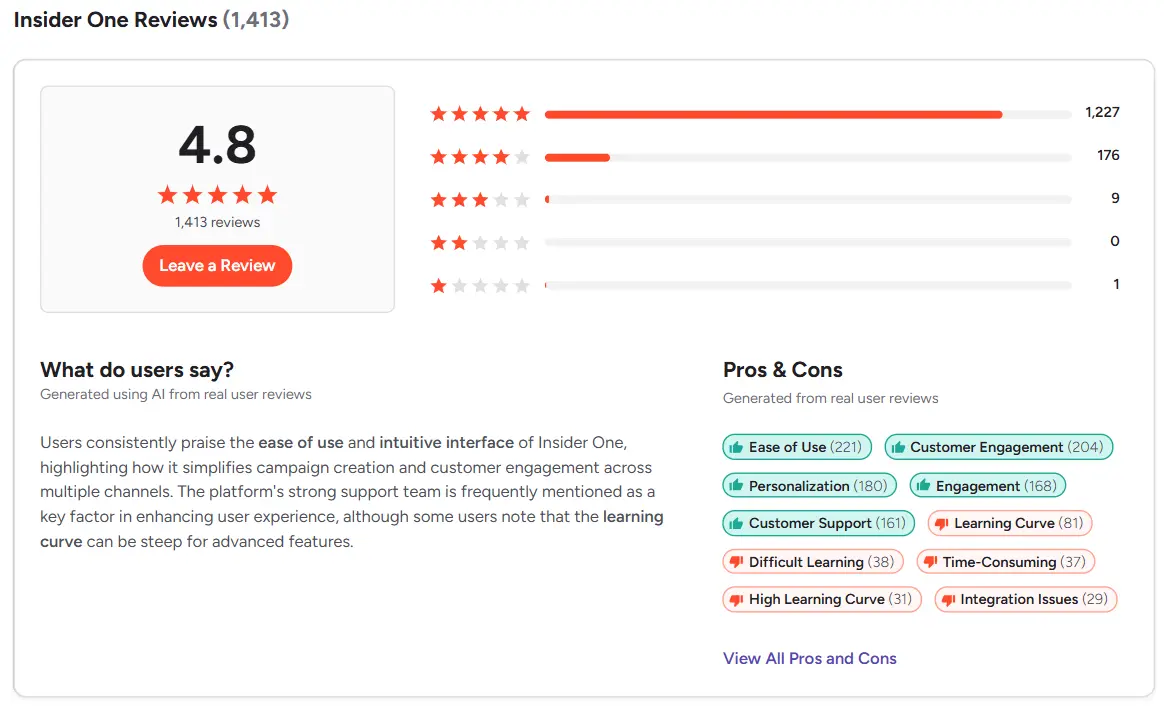
Best for: Brands seeking cross-channel customer engagement.
Insider helps brands personalize customer experiences across websites, apps, email, SMS, and messaging channels using AI-driven customer segmentation and predictive analytics.
Its platform excels at identifying high-intent users and delivering contextual experiences throughout the customer journey.
Key Features
- Predictive customer segmentation
- AI-powered recommendations
- Omnichannel messaging
- Journey orchestration
- Dynamic website personalization
- Intent prediction
Pros
- Strong omnichannel capabilities
- User-friendly interface
- Powerful predictive segmentation
Cons
- Some advanced features require premium plans
Explore top Insider One alternatives.
4. Bloomreach
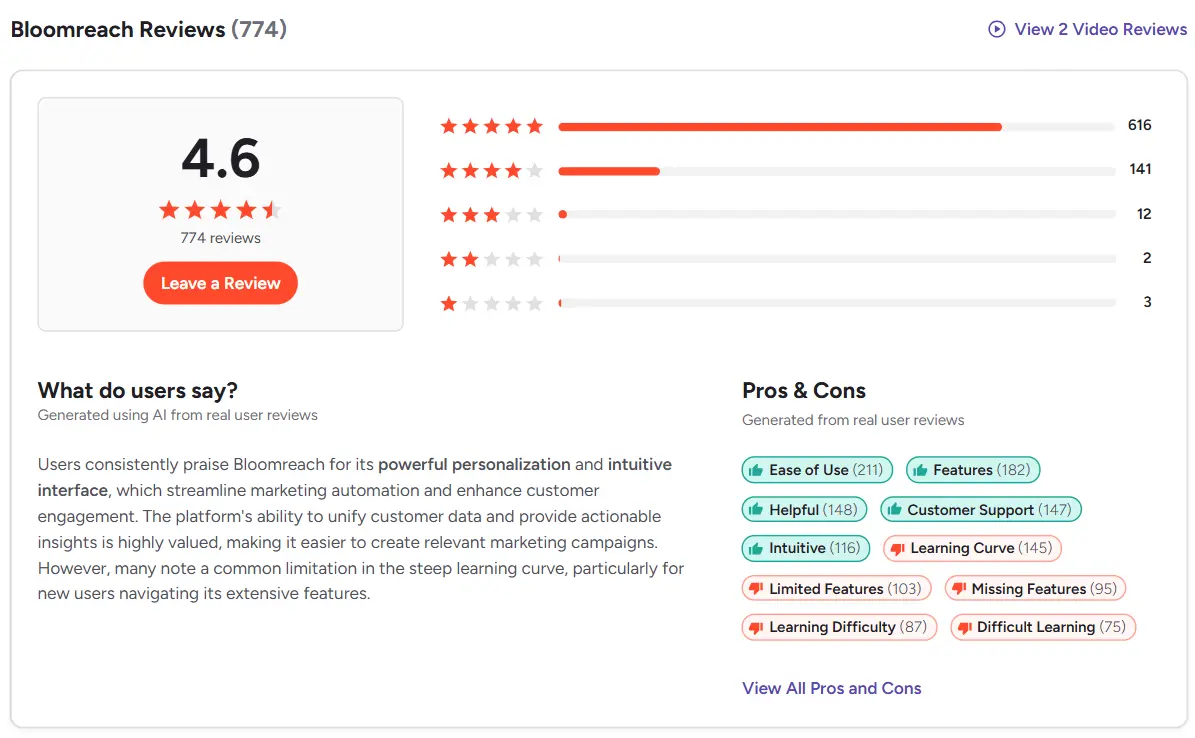
Best for: Retailers wanting to combine search, merchandising, and personalization.
Bloomreach provides an AI-driven commerce platform that integrates product discovery, merchandising, content personalization, and search into a unified experience.
Its recommendation engine continuously learns from shopper behavior to optimize search results, product listings, and promotional experiences.
Key Features
- AI-powered ecommerce search
- Product recommendations
- Personalized merchandising
- Content personalization
- Customer segmentation
- Analytics dashboard
Pros
- Excellent search capabilities
- Strong merchandising tools
- Scalable AI engine
Cons
- Enterprise implementation can be complex
Explore Bloomreach alternatives.
5. Salesforce Marketing Cloud Personalization
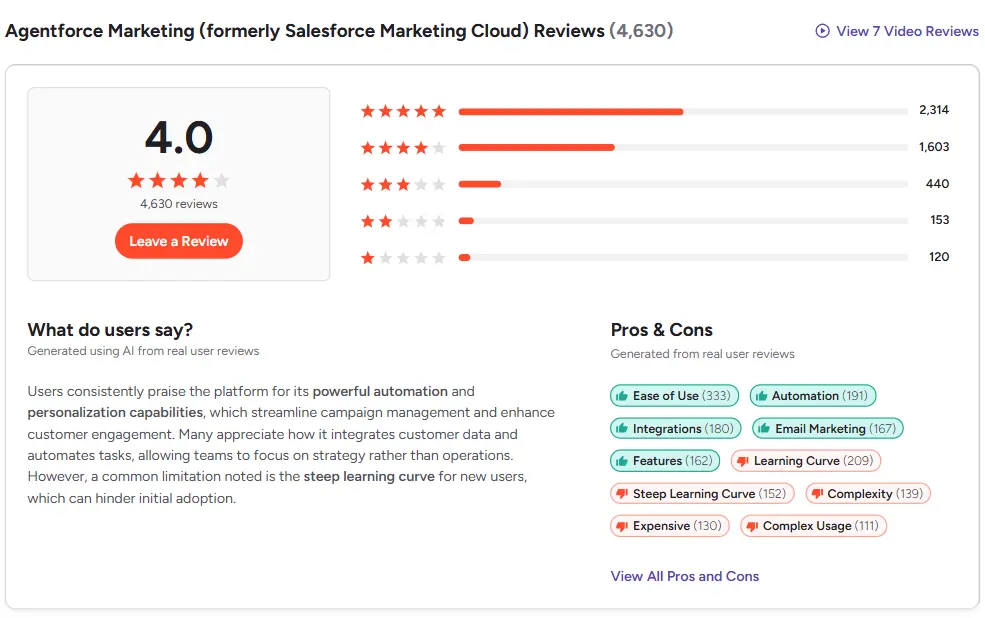
Best for: Enterprises already using the Salesforce ecosystem.
Salesforce Marketing Cloud Personalization (formerly Interaction Studio) enables brands to deliver individualized experiences across digital touchpoints. It leverages Einstein AI to personalize content, offers, and customer journeys using CRM and behavioral data.
Key Features
- Einstein AI recommendations
- CRM integration
- Journey personalization
- Real-time customer profiles
- Predictive insights
- Enterprise analytics
Pros
- Deep Salesforce integration
- Powerful AI capabilities
- Highly scalable
Cons
- Expensive for smaller businesses
- Best suited for Salesforce users
Explore Salesforce Marketing Cloud alternatives.
6. Adobe Commerce
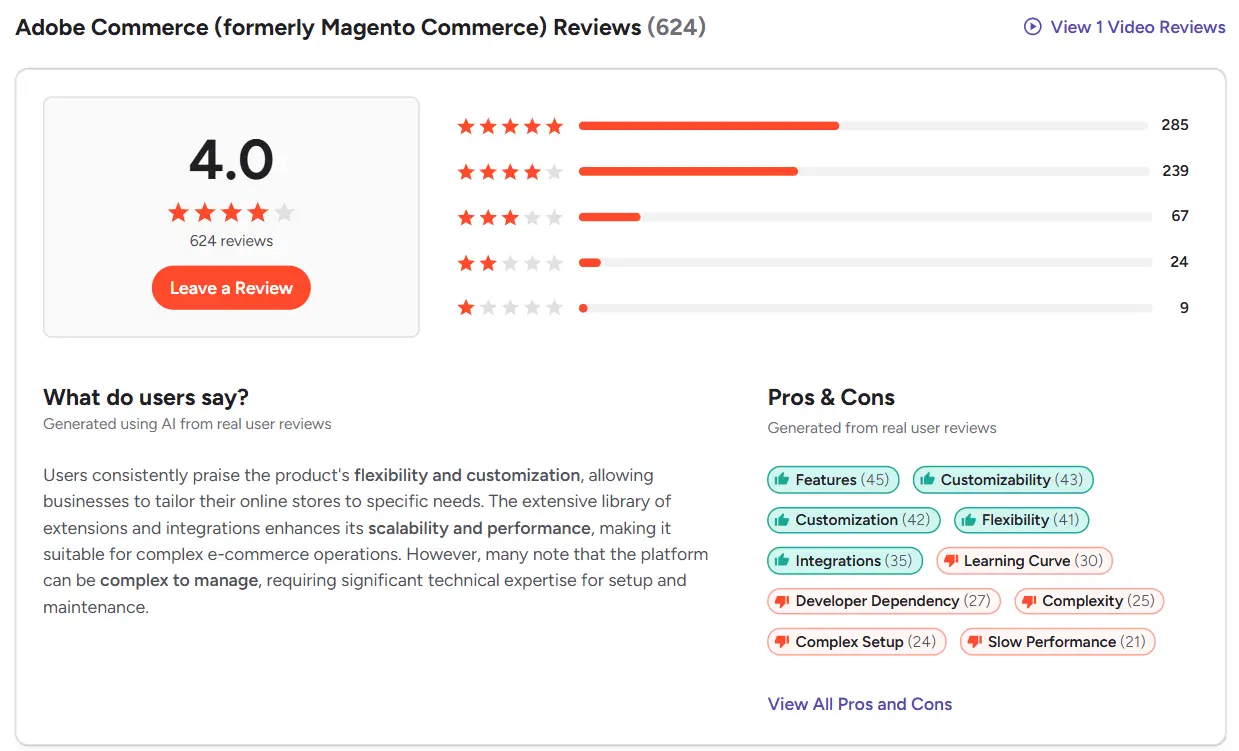
Adobe Commerce, formerly Magento Commerce, is an enterprise ecommerce platform designed to deliver personalized shopping experiences at scale. Its cloud offering combines AI-powered storefronts, built-in merchandising, and GenAI-driven content with multi-site, multi-language, and multi-brand capabilities. It supports millions of SKUs, complex catalogs, and custom pricing while integrating with Adobe Target, Adobe Journey Optimizer, and Adobe Real-Time CDP for connected personalization and customer journeys.
Best for: Large enterprises managing complex ecommerce operations, high-volume catalogs, and multi-brand or multi-market commerce experiences.
Key Features
- AI-powered storefront
- Built-in merchandising
- GenAI-driven content
- Multi-site, multi-language, and multi-brand commerce
- Support for millions of SKUs and complex catalogs
- Custom pricing capabilities
- Adobe Commerce Optimizer for personalization without replatforming
- Native integration with Adobe Experience Cloud
Pros
- Strong scalability for complex enterprise catalogs
- Advanced merchandising and personalization capabilities
- Supports multi-brand and multi-market operations
- SaaS model can reduce upgrade and maintenance overhead
- Integrates with Adobe’s broader customer data and personalization ecosystem
Cons
- Enterprise-focused platform may be complex to implement
- Best suited to larger businesses with sophisticated commerce requirements
- Full value may require investment in the broader Adobe ecosystem
7. Nosto
Best for: Fashion, beauty, and lifestyle ecommerce brands.
Nosto specializes in AI-driven merchandising and product recommendations. Its algorithms personalize category pages, search results, and product recommendations based on shopper behavior and preferences.
Key Features
- AI product recommendations
- Personalized merchandising
- Search personalization
- User-generated content integration
- Segmentation
- Analytics
Pros
- Easy deployment
- Excellent for retail merchandising
- Strong recommendation engine
Cons
- Less comprehensive for omnichannel engagement
8. Clerk.io
Best for: Small and mid-sized ecommerce businesses.
Clerk.io offers an affordable AI-powered personalization platform that focuses on recommendations, search, and email personalization. It’s particularly popular among Shopify and Magento merchants looking for a straightforward implementation.
Key Features
- Personalized search
- AI recommendations
- Email recommendations
- Category optimization
- Merchandising
- Analytics
Pros
- Quick implementation
- Easy to manage
- Cost-effective
Cons
- Limited enterprise capabilities
Ecommerce Personalization Software Comparison
| Platform | AI Personalization | Product Recommendations | Omnichannel | Best For | Pricing |
| Netcore Cloud | ⭐⭐⭐⭐⭐ | ✅ | ✅ | Mid-market & Enterprise | Custom |
| Dynamic Yield | ⭐⭐⭐⭐⭐ | ✅ | ✅ | Enterprise Retail | Custom |
| Insider | ⭐⭐⭐⭐⭐ | ✅ | ✅ | Enterprise | Custom |
| Bloomreach | ⭐⭐⭐⭐ | ✅ | Limited | Commerce Brands | Custom |
| Salesforce Marketing Cloud Personalization | ⭐⭐⭐⭐⭐ | ✅ | ✅ | Salesforce Customers | Premium |
| Adobe Commerce | ⭐⭐⭐⭐⭐ | ✅ | Limited | Enterprise | Premium |
| Nosto | ⭐⭐⭐⭐ | ✅ | Limited | Retail & Fashion | Custom |
| Clerk.io | ⭐⭐⭐⭐ | ✅ | Basic | SMB Ecommerce | Custom |
How to Choose the Right Ecommerce Personalization Platform
Selecting the right ecommerce personalization software depends on your business goals, technical maturity, and growth plans. Consider the following factors before making a decision:
1. AI Capabilities
Look for platforms that use machine learning to continuously improve product recommendations, audience segmentation, and content personalization without requiring constant manual intervention.
2. Real-Time Personalization
Customer preferences change rapidly. Choose a platform that updates recommendations and experiences instantly based on browsing behavior, purchases, and engagement.
3. Omnichannel Support
The best platforms personalize experiences consistently across your website, mobile app, email, SMS, WhatsApp, and push notifications to create a seamless customer journey.
4. Ease of Integration
Ensure the platform integrates smoothly with your ecommerce platform, CRM, CDP, marketing automation tools, and analytics stack. Native integrations can significantly reduce implementation time.
5. Analytics and Reporting
Look for dashboards that measure key metrics such as conversion rate, average order value (AOV), click-through rate (CTR), revenue attributed to recommendations, and customer lifetime value (CLV).
6. Scalability
Your personalization platform should be able to handle increasing traffic, larger product catalogs, and expanding customer bases without compromising performance.
7. Total Cost of Ownership
Don’t focus solely on licensing fees. Consider implementation costs, required technical resources, training, ongoing support, and the platform’s ability to deliver measurable ROI.
Final Take
As customer expectations continue to evolve, ecommerce personalization has become a core driver of digital commerce success. The best personalization platforms go beyond recommending products; they unify customer data, leverage AI to understand intent, and deliver relevant experiences across every touchpoint.
When evaluating solutions, prioritize platforms that combine real-time personalization, omnichannel engagement, AI-powered recommendations, robust analytics, and seamless integrations. Choosing a scalable platform aligned with your business goals will help you improve conversion rates, strengthen customer loyalty, and maximize long-term revenue growth.
Looking to take your ecommerce personalization strategy to the next level? Explore how Netcore Cloud’s AI-powered personalization platform can help you deliver meaningful 1:1 customer experiences that drive measurable business outcomes. Talk to us.