 Diwali Engagement Playbook is now


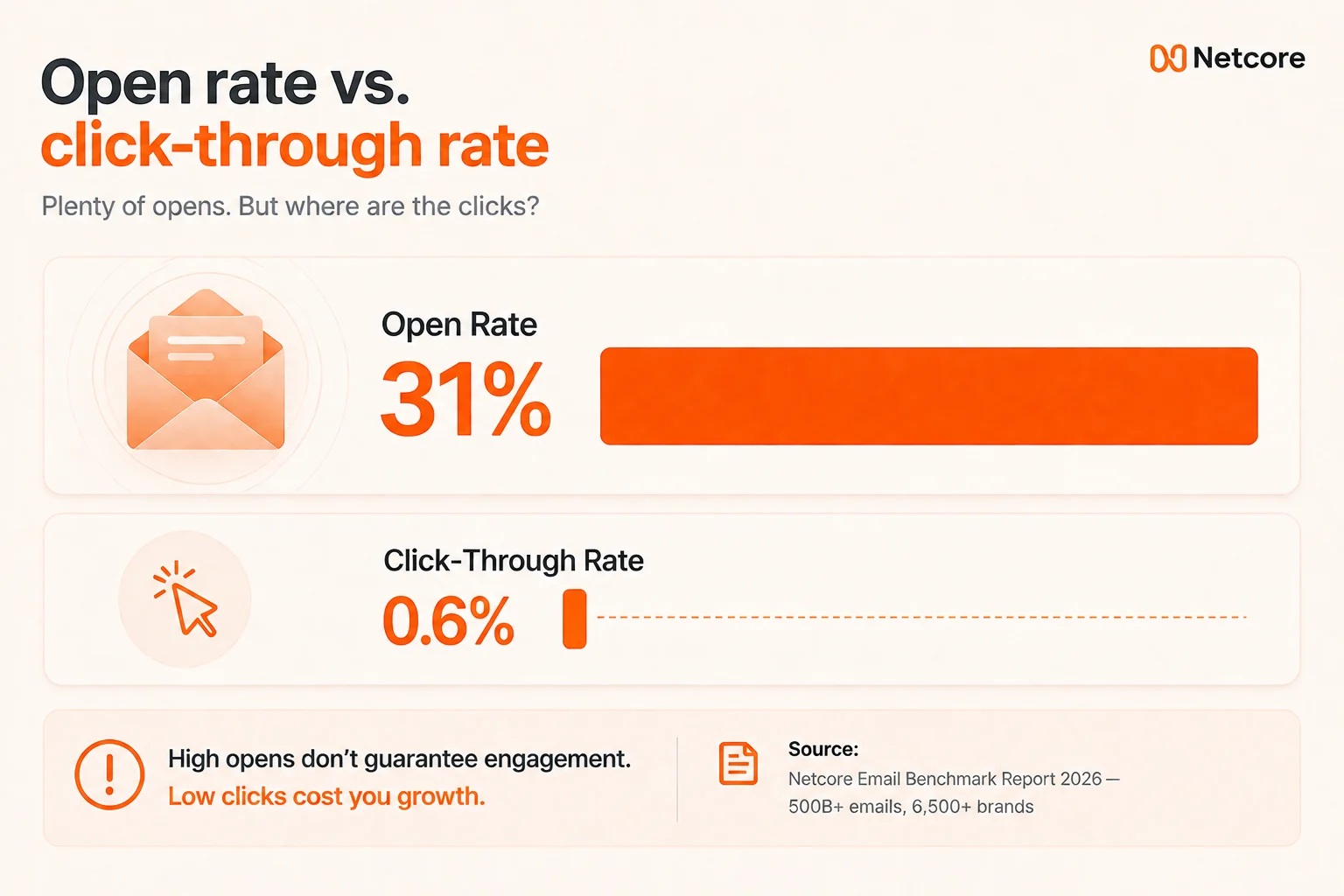
Open rates are up across most email programs. Revenue isn’t following at the same pace and that gap has a name most marketing teams haven’t looked into.
Half your “most engaged” segment might be bots and every rupee spent chasing it follows that lie downstream.
Here’s how it plays out in practice
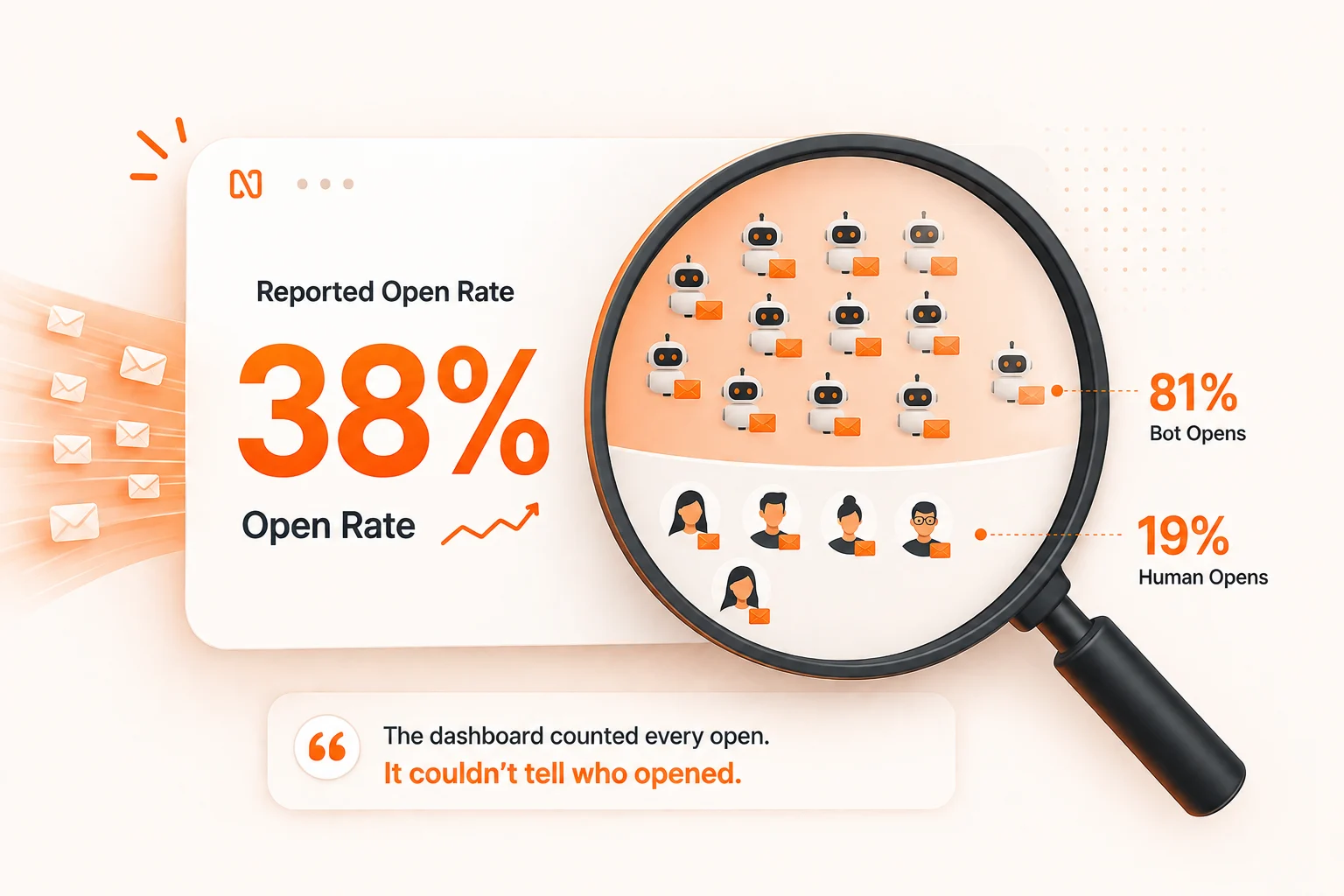
A D2C fashion brand in Mumbai runs a festive season campaign. 12 lakh emails go out. The dashboard shows a 38% open rate right at benchmark. The team celebrates.
Nobody asks the one question that actually matters: how many of those opens came from an actual person?
And the marketing team builds every decision that follows audience selection, retargeting spend, journey triggers, board reporting on an answer nobody checked.
The Real Gap
The Bots Hiding Behind Your Inbox’s Privacy Tech
The growing gap between opens and clicks is often the footprint of automated activity, not disengaged audience. Security gateways and mailbox providers routinely scan and pre-load emails before they ever reach a real inbox (Apple’s Mail Privacy Protection is one well-known example, firing tracking pixels through its own proxy servers). Your ESP counts every one of those scans as an “open” whether or not a real person ever saw the email
The Impact
The Bot Tax You Didn’t Know You Were Paying
Every bot-triggered open costs you money, not visibility, not vanity, actual revenue. Your retargeting budget spends against audiences that will never buy.
Here’s how it happens: one bot-triggered open sets off a chain reaction. Automation journeys start chasing bots instead of real customers. Attribution gives email credit for sales it didn’t actually influence. And customers who really have gone quiet get missed, because a bot’s activity makes them look “active” on paper.
The longer these bots stay mixed into your targeting, the more it costs you. Mailbox providers reward genuine engagement, not inflated numbers — so as your data gets noisier, inbox placement drops, real engagement falls, and your sender reputation takes the hit. And this isn’t a one-time cost: it compounds, quietly, with every campaign that follows.
The Shift
From Open Rates to Engagement Quality
Here’s the real dividing line in email marketing right now: not who sends more, but who strips bot activity out of their engagement data before it touches a decision.
If your platform can’t tell a machine-triggered open from a human one, you’re not measuring engagement, you’re measuring noise dressed up as a metric.
The Proof
What B2C Brands Are Doing Different
- Auditing their “most engaged” segments: Comparing open volume against clicks, site visits, and purchases. A wide gap signals bot activity, helping them quantify the exposure before scaling spend against it.
- Moving beyond open-based journeys: Replacing open-triggered automations with user-based opens or downstream behavioural triggers to ensure journeys respond to genuine customer engagement.
The Conclusion
Beyond the Open Rate
Top-tier brands leveraging Netcore are shifting focus from vanity metrics to true engagement context. To separate real human interactions from bot noise, these brands deploy a sophisticated, multi-layered validation framework:
- Leading brands isolate genuine human engagement by filtering traffic from security gateways, proxy servers, and bot user-agents. User-agent analysis identifies the client generating the event, helping distinguish automated scanners from real users. Coverage depends on the email platform’s ability to expose user-agent data.
- The Timestamp Filter: These brands recognize that bots trigger ‘opens’ in milliseconds. By filtering out instant-open events, they isolate engagement that occurs on a genuine human timeline. An easy-to-adopt approach that helps improve the quality of engagement metrics by filtering likely bot activity.
- Metadata Validation: Top marketers cross-reference delivery paths to confirm if an interaction originated from a legitimate user inbox rather than a security scan.
The result? High-confidence data that drives real segmentation, not machine noise.
Because in today’s inbox, the question is no longer “Did someone open my email?” It’s “Did a real customer engage – and should that interaction influence the next marketing decision?”
Your open rate isn’t the full story.
Find out what’s real.


